REVIEW · VATICAN CITY
Rome in a day private Tour with Vatican Museums and taxi transfer
Book on Viator →Operated by Rome in tours · Bookable on Viator
Rome feels like it’s happening all at once. This private day strings together the Vatican Museums and the Roman Forum sights with timed tickets, smart pacing, and headsets when you’re in a bigger group.
I especially like the focus on real interpretation: an art historian or archaeologist guide helps you connect the dots between art, power, and religion. I also like the payoff at the end—Colosseum ground level and the first tier—without wasting the whole day in transit.
The main drawback is simple: it’s a long, packed schedule at a high price point ($779.83 per person), and you must follow the dress code or you can risk being turned away.
In This Review
- Key points you’ll care about
- One-Day Vatican-to-Colosseum Route That Actually Holds Together
- Vatican Museums: Terrace Views and the Collections People Talk About
- Sistine Chapel in 30 Minutes: What to Notice Beyond the Ceiling
- St. Peter’s Basilica: A Big Church in a Small Time Window
- Piazza Navona and the Domitian Stadium Layer Beneath It
- Pantheon: The Dome, the Oculus, and Raphael’s Tomb
- Piazza di Pietra to Trevi: Quick Hits That Still Feel Like Rome
- Piazza Venezia and the Power Map of Modern Rome
- Roman Forum: Caesar, Mark Antony, and the Sacra Via Walk
- The Taxi Hop to the Colosseum: Less Tired, More Time
- Entering the Colosseum: Ground Level and First Tier
- Price and What You’re Actually Paying For
- Who This Tour Suits Best
- Quick Planning Notes Before You Go
- Should You Book This Tour?
- FAQ
- How long is the Rome in a Day private tour?
- What’s included for tickets?
- Is there a taxi transfer?
- Do we get headsets?
- What about lunch?
- What dress code do I need?
- Where does the tour start and end?
Key points you’ll care about
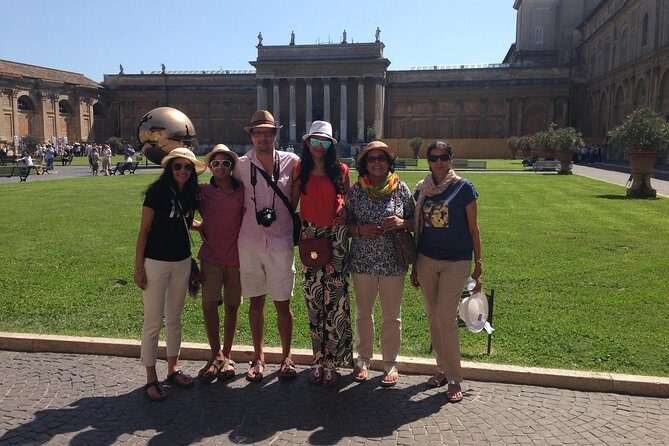
- Timed tickets built in for Vatican Museums, Sistine Chapel, Pantheon, Roman Forum, and the Colosseum
- Expert guide using an art historian or archaeologist lens to make the stops make sense
- Headsets for 6+ people so you can hear clearly even in busy rooms
- Taxi transfer to the Colosseum to reduce the “Rome legs” stress during the busiest part of the day
- Start at Vatican Museums, finish inside the Amphitheater, so your logistics are cleaner than most day tours
One-Day Vatican-to-Colosseum Route That Actually Holds Together

This is the kind of tour where the best value isn’t just seeing a lot. It’s how the day is structured so you’re not constantly guessing: where to go, how long to stay, and how to move between major sites without losing half the day to lines and wandering.
You’ll be moving through Vatican City first, then down into central Rome for the Pantheon-area sights and the Forum complex, and finally the Colosseum. Total time comes in around 6 to 7 hours, depending on how the Vatican portion flows that day.
It’s offered in English, and it runs rain or shine. Since it’s private—only your group—your guide can keep the pace right for kids, couples, or multi-generational trips (assuming everyone can handle several stops in one day).
Other Vatican Museums tours we've reviewed at the Vatican & Rome

Vatican Museums: Terrace Views and the Collections People Talk About
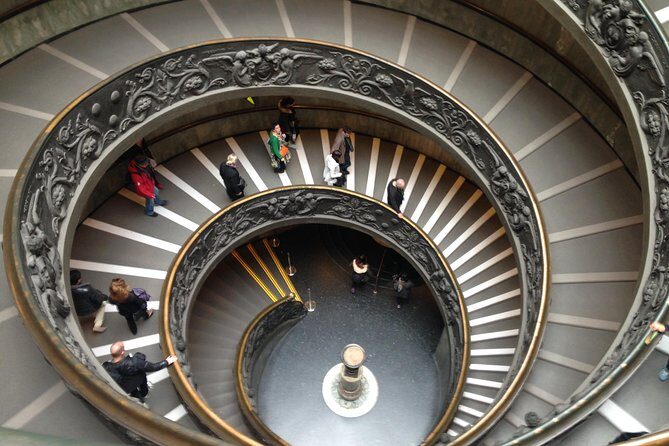
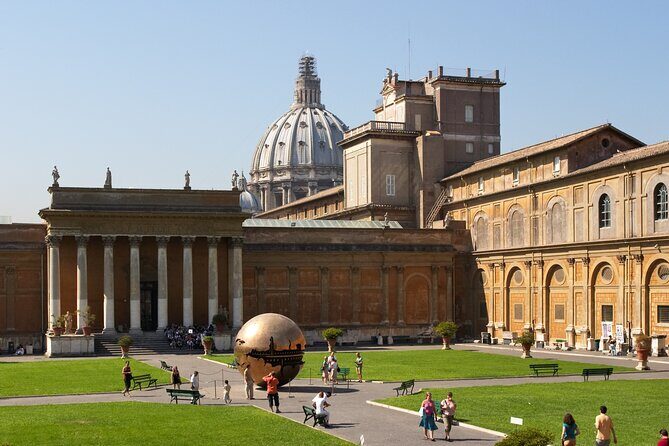
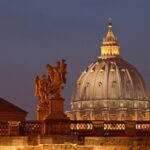
The day starts inside Vatican Museums, with a strong first beat: a terrace view over St. Peter’s Basilica and the Vatican gardens. That early panorama helps you get oriented fast—so when you later see Basilica details up close, they feel less random.
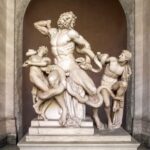
From there, you’ll walk through highlights that are famous for a reason:
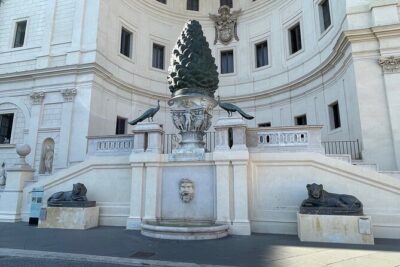
- the Court of the Pine Cone
- the Gallery of the Candelabras
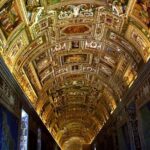
- the Gallery of the Tapestries
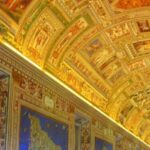
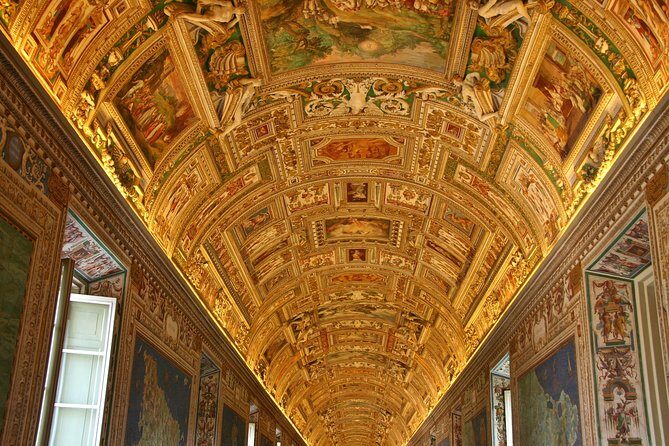
- the Gallery of the Geographical Maps
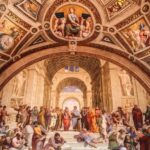
- Raphael’s Rooms
The tour gives you about 1 hour 45 minutes here, and that matters. Vatican Museums can swallow a whole day if you go freestyle. With a set window plus a guide shaping the route, you get the most “wow per minute” parts.
Also, there’s the practical side: you’ll use a mobile ticket, and you’ll have a guide directing you through the high-traffic areas so you’re not stuck staring at signage wondering what’s worth your time.
Sistine Chapel in 30 Minutes: What to Notice Beyond the Ceiling
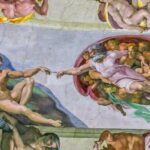
Next is the Sistine Chapel, with 30 minutes on the clock and admission included. Yes, everyone thinks about Michelangelo’s ceiling. But the guide focus helps you spot other details that are easy to miss when you’re just staring upward.
What this stop includes is:
- Michelangelo’s frescoes
- the Private Chapel of the Pope
- the location of the Conclave
Those last two are the difference between seeing the Chapel as a single image and understanding it as a working space with a specific role in church history. You’re also given a Sistine Chapel brochure, which is a nice extra for follow-up while you still have the visuals in your head.
One tip that’s worth taking seriously: the Chapel rules mean you’ll want your phone and bag handling ready so you don’t waste your time at the start. Your guide will set the tempo, but you still control how quickly you’re prepared.
St. Peter’s Basilica: A Big Church in a Small Time Window
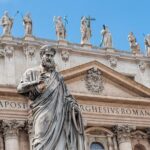
St. Peter’s Basilica gets about 30 minutes, and admission is free on this itinerary. It’s not a long visit, but it’s enough time to catch the major beats without getting trapped inside for hours.
You’ll focus on standout elements, including:
- the Canopy by Bernini
- relics of Saint Peter
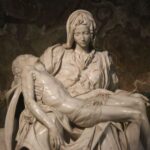
- Michelangelo’s Pietà
- Saint John Paul II’s tomb
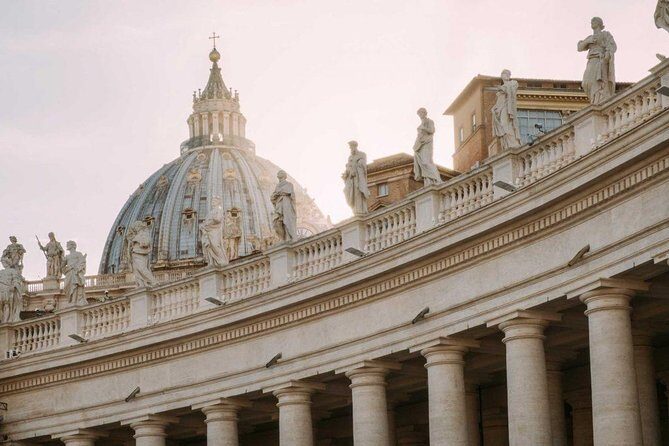
This is also a place where timing helps you. If you arrive overwhelmed, you may just walk through. With a guide directing attention, you’ll actually understand what you’re looking at—especially around the Bernini details and the way the Basilica anchors the Vatican’s spiritual gravity.
Dress code matters here too: no shorts, no sleeveless tops, and your knees and shoulders must be covered for worship spaces and selected museums. If you ignore this, you don’t just feel awkward—you can risk refused entry.
Piazza Navona and the Domitian Stadium Layer Beneath It
After the Vatican, the tour shifts into classic Rome street-level sightseeing—starting with Piazza Navona. You’ll get about 20 minutes, and it’s packed with “turn your head” moments.
Top sights include:
- Bernini’s Fountain of the Four Rivers
- the church of Sant’Agnese
- the fact it’s built over an earlier stadium tied to Emperor Domitian
- the Fountain of the Moro and Fountain of Neptune
- the Piazza Navona location associated with Angels and Demons
- Palazzo Pamphilj
This stop is more than a photo break. It’s a lesson in Rome’s biggest skill: building over what came before. The guide’s explanation of the Domitian stadium layer gives the piazza a deeper “why,” so you’re not just watching fountains.
If you’re traveling with kids, Piazza Navona often works well because it’s visually busy and easy to keep everyone engaged in a short window.
Other private Vatican tours at the Vatican & Rome
Pantheon: The Dome, the Oculus, and Raphael’s Tomb
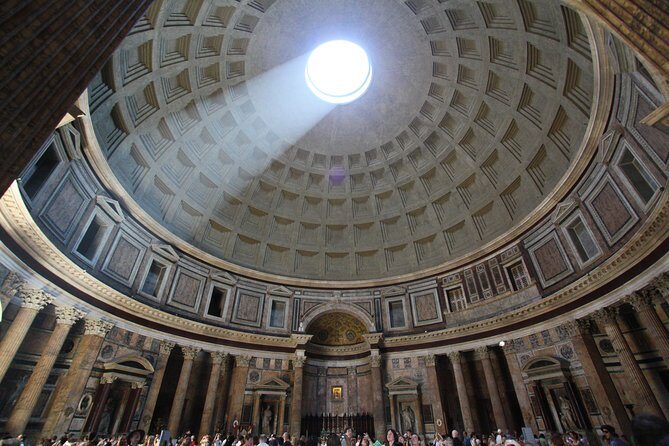
The Pantheon gets about 20 minutes, with admission included. It’s one of those places where the guide framing changes everything.
You’ll see:
- the biggest unreinforced concrete dome in the world
- the most well preserved pagan monument in Rome
- the tomb of Raphael
- the tombs of the Kings of Italy
- the oculus and the bull’s-eye effect
That bull’s-eye effect is exactly the kind of thing you’ll want your eyes on rather than just skimming. The Oculus isn’t just a hole in the ceiling—it’s part of how light behaves in the building, and that’s what makes the interior feel special.
A short time window can be tricky with the Pantheon because people tend to linger. But since your day already includes heavy hitters, this duration is a reasonable compromise: enough to hit the essentials and move on without losing your whole plan.
Piazza di Pietra to Trevi: Quick Hits That Still Feel Like Rome
Then you get two quick stops close together.
First, Piazza Di Pietra for about 3 minutes, centered on the Temple of the Deified Hadrian. It’s short on purpose. You’re using it like a pause button while transitioning to the next big “Rome postcard” moment.
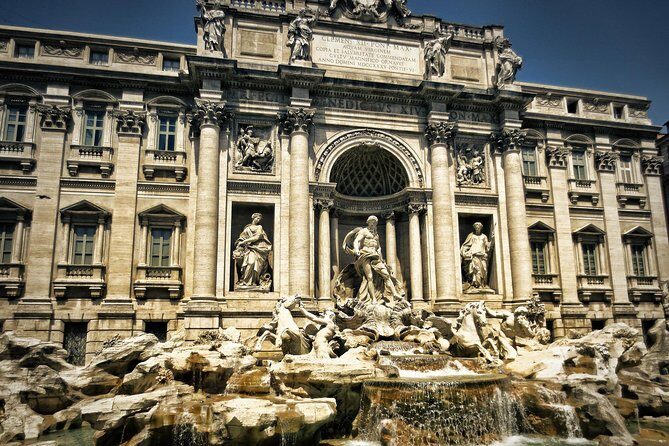
Then it’s Trevi Fountain, about 10 minutes, with time to enjoy the famous scene:
- the late Baroque look
- the chance to throw coins
Ten minutes can sound short, but in peak Rome traffic, it’s often the difference between seeing it and standing in it. The guide keeps you moving so you don’t lose the day to crowd drift.
If you care about photos, aim for a clear plan with your group before you arrive—who’s where, how long you’ll wait, and what you’ll do if it gets packed.
Piazza Venezia and the Power Map of Modern Rome
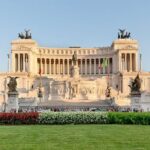
Next comes Piazza Venezia for about 10 minutes. It’s an in-between stop, but it sets up the “Rome as a map of power” feeling that continues into the Forum.
You’ll learn about:
- the geographic center of modern Rome
- the intersection of the 5 major road axes
- the Vittoriano, including the Altar of the Forefathers and the Monument to the Unknown Soldier (WWI)
- Palazzo Venezia and its role as Mussolini’s headquarters during WWII
- the balcony where Mussolini declared Italy’s entrance into the war
- links to Michelangelo’s house
- Palazzo Bonaparte, tied to Napoleon’s mother
Even if you don’t love political history, the framing helps. You stop seeing Rome as a pile of monuments and start seeing it as a city of decisions—where roads, speeches, and buildings connect.
Roman Forum: Caesar, Mark Antony, and the Sacra Via Walk
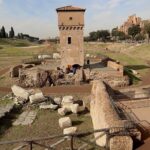
The Roman Forum portion is about 25 minutes, with entry included. This is one of the highest-impact segments of the whole day because it’s still the “beating heart” of the political, social, and religious story.
You’ll cover multiple forum areas and key landmarks, including:
- the Forum of Nerva
- the Forum of Augustus
- the Forum of Julius Caesar
- the Forum and Column of Trajan
- the Sacra Via
- the Altar of Julius Caesar and the place of Caesar’s cremation
- the podium where Mark Anthony made his funeral speech
- major temple stops like Temple of Antonino and Faustina, Temple of Concordia, and Temple of Vespasian
- Arch of Septimius Severus
- Tabularium (ancient state archive)
- additional temple and religious stops like the Temple of Castor and Pollux and the Temple of the Vestal Virgins
- Basilica Iulia and Basilica Emilia
- Curia Iulia
The practical magic here is the guide’s ability to connect the names to what you’re standing near. Roman ruins can feel like scattered walls—until someone gives you a mental map.
One note: because the Forum time is limited, you’ll benefit most if you go in with curiosity instead of trying to “learn everything.” The point is to get the overall structure, the key narratives, and the big names—then you can extend with a longer visit later.
The Taxi Hop to the Colosseum: Less Tired, More Time
One included highlight is the taxi ride that helps you reach the Colosseum without doing even more walking. That’s not a luxury add-on—it’s a smart way to keep the day enjoyable.
By the time you’ve done Vatican sites plus the central city stops, your group’s energy matters. The taxi keeps the momentum so you arrive at the Colosseum still able to look up, listen, and enjoy rather than just survive.
Also, your tour ends in a useful place: inside the Amphitheater area at Piazza del Colosseo. The data even notes it’s close to the metro (line B) and that a taxi stand is a short walk away if you want to head out quickly afterward.
Entering the Colosseum: Ground Level and First Tier
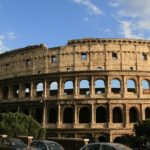
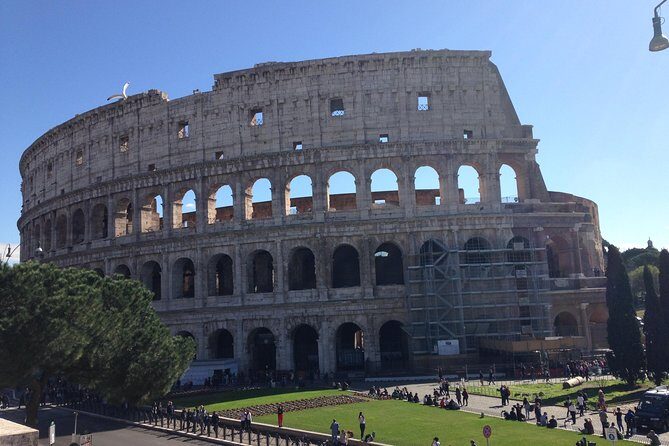
The Colosseum visit is about 45 minutes, with entry included plus a reservation fee. It’s described as the biggest amphitheater in the empire and a UNESCO site, and this tour includes time to visit:
- the ground level
- the first tier
This is a strong combination for first-timers. Ground level helps you understand scale and the space’s “arena logic.” The first tier adds height and context so you can see how the seating and structure relate.
Forty-five minutes is enough to get the main picture without turning the Colosseum into a half-day chore. And because your guide is managing the flow, you’re less likely to spend time stuck sorting your bearings while everyone else keeps moving.
Price and What You’re Actually Paying For
At $779.83 per person, this isn’t a budget tour. But you should also know what the price covers.
The itinerary includes admission tickets and reservations for key sites. For example, the Colosseum components are valued at €18 per person for the entrance ticket and €2 per person for the reservation fee. Those fees alone are not the whole cost, meaning the rest of the price is doing work for you: guiding, timed entry handling, headsets (for groups of 6 or more), and the taxi transfer to reduce friction late in the day.
So the best “value match” is when you’re paying for time saved and for interpretation gained. If you’d otherwise spend your day juggling tickets, sorting routes, and trying to make sense of ruins and art on your own, a guided plan like this often feels more fair.
If your goal is just checkboxes with minimal talking, this style may feel like overkill. If your goal is to understand what you’re seeing while keeping stress low, it makes sense.
Who This Tour Suits Best
This tour is especially well-suited for:
- first-time Rome visitors who want a lot in one day without total chaos
- families who want a private format and clear pacing (one guide name that pops up is Illia, praised for knowing shortcuts and keeping groups comfortable)
- people who like art and archaeology context, since the guide is specifically an art historian or archaeologist
- groups who can follow a dress code and handle a full-day schedule
It also helps if you’re the type who hates waiting around. With reservations and structured time windows, you spend your energy inside the sights instead of outside them.
If you’re the type who needs long, slow museum wandering, consider adding extra time on a separate day. This plan is designed for depth in the highlights, not for full exhaustion.
Quick Planning Notes Before You Go
You’ll want to pack for churches and museums: cover knees and shoulders. A light layer can help, since you’ll be in and out of spaces with different temperatures.
Bring your documents. A valid ID is required on the day for both Vatican Museums and the Colosseum, and a current valid passport is required for children under 18 and a student card for students under 26.
St. Peter’s Basilica can close in rare cases due to liturgical ceremonies, and in that case your museum time may be extended—so keep your schedule flexible even if you’re planning the rest of your day loosely.
Lastly, lunch isn’t included. Build in time or budget for something simple before or after.
Should You Book This Tour?
If you want Vatican Museums, Sistine Chapel, the Pantheon area, the Roman Forum, and the Colosseum in one day—without turning your trip into a logistics puzzle—this is a strong choice. The expert guide format and timed structure are the big wins, and the taxi transfer helps keep your energy.
If you’re sensitive to long days, or you’re only interested in one or two sites, you may feel the price and pacing more than the value. For most first-timers and art/ruins lovers, though, this is a smart way to make the day count.
FAQ
How long is the Rome in a Day private tour?
It runs about 6 to 7 hours.
What’s included for tickets?
Admission tickets are included for Vatican Museums, Sistine Chapel, Pantheon, Roman Forum, and the Colosseum (including the Colosseum reservation fee).
Is there a taxi transfer?
Yes. A taxi ride is included as part of the day’s route to help you move between areas.
Do we get headsets?
Headsets are included for a party of 6 pax or more.
What about lunch?
Lunch is not included.
What dress code do I need?
You need covered knees and shoulders. No shorts or sleeveless tops are allowed in places of worship and selected museums.
Where does the tour start and end?
It starts at Vatican Museums (Vatican City) and ends at Piazza del Colosseo, inside the Amphitheater.