REVIEW · ROME
The Vatican: Private VIP Experience Tour
Book on GetYourGuide →Operated by Through Eternity Tours · Bookable on GetYourGuide
Your brain will trip over the art.
This private VIP Vatican experience strings together the places that usually take days—Vatican Museums, the Sistine Chapel, Raphael Rooms, and then St. Peter’s—so you get the story in one smooth arc. I especially like the expert English-speaking guide who can connect what you’re seeing to the Renaissance mindset, and I also like the queue-saving access that gets you inside faster. One consideration: you’ll be on your feet for about five hours with stairs, and you’ll need to follow the Vatican dress rules (no shorts, no sleeveless tops).
You’ll meet your guide in front of Café Vaticano with a Through Eternity sign/flag, then move through the Vatican Museums with guided time in the collections people actually remember. If you’ve ever looked at a postcard of the Pietà or the Sistine ceiling and wondered what you’re supposed to notice first, this tour gives you a clear path—and a guide who knows where to stand and what to point out (I’ve seen names like Brandon, Guia, Tatiana, and Thomas cited in past experiences for exactly that kind of storytelling and crowd handling).
In This Review
- Key highlights that make this Vatican tour feel VIP
- Why this private VIP Vatican tour is worth the money
- Meeting at Café Vaticano and getting through the gates fast
- Vatican Museums: seeing the collection as one connected story
- Pinacoteca Vaticana: where you spot Leonardo, Caravaggio, and Raphael
- Ancient sculpture stops: Chiaramonti, Candelabra, and the Belvedere vibe
- Tapestries and maps: the Vatican shows how it planned the future
- Raphael Rooms: frescoes that make the Renaissance feel logical
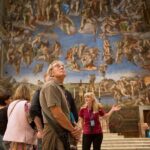
- Sistine Chapel: how the ceiling’s figures and themes come into focus
- St. Peter’s Basilica finale: Pietà, relics, and Bernini’s canopy
- Timing, walking, and dress rules that can affect your day
- Price and value: what $568 gets you (and what it doesn’t)
- Who this tour fits best
- Should you book the Vatican Private VIP Experience Tour?
- FAQ
- How long is the Vatican private VIP experience tour?
- Is this tour private?
- What languages is the guide available in?
- Do I get skip-the-line entry?
- What ID do I need for entry?
- What should I wear, and what’s not allowed?
- Is the tour wheelchair accessible?
- Can I cancel, and is there a pay-later option?
Key highlights that make this Vatican tour feel VIP
- Skip-the-lines access + fast-track into St. Peter’s so you spend more minutes looking and less time waiting.
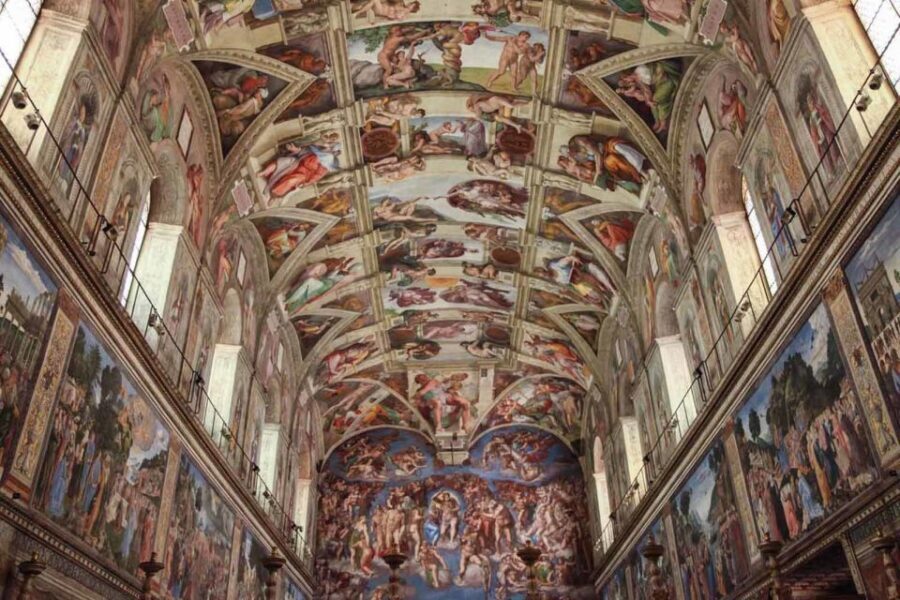
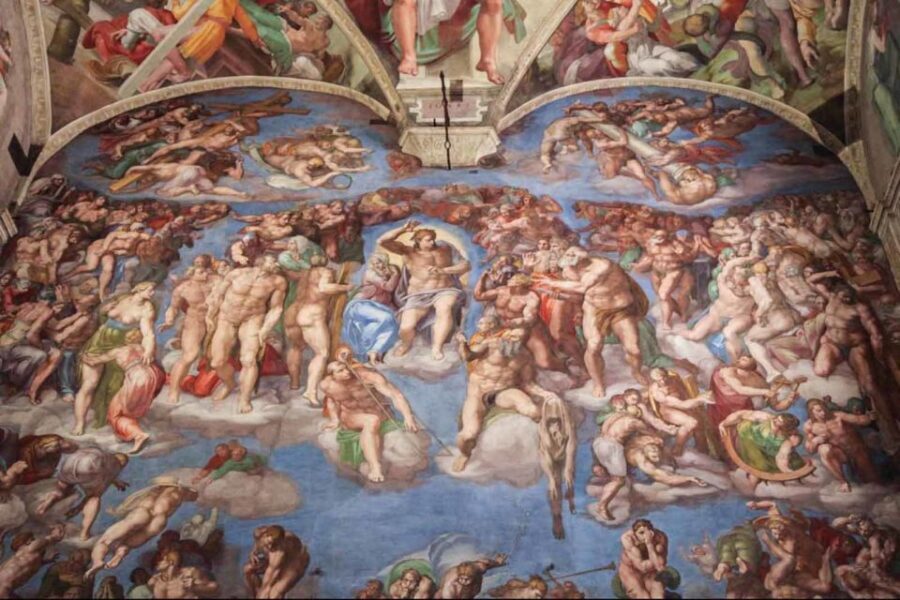
- Sistine Chapel time with meaning, including the figures Michelangelo painted (like Jonah, Adam, Eve, Noah) and the Last Judgment theme.
- Raphael Rooms guided for context, not just a quick pass through frescoes.
- Expert-led special focus areas such as the Pinacoteca visit and key sculpture collections.
- Ends in St. Peter’s Basilica with guided highlights like Michelangelo’s Pietà and Bernini’s canopy above the altar.
Why this private VIP Vatican tour is worth the money
At $568 per person, this isn’t a casual add-on. The value comes from three things that matter in the Vatican: time, expertise, and flow.
First, you’re not just buying entry—you’re buying skip-the-line access and a guided route that prioritizes the big artistic beats. The Vatican can chew up your day with queues and random wandering. Here, your guide helps you move with purpose and makes the art easier to read.
Second, the tour is built around an expert who can explain how the Renaissance worked, and why those famous figures and frescoes are still changing how people see the world. In past experiences, guides named Brandon, Guia, Tatiana, and Thomas are repeatedly praised for connecting details so the tour doesn’t feel like a slideshow.
Third, it’s private, which changes everything. Even with crowds outside, you can keep your pace and ask questions without feeling like you’re being herded into a cattle chute.
Other VIP Vatican tours at the Vatican & Rome

Meeting at Café Vaticano and getting through the gates fast
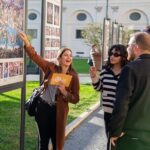
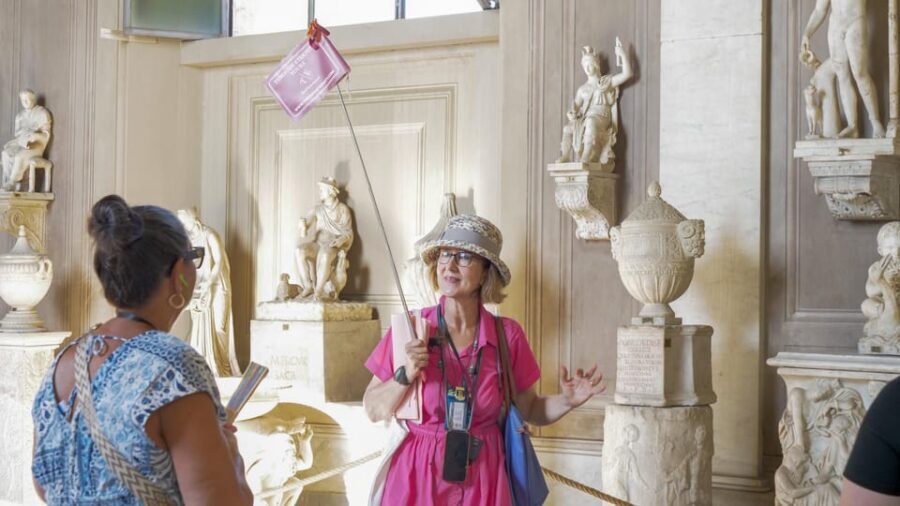
Your guide meets you in front of Café Vaticano with a Through Eternity sign or flag. That small detail matters because the Vatican area is confusing when you’re tired and everyone is walking in the same direction.
From the start, the tour is designed to use a separate entrance for skip-the-lines access. You’ll still deal with the Vatican’s reality—security checks and packed areas—but fast-track entry helps you avoid the worst time sink: waiting while the most famous rooms are already open.
Practical tip: wear shoes you can do serious walking in. The tour includes steps and staircases, and you’ll also want water. If you’re traveling with anyone who has mobility concerns, it’s worth flagging that early so the team can accommodate you as best as possible.
Vatican Museums: seeing the collection as one connected story
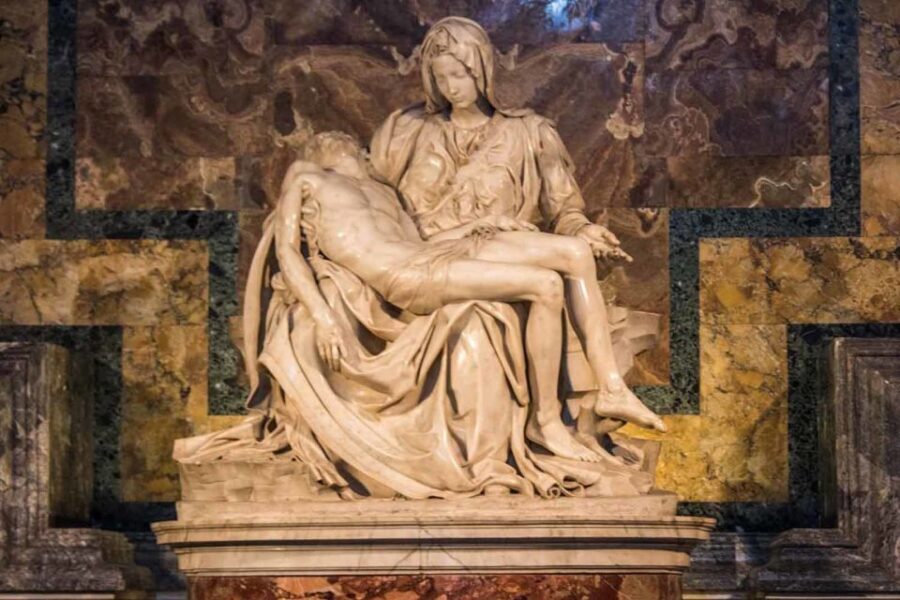
The core of your tour is the Vatican Museums guided visit (about 3.67 hours), and the route is structured around how Renaissance artists thought.
A lot of visitors see rooms out of order and miss the connection between ancient models and Renaissance innovation. This tour keeps you moving through major stops so you can notice patterns: ancient sculpture ideas show up again and again, and the fresco programs aren’t random decorations—they’re visual theology and political messaging.
Even if you only know a few artists by name, your guide can help you understand what you’re looking at: how bodies are posed, how figures relate to each other, how symbolism builds across ceilings and walls. The payoff is that the art becomes readable.
Pinacoteca Vaticana: where you spot Leonardo, Caravaggio, and Raphael
One special stop is the Pinacoteca Vaticana with a guided visit. This is where the paintings help you understand the broader artistic world around the Papal court.
If you’ve seen names like Leonardo da Vinci, Caravaggio, and Raphael on museum labels but never connected them to context, this stop is a useful bridge. Your guide can help you notice differences in style and intention so it feels less like trivia and more like a living art debate.
Also, a dedicated guide here saves you from the most common problem: looking at the wrong level of detail. In a museum this huge, guidance helps you focus on the pieces that lead to the bigger moments later.
Ancient sculpture stops: Chiaramonti, Candelabra, and the Belvedere vibe
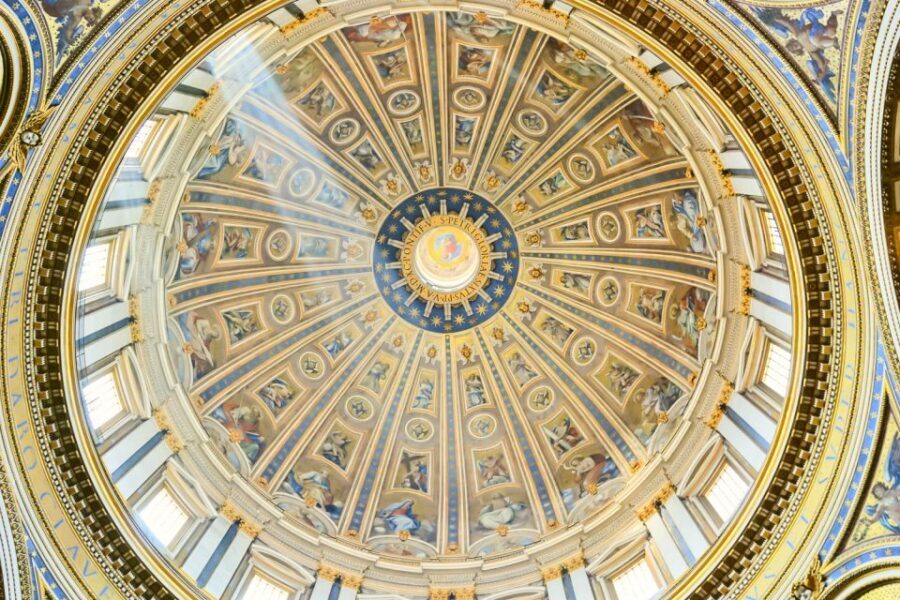
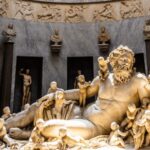
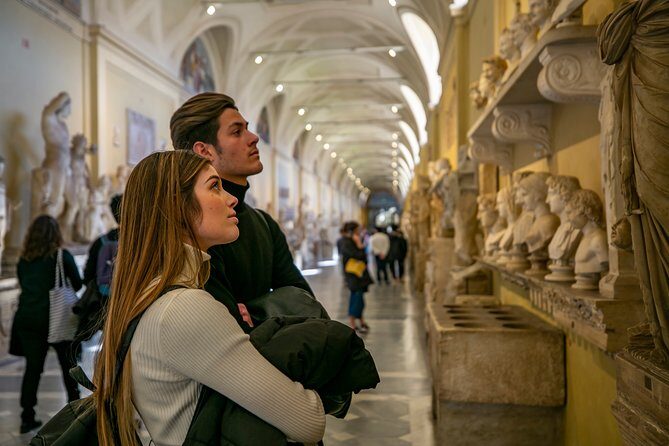
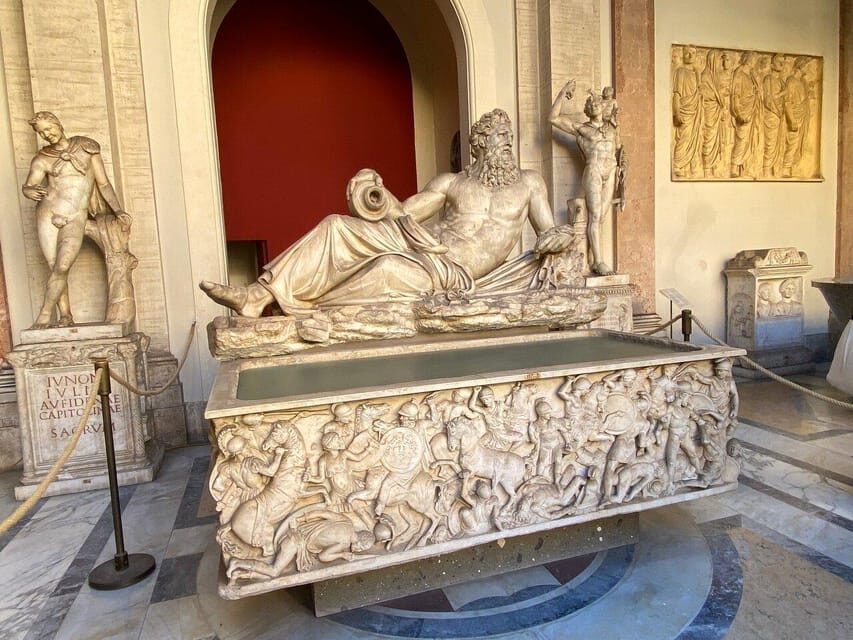
You’ll also get guided time in Chiaramonti Museum, the Gallery of the Candelabra, and other sculpture collections. This is where the Vatican’s ancient holdings stop being background and start shaping the Renaissance imagination.
The tour highlights sculptural masterpieces that Renaissance artists studied, including works linked to excavations and the study of famous Greek pieces. Your guide can connect that to what you see in the architecture—because Renaissance artists weren’t only copying images. They were responding to how ancient art felt in space, light, and scale.
Why this matters: when you understand the ancient source material, Michelangelo and Raphael start to make more sense. Their genius isn’t just about technique—it’s about what they chose to learn from the past.
Other private Vatican tours at the Vatican & Rome
Tapestries and maps: the Vatican shows how it planned the future
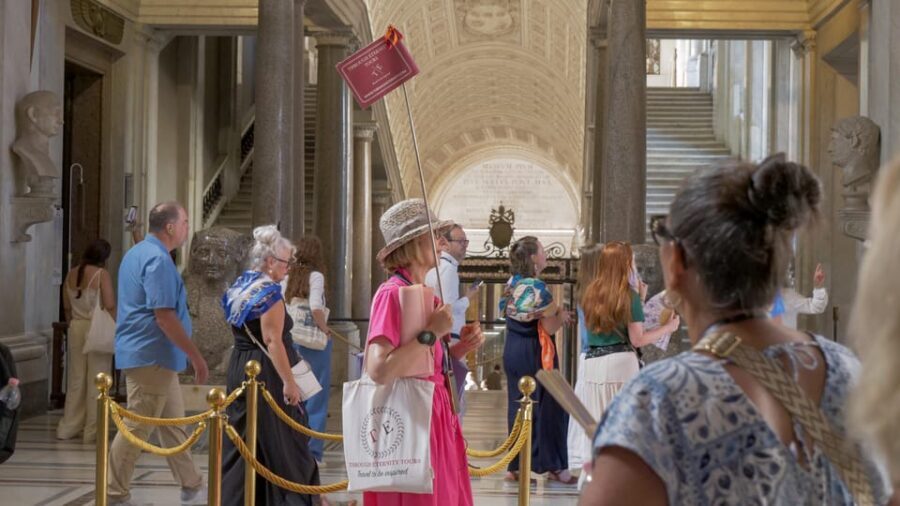
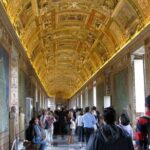
The route includes the Gallery of Tapestries and Gallery of Maps (tours of both areas are part of the Vatican Museums segment).
These rooms are easy to overlook if you only chase the loudest names. But they add something important: the Vatican wasn’t only a place for painters. It was a hub of power, storytelling, and intellectual work.
Tapestries show craftsmanship and visual theater. Maps show the Papal worldview and the Renaissance hunger for accurate knowledge. In a few focused moments with an expert, these spaces help you understand why the ceiling in the Sistine Chapel isn’t just religious art—it’s also an argument about order, meaning, and authority.
Raphael Rooms: frescoes that make the Renaissance feel logical
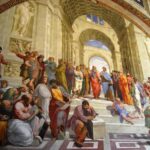
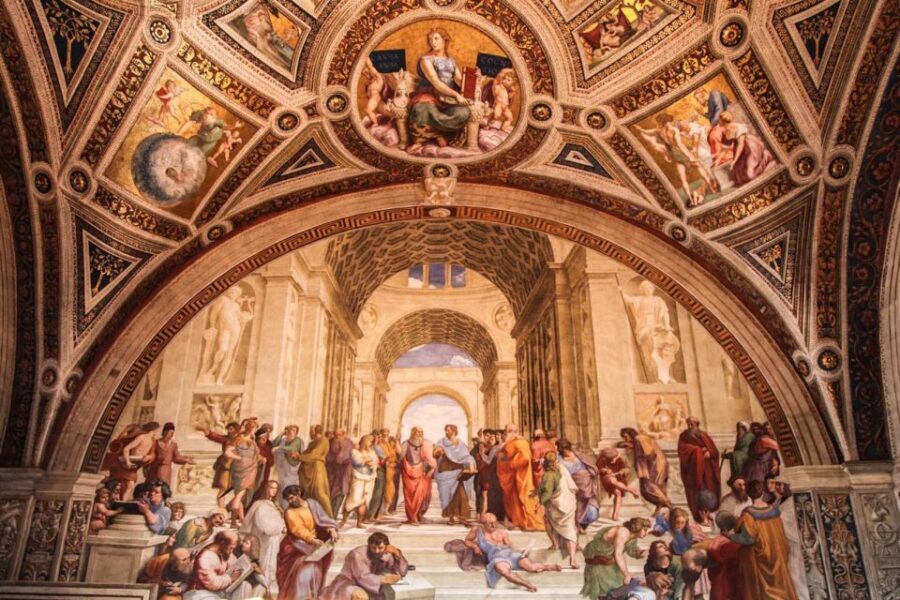
Next comes Raphael Rooms, guided. These frescoes don’t work well as a quick walkthrough because they’re built like sequences. If you know what to look for—figures, themes, symbolic choices—you feel the program’s logic.
Your guide’s job here is to help you connect the Renaissance story to what’s painted. When it clicks, you stop thinking of Raphael Rooms as rooms full of paintings and start feeling them as a curated worldview made visual.
If you love art history, this is one of those stops where a good explanation turns an overwhelming place into something you can actually follow.
Sistine Chapel: how the ceiling’s figures and themes come into focus
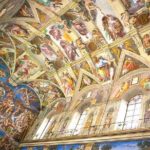
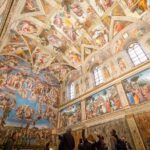
The tour includes guided time in the Sistine Chapel (listed at about 20 minutes). That time is short compared to the scale of what you’re seeing, but it’s intentional. In the Sistine Chapel, the goal is not to read every inch like a textbook. It’s to know what you’re looking at so the experience sticks.
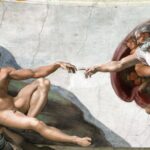
The tour approach is heavily theme-based, including key figures painted on the ceiling and the Last Judgment. The highlights specifically call out Jonah, Adam, Eve, Noah, and thousands of others. The point is that Michelangelo isn’t painting separate scenes for decoration—he’s constructing a theological and moral message.
Your guide also frames the frescoes in how they changed the way people look at the world. That’s a big claim, but it matches what you feel when you finally understand the “why” behind the poses and symbolism.
Practical reality: the Sistine Chapel can feel crowded. Having a guide helps you get the best vantage points and avoid spending your limited time craning randomly.
St. Peter’s Basilica finale: Pietà, relics, and Bernini’s canopy
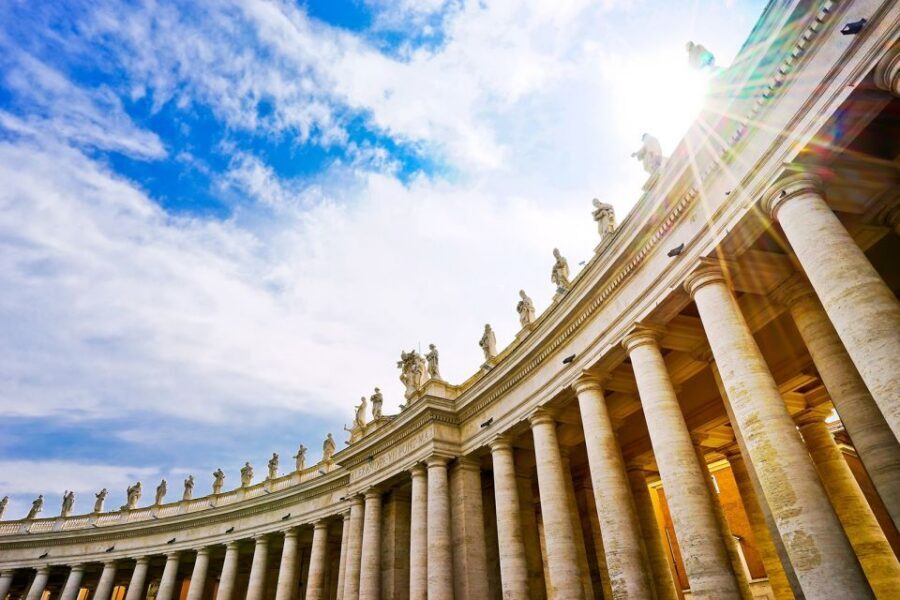
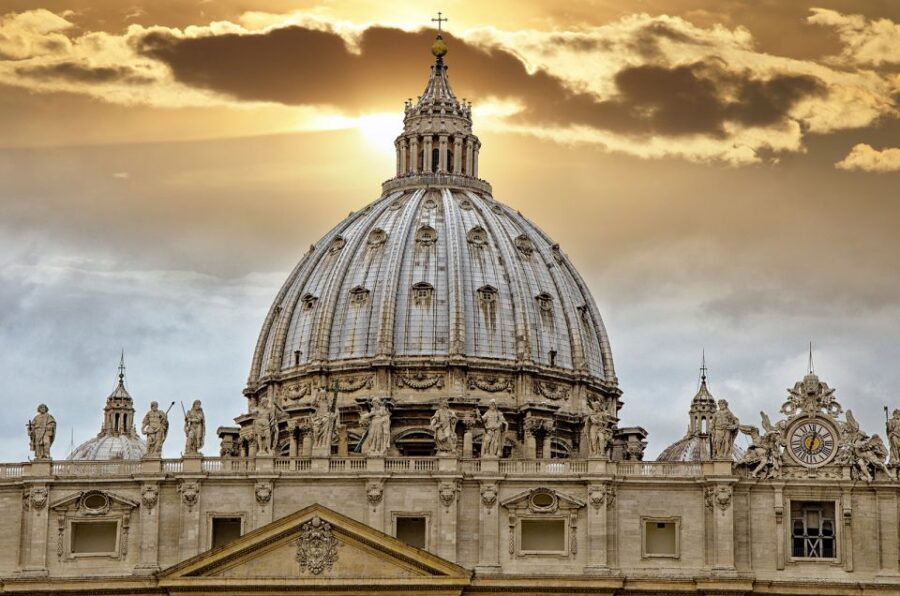
Your tour ends in St. Peter’s Basilica with guided time (about 1 hour). The Vatican’s museums are art history in daylight. St. Peter’s shifts into something more emotional, and the atmosphere changes fast once you’re inside.
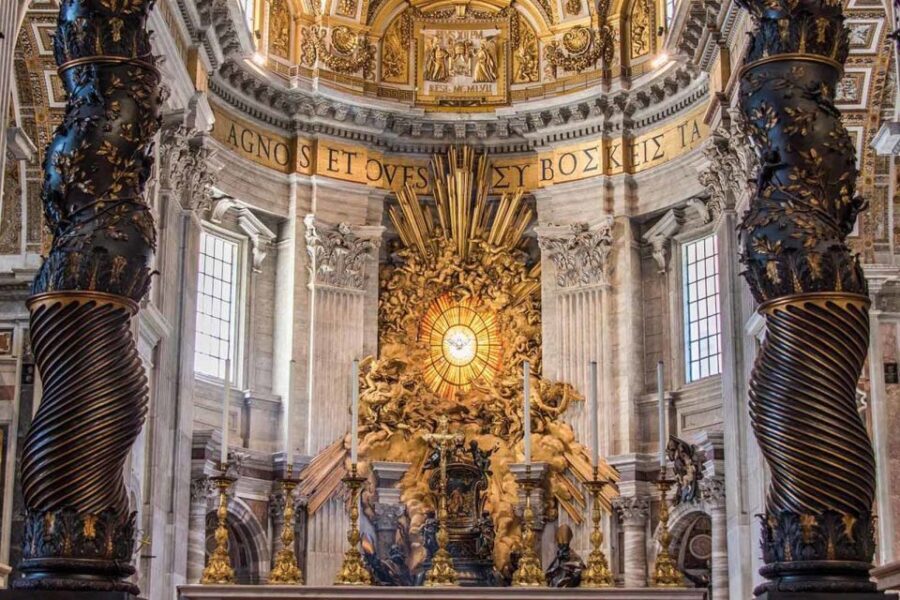
This guided portion includes key moments like Michelangelo’s Pietà and Bernini’s majestic canopy above the altar. Seeing these in person after learning what they represent makes the experience feel more complete than a museum-only visit.
There’s also a spiritual and historical layer: along the way, your guide will point out collections of relics and religious tokens that have accumulated at the site over nearly 2,000 years at the tomb of St. Peter. Even if you’re not visiting for religious reasons, that kind of long timeline adds weight.
And yes, the tour includes fast-track entrance to St. Peter’s, which is a smart use of money when you’re trying to avoid long bottlenecks.
Timing, walking, and dress rules that can affect your day
This experience runs for about 5 hours. That’s long enough to require real stamina, but short enough that you’ll still have energy for dinner after.
What I’d plan around:
- Comfortable shoes (you’ll be walking on steps and staircases)
- Water
- Dress code rules: no shorts, no sleeveless shirts, and knees/shoulders must be covered to enter places of worship
What you can’t bring includes large bags, tripods, and large umbrellas. Plan to travel light, because anything oversized may have to go to the coat check.
Security and entry rules matter too. Each person needs a valid passport or government issued photo ID that matches the name on the booking.
Price and value: what $568 gets you (and what it doesn’t)
The price can feel steep until you break down where it pays off.
You’re paying for:
- Expert, English-speaking guidance (plus Italian is also listed)
- Skip-the-lines access and a fast-track approach at St. Peter’s
- Coverage of major highlights across museums and basilica, with guided time where it’s most useful
- All fees and taxes included
You’re not paying for:
- Transportation to and from the meeting and end point
- Food and beverages
So the real question is: are you the type of traveler who hates waiting and wants meaning, not just names? If yes, this price starts to make sense. If you’re traveling on a tight schedule and don’t want to piece together multiple tickets and separate guides for museums vs. basilica, the package reduces friction.
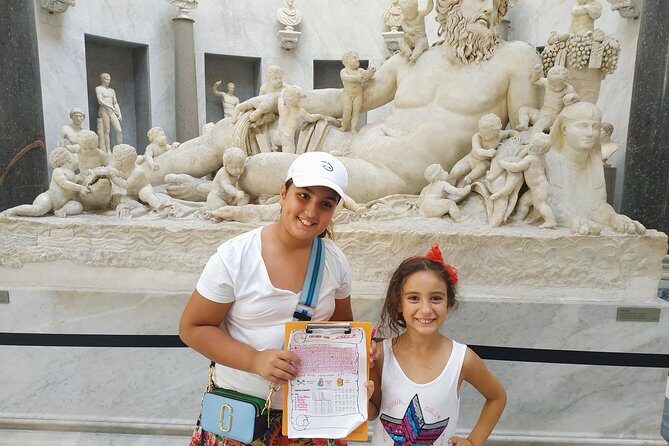
For couples or families, private can be easier to justify because you get a better pace and fewer compromises. For solo travelers, it can still be worth it if you want a guided “storyline” and you’re willing to pay to get through the crowds efficiently.
Who this tour fits best
This is a strong choice if you:
- Want the Vatican Museums + Sistine Chapel + Raphael Rooms + St. Peter’s in one guided flow
- Care about understanding the art through Renaissance context
- Prefer a private group pace (ask questions, pause when something grabs you)
- Want a plan built around famous highlights like Michelangelo’s and Raphael’s major contributions
It may be less ideal if you:
- Have trouble with walking steps and staircases
- Are hoping for a long, slow, fully unstructured museum roam (this tour is guided and time-focused)
Should you book the Vatican Private VIP Experience Tour?
I’d book it if you want to leave the Vatican feeling like you understood what you saw, not just that you managed to see it. The combination of skip-the-lines, a private expert guide, and a route that ties sculpture, paintings, ceiling symbolism, and St. Peter’s together is the key reason it’s memorable.
I’d skip it if you’re looking for a self-guided budget day or you’re easily overwhelmed by walking and strict dress rules. In that case, you might prefer a shorter or more flexible option.
If you do book, make it easy on yourself: cover up properly, bring water, travel light for security, and wear shoes built for the long route. Then you can focus on the real job—stopping, looking, and finally understanding why everyone goes quiet in the Sistine Chapel.
FAQ
How long is the Vatican private VIP experience tour?
The tour duration is 5 hours, with starting times available based on availability.
Is this tour private?
Yes. It’s listed as a private group experience.
What languages is the guide available in?
The tour includes a live guide in English and Italian.
Do I get skip-the-line entry?
Yes. It includes skip-the-lines access, plus fast-track entrance to St. Peter’s.
What ID do I need for entry?
Each traveler must present a valid passport or government issued photo ID that matches the name used during booking for successful entry to the Vatican Museums.
What should I wear, and what’s not allowed?
You’ll need knees and shoulders covered for places of worship, and shorts and sleeveless shirts are not allowed. Large bags, tripods, and large umbrellas can’t be brought into the museums.
Is the tour wheelchair accessible?
Yes. The experience is listed as wheelchair accessible.
Can I cancel, and is there a pay-later option?
Yes. You can cancel up to 24 hours in advance for a full refund, and you can reserve now & pay later.
You Might Also Enjoy
More Tour Reviews in Rome
- Skip-the-Line Group Tour of the Vatican, Sistine Chapel & St. Peter’s Basilica
★ 4.5 · 12,779 reviews