REVIEW · ROME
Rome: Early Bird Vatican Museums Small Group Tour (MAX 6 People)
Book on Viator →Operated by Eyes of Rome · Bookable on Viator
The Vatican feels manageable at first access. I love the first-access 8:00 AM entry with skip-the-line tickets, and I like that it’s a max 6 group so you’re not just a number. The trade-off: even early, you’ll deal with crowds inside and the Vatican can run hot, so bring water and good shoes.
This guided Rome morning runs about 3 hours 30 minutes in English, with a mobile ticket. You meet at 7:30 am at Giuly’s Café in central Rome and finish in St. Peter’s Square—right where your next walk (or taxi plan) becomes easy.
One important heads-up: you need to follow the dress code (no shorts or sleeveless tops; knees and shoulders covered), or entry can get refused. If you’re prepared, this tour is a smart way to see a lot without losing your day to lines.
In This Review
- Key things worth knowing before you go
- Entering The Vatican Early: Why This Small-Group Format Matters
- The 7:30 AM Start at Giuly’s Café: How the Day Flows
- Vatican Museums at First Access: Courtyard of the Pigna to Pomodoro’s Sphere
- Gallery of Maps, Tapestries, and Candelabra: Three Stops That Give the Vatican Context
- Gallery of Geographic Maps
- Gallery of Tapestries
- Gallery of Candelabra
- Sistine Chapel: How to See Michelangelo Without Losing Your Breath
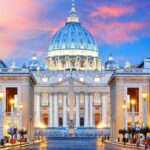
- St. Peter’s Basilica, Pietà, and the Baldachin: Big Art Up Close
- St. Peter’s Square Finale: What You See After You Step Outside
- Dress Code, Heat, and Walking: Small Stuff That Can Ruin Your Morning
- Price and Logistics: Is $179.81 Actually Good Value?
- Should You Book This Vatican Early-Bird Tour?
- FAQ
- What time does the tour start?
- Where do we meet, and where does the tour end?
- How many people are in the group?
- Is the tour in English?
- What’s included in the price?
- What is not included?
- Are there dress code requirements?
- Is free cancellation available?
Key things worth knowing before you go
- First access at 8:00 AM: fewer crowd crushes right when the museums open
- Max 6 group size: faster navigation and more time to ask questions
- Skip-the-line entry tickets: saves your energy for art and stops that matter
- A guided run through major highlights: from the Vatican Museums to Sistine Chapel, then St. Peter’s Basilica
- St. Peter’s Square at the end: you exit into the most famous outdoor space in the complex
Entering The Vatican Early: Why This Small-Group Format Matters
I get it. The Vatican is one of those places where hype can feel like a lie. It is huge. It is packed. And even when you plan well, you can still waste time figuring out which hallway leads where.
That’s why the core value here isn’t just the famous art—it’s the timing plus control. With first access and skip-the-line entry, you get inside while the building is still in its early rhythm. With a small group (max 6), the guide can keep everyone together without stopping every 30 seconds. You feel guided, not dragged.
Another underrated benefit: the group stays tight enough that you’re not competing for the guide’s attention. You can actually ask why something matters—like what you’re supposed to look for in the Sistine Chapel ceiling, or why the Pietà hits so hard even when you’re standing in a sea of people.
The tour is also built around a morning pace. You finish in St. Peter’s Square while the rest of the day is still young, which is great if you want to keep exploring Rome afterward.
Other Vatican Museums tours we've reviewed at the Vatican & Rome

The 7:30 AM Start at Giuly’s Café: How the Day Flows
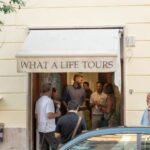
This experience begins at 7:30 am at Giuly’s Café, Via Santamaura 3, 00192 Roma RM. The tour ends in St. Peter’s Square (Piazza San Pietro), so you don’t spend extra time backtracking.
That starting time matters. Even with skip-the-line entry, the Vatican has security and entry checks. Earlier access means you’re dealing with these steps while the crowd energy is still lower. It’s the difference between rushing through corridors and actually looking at what you’re passing.
Also note the tour is offered in English, and you’ll have a mobile ticket. That usually means less fuss on your side (no paper ticket to lose). It’s also convenient for people who like to keep everything on their phone.
One more practical note: there’s no hotel transfer included. If you’re staying near public transportation, you’ll likely find it easy to get there in time. Otherwise, budget a bit for getting across early-morning Rome.
Vatican Museums at First Access: Courtyard of the Pigna to Pomodoro’s Sphere
The opening stretch is where this tour earns its keep. You step into the Vatican Museums with early, first-access timing, then move through selected highlights rather than wandering.
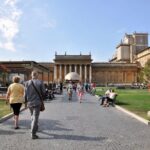
Your first museum stop is the Courtyard of the Pigna, created from the 16th-century area of the Belvedere. This is the kind of space that helps you understand the Vatican as a power-center of collecting and building. It’s not just a museum layout—it feels like a stage where artifacts, architecture, and influence all show up together.
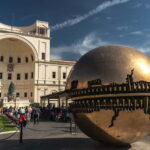
Then you move to a standout modern counterpoint: Sphere within a Sphere by Arnaldo Pomodoro. The sculpture is a large bronze sphere with a fractured, textured surface, and inside it sits a smaller sphere. The light-and-shadow effect is the whole point here. Up close, it shifts from cool to almost eerie—like you’re looking at a physical metaphor for layers of meaning.
This mix—ancient courtyard energy, then a contemporary bronze idea—makes the museum feel less like a checklist. You start the day thinking visually and conceptually, not just “ticket in, photos out.”
Expect about 1 hour 10 minutes total in the Vatican Museums at the start. The pace is brisk, but it’s not chaotic. The idea is to get you into the right rooms early, before the crowd tide rises.
Gallery of Maps, Tapestries, and Candelabra: Three Stops That Give the Vatican Context
Instead of trying to cover everything, the tour hits three specialized galleries that explain how the Vatican thinks: through geography, storytelling textiles, and classical display.
Gallery of Geographic Maps
In the Gallery of Geographic Maps, you get a long view of Italy’s past. The gallery features topographical maps created in the 16th century under Pope Gregory XIII, spanning about 120 meters. Even if you’re not a cartography nerd (I’m not), this stop helps you see how power and knowledge were linked. These maps weren’t just for decoration. They were a statement about what was known, what mattered, and how the world was organized.
Other early-access Vatican tours at the Vatican & Rome
Gallery of Tapestries
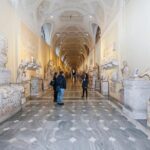
Next comes the Gallery of Tapestries, with 15th and 16th-century works woven from biblical and historical narratives. The designs were inspired by Raphael’s school, which gives the room a Renaissance backbone. Tapestries here feel like storytelling you can walk past—scenes that read differently when you’re standing close versus viewing from far away.
Gallery of Candelabra
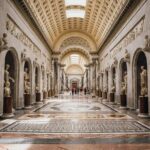
Then the Gallery of the Candelabra connects Greek and Roman sculpture with dramatic museum architecture. It’s named for the grand marble candelabra and arranged so the candelabras break the gallery into thematic sections. The gallery setup dates to the late 18th century, which means you’re not only looking at antiquity—you’re also seeing how later eras curated antiquity.
A quick note on timing: these three galleries are short stops (about 5 minutes each as listed). That can feel like a “blink and you miss it” experience if you want slow art immersion. But with early access and a guided plan, it’s a good trade: you learn what you’re seeing and you still get to the bigger emotional hits next.
Sistine Chapel: How to See Michelangelo Without Losing Your Breath
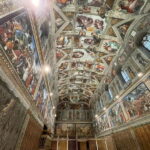
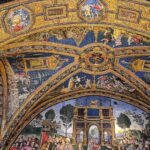
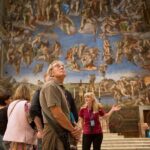
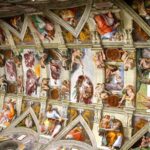
The Sistine Chapel is where expectations get loud. The ceiling frescoes by Michelangelo are the headline, but the chapel also matters as a space where major Church ceremonies happen, including conclaves.
The chapel gets its name from Pope Sixtus IV della Rovere, who restored the old Cappella Magna between 1477 and 1480. That context helps you understand why this room has always been treated as more than art storage. It’s a setting for authority, ritual, and decision-making.
Your time here is listed as 30 minutes with admission included. That’s not enough to study everything like you’re preparing for an exam, but it’s plenty to (1) understand what you’re looking at and (2) have time to actually get your eyes onto the major scenes.
One practical reality: the Sistine Chapel can feel intense—crowded and sometimes noisy. If you’ve ever stood in a place where people are talking over you, you’ll know what I mean. The solution isn’t avoidance; it’s preparation. A good guide sets expectations before you reach the ceiling so you don’t spend your first minutes confused or rushing.
Also, some guides have built in short “breathing room” moments inside the chapel (for example, a brief pause has been described around 10 minutes in past experiences). If that happens on your date, take it seriously. This is your chance to look up without thinking about the exit.
St. Peter’s Basilica, Pietà, and the Baldachin: Big Art Up Close
After the museum portion, you move to St. Peter’s Basilica. You’ll get about 45 minutes, with admission ticket free as listed.
This part of the tour is a major reason to choose a guided experience. St. Peter’s Basilica is so visually overwhelming that without guidance, you can end up walking past the exact objects you came for.
The first emotional target is Michelangelo’s Pietà (1498–1499). It’s carved in Carrara marble, and it’s housed in the basilica in the first chapel on the right as you enter. The sculpture was commissioned for Cardinal Jean de Bilhères and originally connected to his funeral monument, but it was moved to its current location in the 18th century. One detail worth knowing: it’s the only piece by Michelangelo that he signed.
Then you get the Baldachin—Bernini’s bronze canopy over the high altar. It’s designed by Gian Lorenzo Bernini and is listed as towering over 90 feet tall. Even in photos, you can feel its scale. In person, it’s almost loud. It commands attention without needing to explain itself.
You’ll also stop at important points like the venerable tombs connected with Saint John Paul II (Karol Wojtyła) as included in the experience details.
St. Peter’s Square Finale: What You See After You Step Outside
The tour finishes in St. Peter’s Square, which is listed as 15 minutes and has admission ticket free.
This space was laid out by Gian Lorenzo Bernini during the pontificates of Alexander VII and Clement IX, and it’s built around an elliptical plan. The defining feature: 284 Doric columns, arranged four rows deep, creating a sense of enclosure. The square is about 196 meters wide and 148 meters long.
Why end here? Because it gives you an instant sense of scale. Inside the basilica, you’re wrapped in architecture. Outside, you can step back and see the entire composition as a system.
It’s also a practical payoff. You’re in the right location to keep exploring—either by heading deeper into the Vatican area on your own or by linking up with the rest of central Rome.
Dress Code, Heat, and Walking: Small Stuff That Can Ruin Your Morning
The Vatican is strict about clothing. For entry, you need knees and shoulders covered for both men and women. That means no shorts and no sleeveless tops. If you don’t follow the rule, you can risk being refused entry.
This is the kind of rule that can wreck your whole day if you treat it casually. Check your outfit the night before, not while you’re outside the gate.
Next: walking. The tour involves a moderate amount of walking, so comfortable shoes aren’t optional. If your feet are unhappy, you’ll feel it in every stop—especially when you’re moving through the museum corridors and then into the basilica.
Then there’s the comfort issue people don’t always plan for: the Vatican Museums can lack air conditioning in many rooms, so it can feel hot even in the morning. Bring water and take it seriously.
Finally: Jubilee-related changes. The tour data notes that due to the Jubilee, some monuments may be under restoration or closed due to extraordinary celebrations. Translation: on certain dates, access can change, and you’ll need to roll with messages from the tour team.
Price and Logistics: Is $179.81 Actually Good Value?
At $179.81 per person, this isn’t a budget play. But value isn’t only about the lowest price—it’s about buying back your time and reducing stress at a high-friction site.
Here’s what you’re paying for:
- Guided experience (not just a self-paced visit)
- First access at 8:00 AM (the big crowd advantage)
- Skip-the-line entry tickets (less time trapped in queue systems)
- Small group cap at 6, which improves the flow and attention
- Admission included for the Vatican Museums and Sistine Chapel, plus St. Peter’s Basilica entry free as listed
If you’re the type who hates standing around, the early access can be worth a lot more than you expect. One trade-off is that you still might find it crowded inside. But the difference is you’re crowding less time, and you’re crowding with context.
Also, there’s no transport included. That doesn’t make the tour worse, but it does mean you’ll want to plan your own morning commute smartly so you’re not rushing.
Should You Book This Vatican Early-Bird Tour?
Book it if you want a high-impact Vatican morning with real guidance, not just walking and guessing. It’s especially good for first-timers who want to understand what they’re seeing—from Pomodoro’s Sphere within a Sphere to the Pietà—and still get out without losing half the day to lines.
I’d skip it or rethink if:
- You’re hoping for a nearly empty Vatican experience. Even early, you’ll be in a major landmark on a major schedule.
- You’re very sensitive to heat and crowded indoor conditions. Bring water, dress right, and set expectations.
- Your date is during Jubilee events with last-minute closures. The tour warns that access can change, so keep a bit of flexibility.
If you like structure, you get it here: early entry, tight group size, and a route designed to hit the moments that most people actually remember. For many visitors, that’s exactly what you want from a Vatican trip.
FAQ
What time does the tour start?
The tour starts at 7:30 AM.
Where do we meet, and where does the tour end?
You meet at Giuly’s Café (Via Santamaura, 3, 00192 Roma RM, Italy) and the tour ends in St. Peter’s Square (Piazza San Pietro, 00120).
How many people are in the group?
This is a small-group tour with a maximum of 6 travelers.
Is the tour in English?
Yes, the tour is offered in English.
What’s included in the price?
The price includes a guided tour, first access, the Vatican Museums and Sistine Chapel admission tickets, and St. Peter’s Basilica admission (free). It also uses a mobile ticket.
What is not included?
Transfers from/to your hotel are not included.
Are there dress code requirements?
Yes. You must have knees and shoulders covered. No shorts or sleeveless tops are allowed, and you may be refused entry if you don’t comply.
Is free cancellation available?
Yes. You can cancel up to 24 hours in advance for a full refund. If you cancel less than 24 hours before the start time, the amount paid is not refunded.