REVIEW · ROME
Vaticaans Museum en Sixtijnse Kapel in Nederlands
Book on Viator →Operated by Gids in Rome van Wouter Vercruysse · Bookable on Viator
Skip the line, then slow down.
This 3-hour Vatican experience is built around priority access and a Dutch-speaking guide, so you spend less time waiting and more time understanding what you’re seeing in the Vatican Museums and the Sistine Chapel. One note: some text about catacombs shows up in the background material, but the visit itself is focused on the Vatican Museums, the Sistine Chapel, and St. Peter’s Basilica.
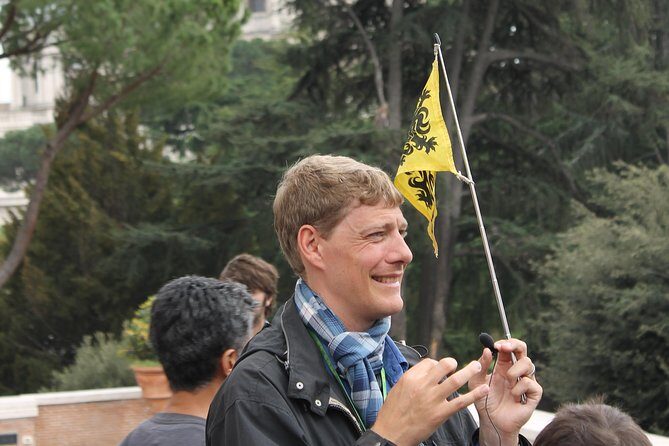
I especially like two things: first, the Dutch guide approach. Guides such as Marly, Irene, Evi, Frank, and Moniek are mentioned for keeping the story clear and engaging, even for younger visitors. Second, I like that you get headsets, which help you follow the guide as the rooms get louder and more crowded.
One possible drawback to consider is pace. A few reviews mention the museum tour can feel fast, and one person noted the audio was not always easy to hear through the headset. Also, Sistine Chapel time is short (about 20 minutes), so you’ll want to look with purpose rather than expect lots of wandering.
In This Review
- Key highlights to look for
- A tight 3-hour plan inside the Vatican (and why it works)
- Vatican Museums in Dutch with priority entry: the “what am I actually seeing?” part
- Entering the Sistine Chapel in silence: timing, context, and Michelangelo
- St. Peter’s Basilica afterward: priority access and immediate payoff
- The guide makes or breaks it: what the best performances have in common
- Headsets and group size: the practical comfort layer
- Price and value: is $130.62 a good deal?
- Who this tour suits best (and who should pick something else)
- Should you book this Vatican Dutch Museums and Sistine Chapel tour?
Key highlights to look for
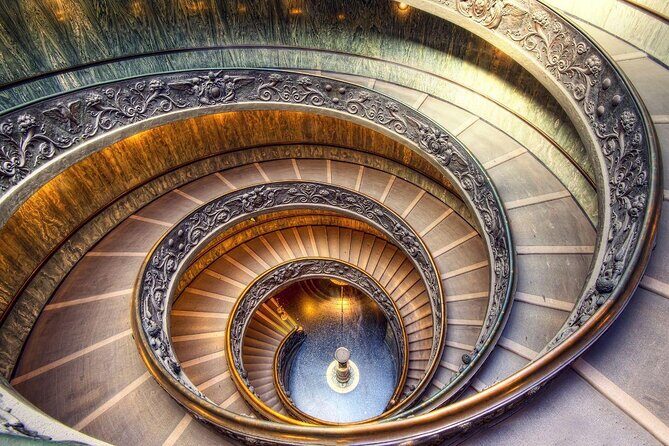
- Skip-the-line Vatican Museum access with a Dutch-speaking guide
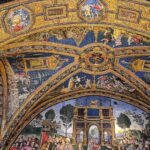
- Sistine Chapel in silence with context about what you’re looking at
- St. Peter’s Basilica priority access without extra line pressure
- Headsets to keep the story clear inside busy rooms
- Small group (max 15), which tends to make the visit feel smoother
- Guides like Marly, Irene, Evi, Frank, and Moniek are repeatedly called out for narration and timing
A tight 3-hour plan inside the Vatican (and why it works)
This tour is timed for real-world Vatican crowds: about 3 hours total. It starts at 2:00 pm at Caffè Vaticano, Viale Vaticano 100 (00192 Roma), then brings you back to the same meeting point when it’s done. With a maximum of 15 travelers, the group stays small enough for the guide to keep control of the flow.
Why this matters: the Vatican can overwhelm you fast. When you’re standing in long lines, you stop learning and just start surviving. Here, the tour is structured to keep you moving through the highlights without turning the visit into a queue marathon.
Also, the language matters. This is a Dutch tour. If Dutch is your comfort zone, you’ll pick up more meaning from art descriptions and the guide’s explanations, instead of mentally translating while you’re trying to look up at ceilings.
Other Vatican Museums tours we've reviewed at the Vatican & Rome

Vatican Museums in Dutch with priority entry: the “what am I actually seeing?” part
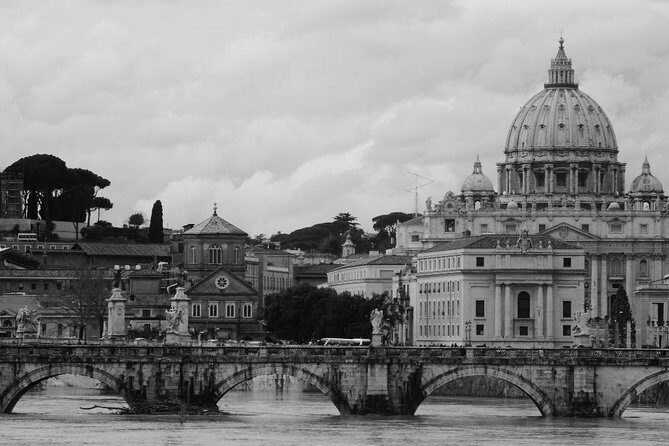
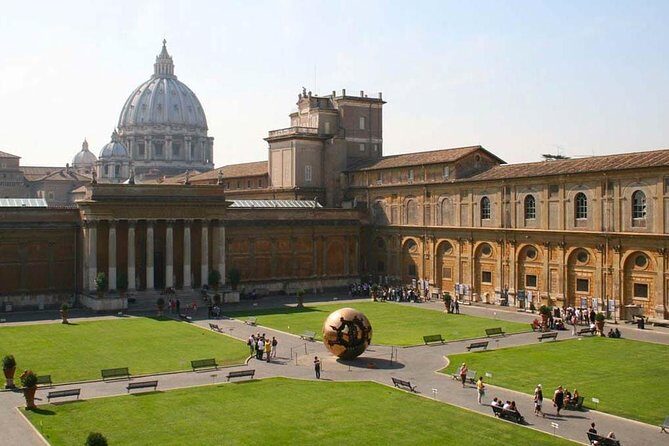
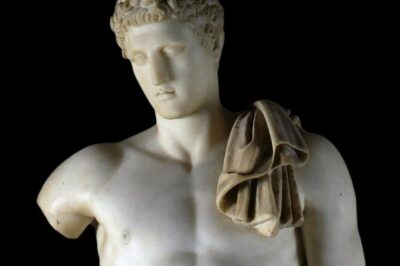
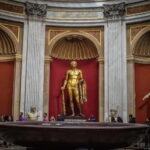
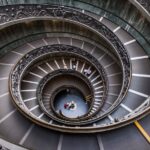
You spend most of your time in the Vatican Museums, with the ticket included and a Dutch-speaking guide leading the way. The aim is not to show you every room. It’s to give you a smart selection, so you understand the big themes and don’t walk away feeling like you saw nothing but marble hallways.
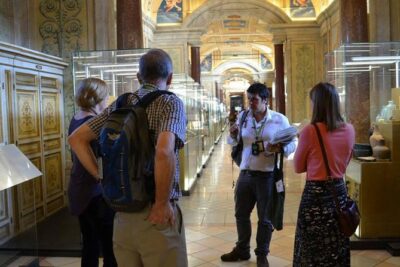
One of the most repeated strengths in feedback is how guides handle the crowd inside the museum. People specifically highlight that the group could move smoothly past lines and get going right away. That’s the value of skip-the-line: it turns a huge, chaotic building into something you can actually navigate.
What you’re looking for during the museum portion is guidance-by-story. Multiple guides are described as using humor, involving younger participants, and explaining details you might miss if you’re just drifting. That matters because the Vatican Museums reward attention. With a guide, you’re not just seeing “old stuff.” You’re hearing what makes each object or area significant, and that changes how you experience it.
A practical caution: a few comments point out that the museum portion can feel quick. If you personally love slow gazing and you’re the kind of person who likes to re-read plaques and take extra time, this may feel like you’re moving faster than you want. Still, if your goal is to see the core highlights efficiently, the time management is a big plus.
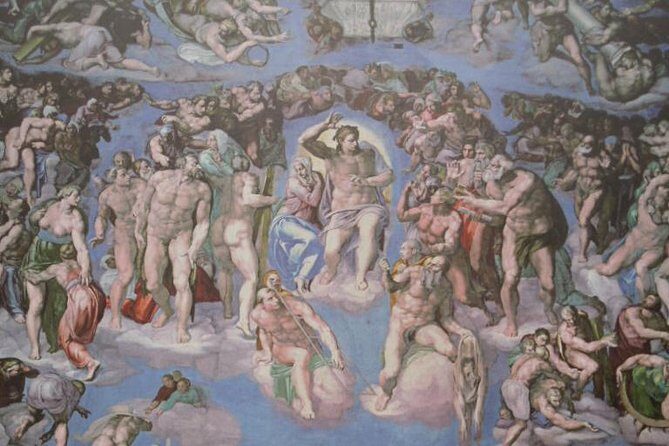
Entering the Sistine Chapel in silence: timing, context, and Michelangelo
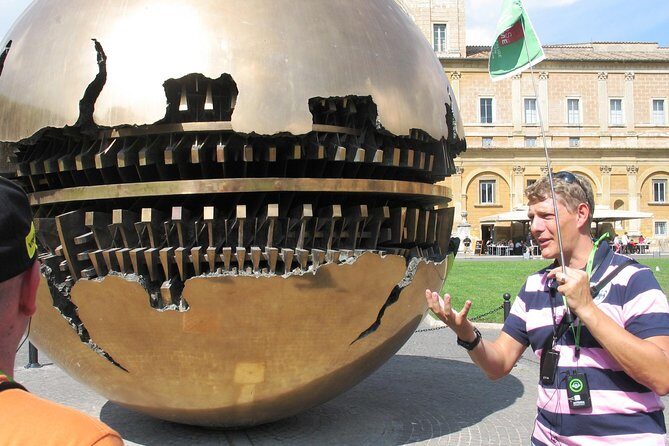
Then you shift into the Sistine Chapel, where you enter under a strict “no talking” vibe. The tour sets the tone: you go in in silence, and the guide frames what you’ll see before you settle into the space.
You also get pointed context. The tour material mentions that on March 13, 2013, Pope Francesco was elected, and the guide connects that moment to the chapel experience. That kind of grounding is useful because the Sistine Chapel can feel like pure artwork-only (which it is), but knowing the surrounding context helps you “place” what you’re looking at.
About time: you’ll have roughly 20 minutes for this part. That’s enough to look up, notice major details, and absorb the guide’s explanation, but not enough to treat it like a slow museum stop. I’d think of this as a focused viewing window.
What I like most about this approach is that the guide’s job is to make Michelangelo feel immediate. Descriptions in feedback point out that guides explain things in a way that keeps people engaged, including families. One person even described the explanation as feeling like Michelangelo is right there with you, which is exactly the effect you want in a place where you can otherwise feel dwarfed by scale.
St. Peter’s Basilica afterward: priority access and immediate payoff
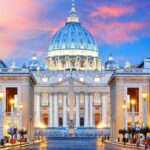
St. Peter’s Basilica is part of the experience, and the tour includes skip-the-line access there as well. Even if you’ve visited churches before, this is one of those places where you’re better off with guidance than with guesswork.
The payoff of priority access is simple: you reduce the “stand and wait” time. That means you can spend more of your mental energy actually looking at what’s in front of you when you finally get inside.
Also, because this basilica visit happens after the museum and chapel portions, it works as a kind of reset. The day’s flow goes from curated museum highlights into one of the most famous art spaces in the world, and then into a grand religious centerpiece. If you like a tour with clear pacing (instead of random roaming), that sequence helps you keep your sense of progress.
The guide makes or breaks it: what the best performances have in common
This tour leans hard on its guides, and it shows. Names that come up repeatedly include Marly, Irene, Evi, Frank, and Moniek. People describe them as able to captivate different ages, keep the tone light, and make the stories feel organized rather than like a random lecture.
Here’s what I think the top-performing guides do well, based on the recurring themes:
- They pick the most important details to explain, so you don’t get lost in everything
- They help you follow what you’re seeing in real time
- They keep a calm rhythm, even when the environment is chaotic
- They use the headset system effectively so you stay connected to the narration
One person noted that a guide handled the hustle without getting flustered, staying relaxed in the middle of crowds. Another praised a guide for being interactive with younger participants. These are small things, but they add up. In a place where your attention constantly pulls in different directions, a guide who can steer the group matters.
On the flip side, there’s one notable weakness: headset audibility. At least one review complains that the guide was poorly audible through the ears. That’s not something you can fully control as a guest, but you can help yourself by keeping the headset positioned correctly and alerting the staff if the audio isn’t clear.
Other Sistine Chapel tours at the Vatican & Rome

Headsets and group size: the practical comfort layer
Let’s talk equipment and pacing, because they affect your actual experience.
Headsets are included, which is a big deal in the Vatican. The rooms can be loud, and walking pace changes throughout the tour. Without headsets, you’d spend too much time leaning in and guessing what the guide said.
Still, audio quality can vary. One guest comment points out the narration was not clear enough through the headset. If you’re sensitive to sound or you’ve had headset issues before, it’s smart to check that you’re comfortable with the volume and positioning once the tour starts.
Then there’s the group size: up to 15 travelers. That’s small enough for smoother movement and clearer guidance. It also tends to mean you’ll spend less time stuck behind people who aren’t sure where to stand or what to do next.
Price and value: is $130.62 a good deal?
The price shown here is $130.62 per person, booked on average about 40 days in advance, and the tour runs about 3 hours. On paper, that can sound steep, until you match it to what’s included.
You get:
- Skip-the-line access for the Vatican Museums
- Skip-the-line access for St. Peter’s Basilica
- A professional Dutch-speaking guide
- Headsets
- Admission tickets for parts of the visit
So the value isn’t just “you bought a ticket.” You bought time savings plus guided interpretation plus equipment that makes the guide easier to hear. In the Vatican, time is money, but it’s also attention. If the tour helps you understand what you’re seeing instead of just collecting photos, it quickly feels worth it.
Who gets the best value?
- You want a structured visit with a clear highlight path
- You prefer Dutch narration and would rather not fight language barriers
- You’re okay with a set schedule and short viewing windows (especially in the Sistine Chapel)
- You like tours where guides tell stories rather than just pointing directions
Who might hesitate?
- You prefer slow, unstructured museum time
- You’re very sensitive to audio clarity and headset discomfort
- You’re the type who wants to spend long periods in the Sistine Chapel without a timed stop (this tour gives about 20 minutes)
Who this tour suits best (and who should pick something else)
This is a strong choice for families and mixed-age groups. Feedback includes examples of guides engaging children, with one review praising how the guide involved younger participants. If you have kids around school age, the “story with moments” style can help keep attention where it needs to be.
It’s also a good match if you’re doing a first Vatican visit and you want a compact plan that covers major icons: Vatican Museums, Sistine Chapel, and St. Peter’s Basilica.
If you’re already an art history buff who wants extremely detailed, room-by-room coverage, you might feel the time constraints. But if your goal is to leave the Vatican with understanding and not just a pile of images, this tour makes a lot of sense.
Should you book this Vatican Dutch Museums and Sistine Chapel tour?
I’d book it if you want:
- Dutch guidance that keeps the experience organized
- Skip-the-line help at both the museum and St. Peter’s Basilica
- A small group experience that still covers the big hits
- Headsets that make the narration easier to follow
I’d think twice if you want a slow, open-ended museum day or if you’ve previously had trouble hearing headset tours. In that case, you may feel rushed even with priority access.
If you’re comfortable with a structured schedule and you value clear explanations, this is a practical, high-impact way to experience the Vatican’s top landmarks in just a few hours.