REVIEW · ROME
Rome: Vatican Museums, Colosseum, Forum, and Palatine
Book on GetYourGuide →Operated by Explore Rome Tours · Bookable on GetYourGuide
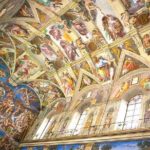
Ancient Rome and Vatican art, in one tight day. I like the fast-track entry approach that gets you past the normal ticket crush, and you also get the big-ticket artistic payoff: Sistine Chapel frescoes like Michelangelo’s Creation of Adam and The Last Judgment. It’s a smart way to connect the Renaissance with the Roman Catholic Church, then pivot straight into the brutal theater of ancient Rome.
The main drawback is timing pressure. Even with ticket-holder access, peak-season lines can still slow you down, and the Colosseum visit is timed (75 minutes), so you’ll need to move at a steady pace rather than wander forever.
This is built as a small group experience (limited to 8), so you should expect a more controlled flow between sights. Choose the Colosseum-only option if you want a shorter Roman history hit, or go for the combo if you’re ready for a longer day of art, faith, and empire.
In This Review
- Key things to know before you go
- Price and what you’re really paying for
- Getting in fast at the Vatican: how the day starts
- Vatican Museums + Sistine Chapel: art that explains religious power
- Raphael’s Rooms and the smaller stops you’ll actually remember
- Sistine Chapel timing and the day’s rhythm
- Colosseum entry: what timed access feels like
- What you won’t get
- Roman Forum and Palatine Hill: the “why it mattered” layer
- Your access window (important)
- Combo day vs. Colosseum-only: picking the right pace
- Option 1: Colosseum only (2.5–3 hours)
- Option 2: Combo ticket (up to a full day)
- How to decide
- Logistics you’ll feel on the ground (without ruining your day)
- Who this tour suits best
- Final verdict: should you book this Vatican + Colosseum day?
- FAQ
- How long does this experience take?
- Is there a tour guide during the visit?
- What’s included in the Colosseum-only option?
- What’s included in the combo option?
- Does this ticket help you avoid lines?
- What if the Sistine Chapel is closed?
- What are the main restrictions on what to bring or wear?
Key things to know before you go
- Priority access, not magic: You skip the normal ticket line, but peak-season delays can still happen.
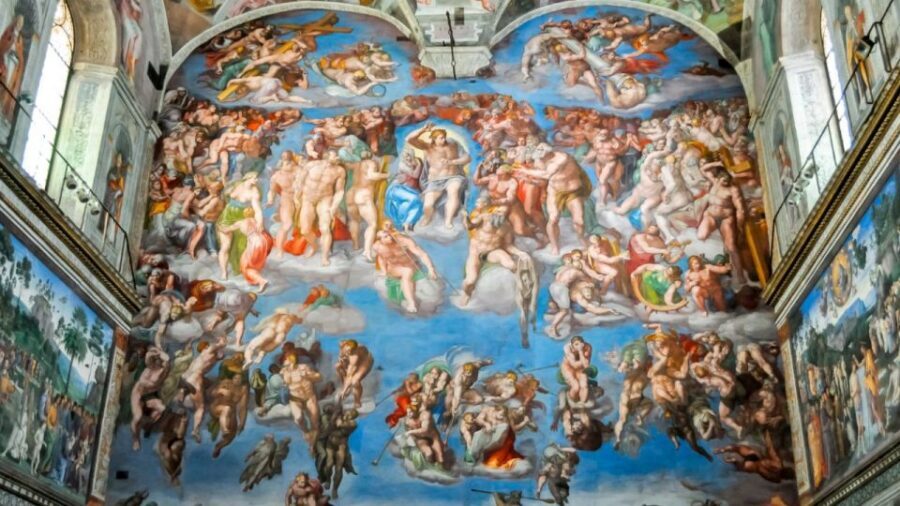
- Sistine Chapel must-see ceiling art: You’ll see Michelangelo’s Creation of Adam and The Last Judgment.
- Guided, but not a live guide: You get an electronic/printed guidebook, and there’s no tour guide or audio guide included.
- Colosseum is timed: Your Colosseum slot is 75 minutes, and you should plan to arrive ready to go.
- Forum + Palatine are the payoff views: Ruins plus panoramic overlooks give you context that the Colosseum alone can’t.
- Dress and rules matter: No flash photography, and shorts/sleeveless shirts/backpacks are not allowed.
Price and what you’re really paying for
The price is listed at $44.41 per person, and on paper that looks like a bargain for two world-famous sites. Here’s the honest way to think about value: you’re paying for tickets, skip-the-line entry, and a structured flow through Vatican Museums and/or the Colosseum complex.
The key trade-off is what’s not included. There’s no tour guide and no audio guide, so you don’t get a human storyteller walking you through every corner. Instead, you rely on an electronic or printed guidebook to interpret what you’re seeing. If you like reading signage and using a guide while you move, this works well. If you want a guide’s commentary to fill in context as you go, you may feel like something’s missing.
Also note that you’re not getting certain premium access areas. The information provided says no arena, no underground, and no attic, so you should calibrate expectations around what’s included versus what some other tours advertise.
Other Vatican Museums tours we've reviewed at the Vatican & Rome
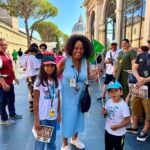
Getting in fast at the Vatican: how the day starts
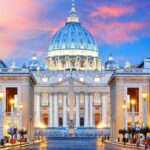
Your day begins at the Vatican Museums, and the big practical win is how you enter. Instead of lining up in the standard queue, you go to the ticket holders’ line and move ahead quickly.
That still doesn’t mean instant entry. In peak season, even the ticket-holder line can experience significant delays, and people who try to buy tickets on-site should expect to wait at least two hours. For you, the goal is simpler: buy less time back for yourself, especially if you’re also trying to fit the Colosseum into the same day.
Once inside, you’re free to explore at your own pace, using the included guidebook to stay oriented. This matters in the Vatican because it’s easy to get lost in a maze of rooms. A guidebook helps you connect themes—art styles, religious symbolism, and how power gets displayed—without you needing a live speaker.
Vatican Museums + Sistine Chapel: art that explains religious power
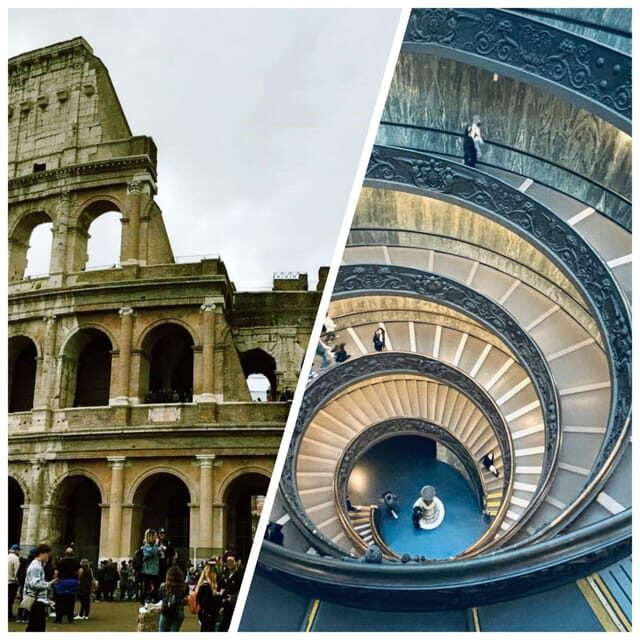
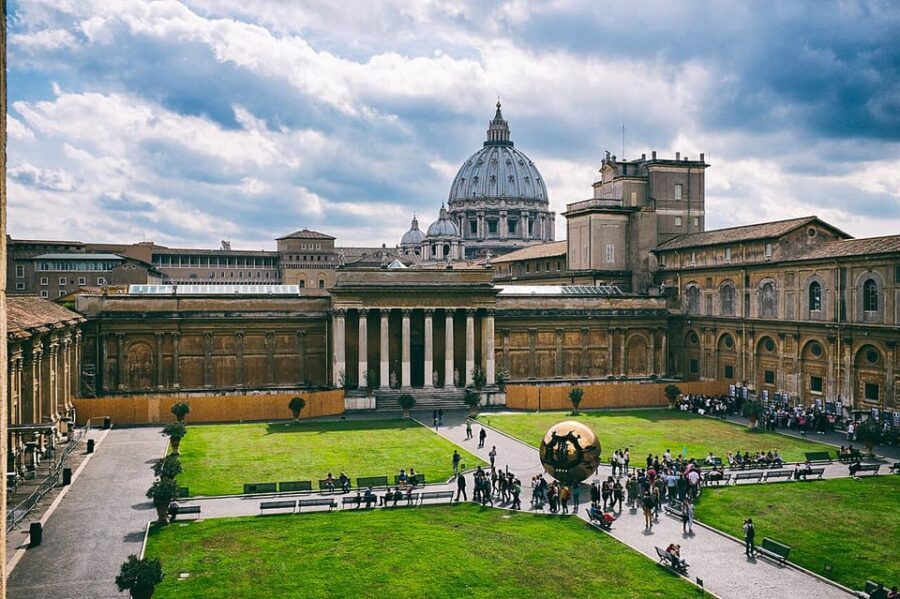
This is the part most first-time visitors remember for years. The Vatican Museums are not only a museum; they’re also a carefully arranged message about history, doctrine, and authority.
You’ll typically spend time on the big highlights, including:
- the Sistine Chapel
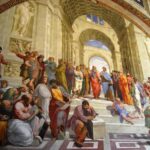
- Raphael’s Rooms
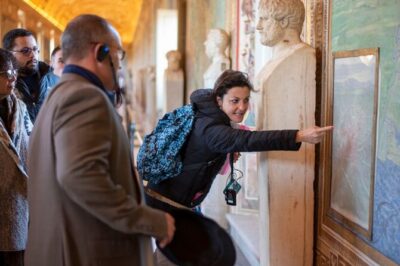
- the Gallery of Maps
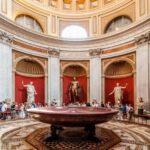
- the Cabinet of Masks
- the Collection of Modern and Contemporary Art
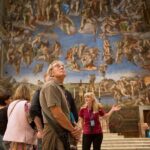
- Michelangelo’s key fresco scenes, including Creation of Adam and The Last Judgment
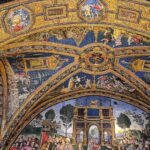
What I like about this setup is that it connects dots. Michelangelo’s work is not just beauty; it’s theology you can feel on your skin. The Creation of Adam is famous for obvious reasons, but what’s more interesting is seeing how that artistic moment fits into a larger program of religious storytelling. Then, The Last Judgment shifts the mood entirely—more judgment, more consequence—and it changes how you read the whole chapel experience.
Also, the Renaissance influence on the Roman Catholic Church isn’t just a vague concept here. The rooms and fresco cycles are arranged so you can see how art becomes persuasion. If you come in knowing you’ll learn something about how that influence shaped the Church, you’ll enjoy the visit much more than if you come in hoping it’s only about famous paintings.
Raphael’s Rooms and the smaller stops you’ll actually remember
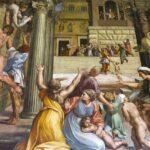
Not every room is equally famous, but that’s where the value hides. Raphael’s Rooms feel like a guided lesson in symbolism. You’re seeing the Renaissance’s ability to mix classical style, religious themes, and political messaging in one visual language.
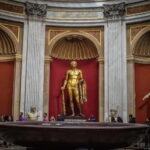
Then there’s the Gallery of Maps and the Cabinet of Masks. These aren’t always the first things people rush to, but I think they’re worth your time because they show another side of the Vatican: curiosity, storytelling, and visual “world-building.” Even if you don’t know every detail, you’ll leave with a stronger sense of how the Vatican presents knowledge, not just worship.
One practical note: the Vatican Museums reserve the right to close an exhibition area without any obligation to provide a refund. That can happen with changing displays and access restrictions. The good news is that the “core” highlights (like the Sistine Chapel) are usually stable targets, but it’s still smart to keep your expectations flexible.
Sistine Chapel timing and the day’s rhythm
Sistine Chapel access has its own rhythm. It’s not a stroll spot—you’ll need to stand, look, and take it in while you move within crowd flow.
The tour description emphasizes priority access and an organized flow, but you should still plan for the reality of the space: people will be close to you, signage can be strict, and you’ll want to have your eyes ready before you step in. If you’re sensitive to crowds or you hate waiting, you may find this day emotionally busy even with fast entry.
And if you’re traveling around late April, pay attention. The Sistine Chapel will be closed from 28 April due to the Conclave. During that period, the info provided says Pantheon tickets may be offered as an alternative (and you’re encouraged to contact the provider if you’re interested). That’s a key decision point, so check your dates early.
Other Vatican plus Colosseum combo tours at the Vatican & Rome
Colosseum entry: what timed access feels like
Then you pivot to the Colosseum, and this is where a timed slot becomes your friend—or your frustration, depending on your style.
For the Colosseum-only option, the Colosseum entry is timed and your visit is 75 minutes. For the combo ticket, you still get priority access to the Colosseum and the Roman Forum/Palatine. Either way, the message is consistent: you’ll see the Colosseum’s most important areas, but you won’t have the luxury of taking ten thousand detours.
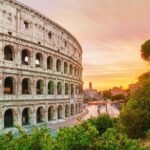
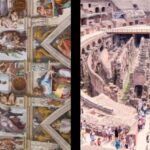
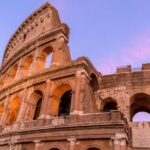
Here’s what helps: you don’t just want to “see” the Colosseum. You want to understand how it worked. It’s over 1900 years old, and it’s described as the world’s largest amphitheater and one of the 7 wonders. More importantly, it’s famous because it held spectacle—gladiatorial contests and the kind of entertainment that mixed civic life with brutal showmanship.
If you go in thinking it’s only a ruin for photos, you’ll miss the strongest part of the experience. Use the guidebook to connect what you’re looking at with how people would have moved and watched. The structure is big, but your attention needs a map.
What you won’t get
The provided info is clear: no arena, no underground, and no attic. So if you were hoping for those extra viewpoints and restricted-feeling areas, this particular setup won’t deliver them.
Roman Forum and Palatine Hill: the “why it mattered” layer
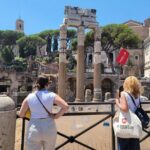
After the Colosseum, the Roman Forum is where you start feeling the scale of Roman governance and daily power.
You’ll see ruins of important government buildings, and that’s exactly the point. The Forum isn’t dramatic like the Colosseum; it’s meaningful because it explains what the spectacle served. The guidebook helps you connect civic life to architecture, and it’s often easier to understand Rome’s story once you’ve walked the political stage.
Then comes Palatine Hill, and this is the part that feels like a reward. You get panoramic views from one of the oldest areas of Rome. Standing above the Forum and city layout makes it click: these weren’t random ruins. This was the center of gravity for the empire.
If you love visual context—where things were in relation to each other—Palatine Hill is the stop that delivers the clearest sense of place.
Your access window (important)
For the Colosseum-only option, the Roman Forum/Palatine access is valid within 24 hours before or after your Colosseum booking time. That gives you a little flexibility if your schedule changes slightly or if you want to return with a less intense crowd level.
Combo day vs. Colosseum-only: picking the right pace
You’ve got two main choices: Colosseum only or the combo ticket.
Option 1: Colosseum only (2.5–3 hours)
This option is best if you’re:
- short on time
- tired from Vatican walking (or you’re doing Vatican on another day)
- focused on one Roman history complex
It starts at your reserved entry time, includes the Colosseum with that 75-minute timed visit, and pairs it with Roman Forum and Palatine access within the 24-hour window.
Option 2: Combo ticket (up to a full day)
This option adds Vatican Museums and the Sistine Chapel, then continues to Colosseum, Roman Forum, and Palatine.
The description says you select any slot and then the provider confirms your preferred time after booking. That’s useful because it means your day plan gets shaped around your chosen timing window. Still, you should assume a longer day of walking and crowd negotiation.
How to decide
If you want the best value per hour and you enjoy art as much as ruins, go combo. If you want to keep your legs happy and your brain rested between big-ticket moments, do Colosseum-only and schedule Vatican separately.
Logistics you’ll feel on the ground (without ruining your day)
Even with priority access, this is still Rome, still peak tourist pressure, and still large sites. Here’s what to take seriously so you’re not annoyed later.
First: comfortable shoes. You’re walking a lot, and you’ll want support for uneven stone and long museum corridors. Second: dress rules. Shorts, short skirts, and sleeveless shirts are not allowed, and flash photography is forbidden. Also, backpacks are not allowed, so keep your bag situation simple.
Bring ID if needed (passport or ID for adults, and passport/ID card for children—copy accepted). Student card is listed as something you should bring, so if you qualify for any student pricing, have it ready.
Finally: this is small group (up to 8), which helps compared to massive bus tours, but it also means you should expect to keep moving with the group pace.
Who this tour suits best
I’d steer you toward this experience if you want:
- a structured, time-efficient plan through two of Rome’s biggest landmarks
- the Sistine Chapel and Michelangelo highlights as part of your day
- Roman Forum and Palatine Hill views that add meaning beyond the Colosseum photos
- a guidebook-based approach rather than live commentary
It may not be a great fit if:
- you hate timed entry because you like slow wandering
- you want an in-person guide to answer questions on the spot
- you need wheelchair access (this option is not suitable for wheelchair users)
Final verdict: should you book this Vatican + Colosseum day?
If you’re trying to do Vatican Museums and the Colosseum with minimal stress, this is a solid choice. The skip-the-ticket-line approach and the small group size are the kind of practical upgrades that make Rome feel manageable. And the combination of Sistine Chapel masterpieces with Roman Forum and Palatine context gives you a fuller story than seeing either site alone.
But I’d book with eyes open. You’re not getting arena/underground/attic access, there’s no live tour guide, and peak-season crowds can still test your patience. Also, because the Colosseum visit is timed, you’ll need to keep your pace.
If your goal is a high-impact day and you’re comfortable using a guidebook, go for it. If you’re a slow wanderer or you want deep narration from a person, you may want a different format—or plan museums and ruins on separate days.
FAQ
How long does this experience take?
It runs from about 2.5 to 10 hours, depending on the option and start time. Check availability to see starting times.
Is there a tour guide during the visit?
No. The tour information says there is no tour guide and also no audio guide included. You’ll use an electronic or printed guidebook instead.
What’s included in the Colosseum-only option?
The Colosseum plus the Roman Forum and Palatine Hill. Colosseum entry is timed for a 75-minute visit, and Forum/Palatine access is valid within 24 hours before or after your Colosseum booking time.
What’s included in the combo option?
The combo ticket includes Vatican Museums and the Sistine Chapel, plus Colosseum and Roman Forum/Palatine Hill.
Does this ticket help you avoid lines?
Yes. The experience is designed to skip the ticket line by routing you through the ticket holders line for quicker access.
What if the Sistine Chapel is closed?
The Sistine Chapel will be closed from 28 April due to the Conclave. During that period, the info says Pantheon tickets may be offered as an alternative if you contact the provider.
What are the main restrictions on what to bring or wear?
Bring comfortable shoes and required ID (passport/ID card; copy accepted for children). Shorts, short skirts, sleeveless shirts, flash photography, and backpacks are not allowed, and pets are not allowed.
You Might Also Enjoy
More Tour Reviews in Rome
- Skip-the-Line Group Tour of the Vatican, Sistine Chapel & St. Peter’s Basilica
★ 4.5 · 12,779 reviews