REVIEW · VATICAN CITY
Rome Walking Tour
Book on Viator →Operated by Rometourguide · Bookable on Viator
A short walk, tons of Rome. This 3-hour morning route strings together major sights—starting at St. Peter’s Square and ending at Piazza di Spagna—with a guide who gives you context as you go. I like the small-group size (max 10) because it keeps the pace relaxed enough to actually look, not just rush. I also like that it frees your afternoon for shopping and wandering. The one thing to plan for: a couple of stops have sights where admission can be extra, so your final cost may creep up.
You’ll use a mobile ticket in English, and the meeting point is easy to find near public transport. The tour runs at 9:30 am, so you’re in the prime part of the day for photos and for escaping the later-day heat and crush.
Price-wise, $192.04 per person isn’t “cheap,” but you’re paying for guide time plus a tight route that covers big hits without you needing to stitch together tickets and directions yourself. If your goal is first-time Rome impact in one morning, this is built for that.
In This Review
- Key Highlights You Can Count On
- Why This Vatican-to-Spanish-Steps Walk Works in 3 Hours
- Price and Tickets: Where Your Money Goes
- St. Peter’s Square: Start With the Center of the Vatican World
- Castel Sant’Angelo Area and Bernini’s Bridge Views
- Piazza Navona and the Four Rivers Fountain Moment
- The Pantheon Dome Stop: How to Look Up Without Missing It
- Trevi Fountain at Human Speed (Even When It’s Busy)
- Sant’Ignazio di Loyola: When a Ceiling Changes Your Whole Mood
- Piazza di Spagna: The Walk’s Smart Finish Point
- What the Guide Adds (So You Don’t Just Collect Sights)
- Small-Group Pace: Why Max 10 People Feels Different
- Who Should Book This Walk
- Should You Book This Rome Walking Tour?
- FAQ
- How long is the Rome walking tour?
- What time does the tour start, and where does it meet?
- Where does the tour end?
- Is the tour offered in English, and do I get a mobile ticket?
- How big is the group?
- Are admission tickets included for the stops?
- What’s the cancellation policy?
Key Highlights You Can Count On
- Small group (up to 10) for better attention and smoother transitions between stops
- Morning start (9:30 am) so you keep your afternoon for your own plans
- Big-name sights in one flow: St. Peter’s Square → Pantheon → Trevi Fountain
- Free entry at several stops (Pantheon, Trevi Fountain, and Sant’Ignazio)
- Route ends at Piazza di Spagna, a convenient springboard for more exploring
- Mobile ticket in English, with a simple confirmation process in most cases
Why This Vatican-to-Spanish-Steps Walk Works in 3 Hours
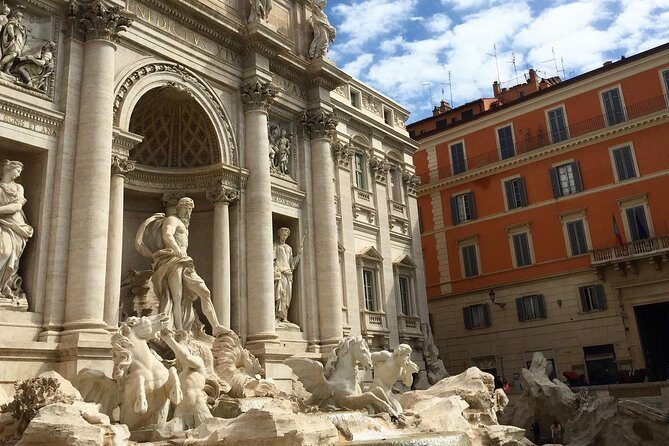
If you’ve got one morning in Rome, this kind of route is the difference between seeing the famous stuff and feeling like you actually processed it. The tour moves at a human pace for a “greatest hits” walk: frequent photo breaks, time to stand back and take in the scale, and enough explanation to make the buildings feel less like postcards.
The biggest win is that it’s designed for momentum. You’re not bouncing around town; the stops stay concentrated as you head from the Vatican area toward central Rome. The final payoff is that you end at Piazza di Spagna, so you don’t waste your energy backtracking across the city.
And because the group is limited to 10 people, you’re less likely to get stuck behind a sea of strangers when the view opens up at key moments like the Pantheon dome and the Trevi Fountain frontage.
Other walking tours we've reviewed in Vatican City
Price and Tickets: Where Your Money Goes
At $192.04 per person for about 3 hours, the value comes from three things: guided explanations, efficient routing, and a mix of free and paid entry points. This is not just a “walk and point” style tour.
Here’s how the ticket situation breaks down across the stops on the route:
- St. Peter’s Square: admission not included
- Museo Nazionale di Castel Sant’Angelo: admission not included
- Piazza Navona: admission included
- Pantheon: admission free
- Fontana di Trevi: admission free
- Chiesa di Sant’Ignazio di Loyola: admission free
- Piazza di Spagna: admission free
So, yes, parts can be extra, and that’s the one budget caveat. But you’re also getting multiple “no ticket needed” moments, which helps balance the cost. If you’re the type who wants to pay for guidance and then avoid surprise fees, this is still a good deal.
St. Peter’s Square: Start With the Center of the Vatican World
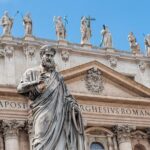
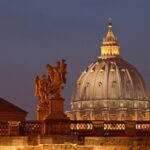
The tour begins in Piazza San Pietro, right at St. Peter’s Square. Expect about 15 minutes here. This is the best kind of opener: you stand in one of Rome’s most dramatic spaces before you start walking, and your guide can frame what you’re seeing in plain language.
Even if you don’t plan to do anything inside the basilica on this tour, the square alone does a lot of work for you. It sets the mood: the size, the order, and the symbolism are obvious the moment you’re standing there.
Practical tip: keep your camera ready, but give yourself a few seconds to look up and around. The square is all about angles and scale, and that’s harder to appreciate if you’re rushing.
Castel Sant’Angelo Area and Bernini’s Bridge Views
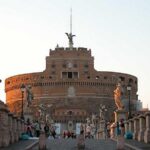
Next comes a quick stop connected to the Castel Sant’Angelo area and the famous bridge associated with Bernini. You’ll get around 10 minutes here, with admission for the museum/castle not included.
Think of this stop as a “Rome geography” moment. The bridge and surrounding structures help you understand how Rome’s river crossings and monumental buildings connect. You’re also moving through one of those zones where the city feels layered—classic stonework, Renaissance-era influence, and big landmark energy all in the same view window.
If you want to go inside Castel Sant’Angelo, you’ll need separate tickets. The tour is using this stop to give you context and a solid exterior look without turning your morning into a museum marathon.
Piazza Navona and the Four Rivers Fountain Moment
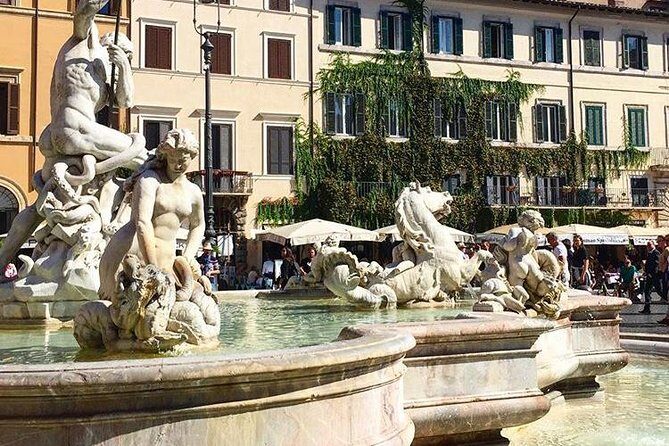
Piazza Navona is one of those places where you instantly feel the “Rome vibe.” You’ll spend about 20 minutes here, and this is the stop where an admission ticket is included.
The star is the Fountain of the Four Rivers by Bernini. What makes it special isn’t just the art—it’s how the fountain sits inside the whole square. You get to see it as part of the public space, not as a lone monument behind ropes.
Since time is limited, I’d treat this as your chance to do the slow look. Don’t just aim for the photo. Stand with your back a little off to the side and study the arrangement. The details reward the pause.




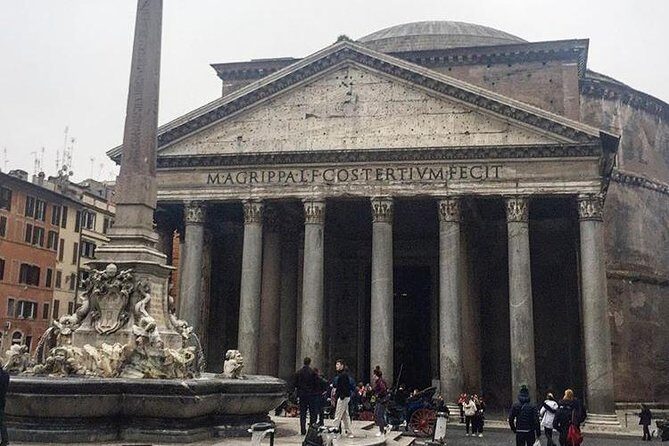
The Pantheon Dome Stop: How to Look Up Without Missing It
The Pantheon is next, with about 30 minutes on site, and it’s a rare treat on this route because admission is free.
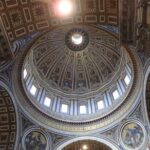
This stop is worth planning your attention for. The Pantheon’s power is in the geometry: the dome, the open circle at the top, and how light moves through the space. With a guide’s explanation, you start noticing relationships—how the scale makes the building feel both solid and strangely open.
What I like about having a guide here is that you’re not stuck just guessing. You’ll understand what you’re seeing as you look, so you don’t leave with a head full of “cool… but what was it?” questions.
Practical tip: if you’re sensitive to crowds, go slowly once you step inside. It’s easy to get swept toward the next tourist flow. Stand still long enough to let your eyes adjust to the light level.
Trevi Fountain at Human Speed (Even When It’s Busy)
Then it’s Fontana di Trevi for about 30 minutes, with admission free.
Trevi is always famous, and that means it’s always busy. The advantage of this tour is that you get a scheduled block of time, not a random stop where you’re stuck waiting and then rushing.
Use your time in two modes:
1) a quick sweeping look for the full composition
2) a second look closer to the moment, so you can see the details rather than just the famous shape
Don’t worry if you don’t get the perfect angle—Rome’s best photos often come from being a little flexible. The bigger win is standing there long enough for it to register as more than a background for social posts.
Sant’Ignazio di Loyola: When a Ceiling Changes Your Whole Mood
Next is Chiesa di Sant’Ignazio di Loyola (about 15 minutes). Admission here is free, and the draw is the stunning ceiling by Andrea del Pozzo.
This is the kind of stop that rewards patience. Even if you’re not a “museum person,” the ceiling effect is the point. You look up, and the church does a clever trick: it pulls your attention upward and transforms how the space feels.
Because you only have 15 minutes, don’t spend it reading every sign. Let the ceiling be the experience. Stand where you can see the overall design first, then tilt your head to catch how the perspective works.
Piazza di Spagna: The Walk’s Smart Finish Point
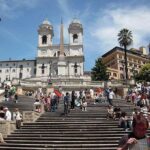
The tour ends at Piazza di Spagna after about 20 minutes, with admission free. The Spanish Steps are right here, and this finish is convenient because it naturally connects you to central Rome’s streets.
This ending matters more than it seems. Many tours drop you in a transportation dead zone. Here, you end in a place that’s easy to orient around, which means you can continue the day your way—shopping, wandering, or setting up a meal without needing a long commute.
What the Guide Adds (So You Don’t Just Collect Sights)
A good guide turns a walk into a story you can remember. The experiences tied to this provider emphasize friendly, professional guiding with real context, not just a recitation of dates.
I also like that the guiding style seems to help you connect dots across Rome. For example, if you plan another Vatican or historic-Rome visit later, you’ll often find that earlier background makes later spots make more sense. It’s the difference between seeing and understanding.
And yes, you might see guide names like Sara and an associate like Matteo mentioned in past experiences with this operator. If that happens, you’re in good hands for clear explanations and a well-managed route.
Small-Group Pace: Why Max 10 People Feels Different
Max 10 travelers changes the feel of the tour. You can ask a question without feeling like you’re holding up a giant bus group. You can step aside when you need a clear view. And at bottleneck moments—inside the Pantheon, around Trevi—there’s less “push forward now” pressure.
You also get better time use. The stops are short by design, but you aren’t just being marched. A guide can adjust on the fly if a sight is more crowded than expected, keeping the morning on track.
Who Should Book This Walk
This tour fits best if you:
- have only a morning and want maximum “Roman wow” density
- are on a first visit and want help prioritizing the big hits
- prefer a small-group format over crowded mega-tours
- like walking as your main activity and want to end in a central shopping/wandering zone
It may be less ideal if you:
- need long, slow museum time at multiple indoor sites
- want zero ticket thinking at all (since some stops on this route have admission not included)
- dislike standing in crowds for famous outdoor landmarks like Trevi
Should You Book This Rome Walking Tour?
I’d book it if your goal is simple: get your bearings fast and stack the top sights into one efficient morning, without building a route yourself. The combination of small-group size, an expert guide in English, and a finish at Piazza di Spagna makes it a smart plan for first-time Rome visitors.
I’d hesitate if your budget depends on only free-entry stops. Since a couple of key stops have admission not included, you might spend extra depending on what you choose to do there.
If you’re trying to make the most of limited time, this is the kind of tour that helps you leave Rome with memories that feel organized, not random.
FAQ
How long is the Rome walking tour?
It’s about 3 hours (approx.).
What time does the tour start, and where does it meet?
It starts at 9:30 am in Saint Peter’s Square (Piazza San Pietro, 00120).
Where does the tour end?
The tour ends at Piazza di Spagna, 00187 Rome, Italy.
Is the tour offered in English, and do I get a mobile ticket?
Yes, it’s offered in English, and you receive a mobile ticket.
How big is the group?
It’s a small-group tour with a maximum of 10 travelers.
Are admission tickets included for the stops?
Some are free, some are included, and some are not. On this route: Pantheon, Trevi Fountain, Sant’Ignazio di Loyola, and Piazza di Spagna are free; Piazza Navona has admission included; St. Peter’s Square and Castel Sant’Angelo have admission not included.
What’s the cancellation policy?
There’s free cancellation up to 24 hours in advance for a full refund. Canceling less than 24 hours before the start time isn’t refundable.
If you tell me your travel dates and whether you’re most excited about Vatican sights or classical Rome, I can help you decide if this route matches your priorities.