REVIEW · ROME
Semi Private Tour Vatican Museums and Sistine Chapel
Book on Viator →Operated by Art and Tradition Tours · Bookable on Viator
Rome’s art gets real fast. This semi-private Vatican and Sistine visit packs big-name masterpieces with included skip-the-line entry so you spend less time waiting and more time looking.
I like the small-group feel, capped at 10 travelers, which means your guide can steer you toward the sights that actually pay off. I also like the way the tour connects famous works to what was going on when they were made, from Raphael’s stories to what you’re seeing on the Sistine ceiling. One thing to consider: with only about 3 hours total, you won’t have unlimited time to slow-walk every corridor on your own.
I was especially drawn to how the guide’s English and pacing make the Vatican Museums feel navigable instead of overwhelming. The meeting point is at Caffè Vaticano (Viale Vaticano 100), and the tour returns you there at the end, which makes the rest of your day easier to plan. If you want a super slow, self-guided wander through every room, you may find the schedule tight.
In This Review
- Key highlights to know before you go
- Entering the Vatican Museums with skip-the-line tickets (and a plan)
- Greek Cross Gallery, Sala degli Animali, and Upper Galleries: what makes this route worth it
- Greek Cross Gallery and ancient sarcophagi
- Sala degli Animali: a virtual menagerie
- Upper Galleries and the Gallery of Maps
- Raphael Rooms: The School of Athens and Deliverance of Saint Peter
- Borgia Apartments rest stop: a break that also makes sense
- Sistine Chapel in about 30 minutes: what you should focus on
- What this guide format does for your eyes
- Group size, timing, and the Rome logistics that matter
- Price and value: is $217.67 worth it?
- Who should book this tour?
- Should you book the Vatican Museums and Sistine Chapel semi-private tour?
- FAQ
- Is transportation included?
- What language is the tour offered in?
- How long is the tour?
- How many people are in the group?
- Where does the tour start and end?
- Are tickets included for the Vatican Museums and Sistine Chapel?
- What is the cancellation policy?
Key highlights to know before you go
- Guaranteed entry with included skip-the-line tickets: You get admission covered up front for the Vatican Museums and the Sistine Chapel.
- Small group size (maximum 10 travelers): More personal attention and less time lost figuring things out.
- Greek Cross Gallery and ancient sarcophagi: A quieter, high-impact stop that many people miss when they rush.
- Sala degli Animali and the virtual bestiary: A fun mix of imagination and design, not just classic painting and sculpture.
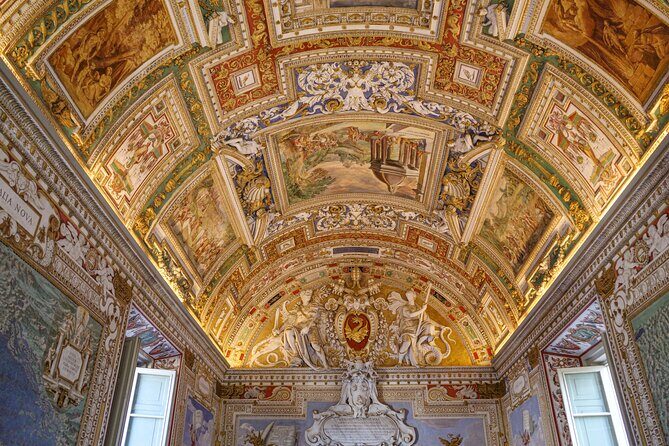
- Gallery of Maps in the Upper Galleries: You’ll see how cartographers pictured the world over time.
- Raphael Rooms plus Sistine Chapel context: You get the meaning behind what you’re looking at, not just names on plaques.
Entering the Vatican Museums with skip-the-line tickets (and a plan)
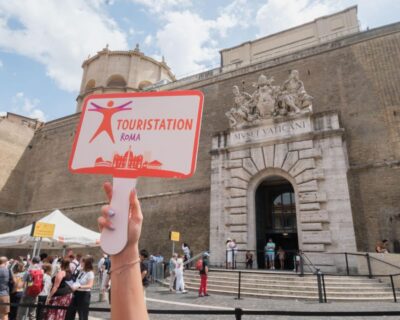
The Vatican Museums can be a test of patience if you show up without a clear strategy. This tour is designed to solve that problem by including skip-the-line tickets for your entry, with a dedicated guide leading the way.
Once you’re inside, you’re not left to figure out where to go next. Your guide helps you move through the museum sections that match what most people come for: major works, plus a few “how did they think this through?” stops that add variety.
A big value point here is that you’re not trying to see everything. You’re seeing what connects to the larger story—art, religion, patrons, and politics—so your time feels focused rather than scattered.
Other Vatican Museums tours we've reviewed at the Vatican & Rome

Greek Cross Gallery, Sala degli Animali, and Upper Galleries: what makes this route worth it
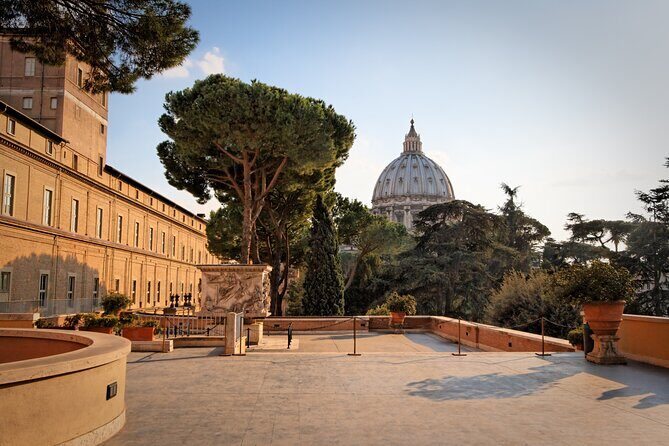
You start with a tour through art and religion in one of the world’s most famous museum complexes, but the key is how the route is sequenced. It isn’t just a march past crowds; there are specific stops picked for visual payoff.
Greek Cross Gallery and ancient sarcophagi
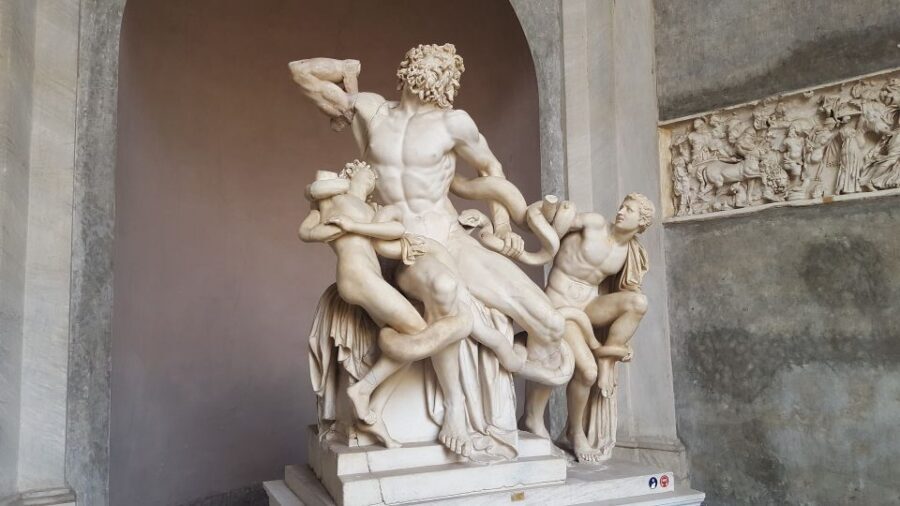
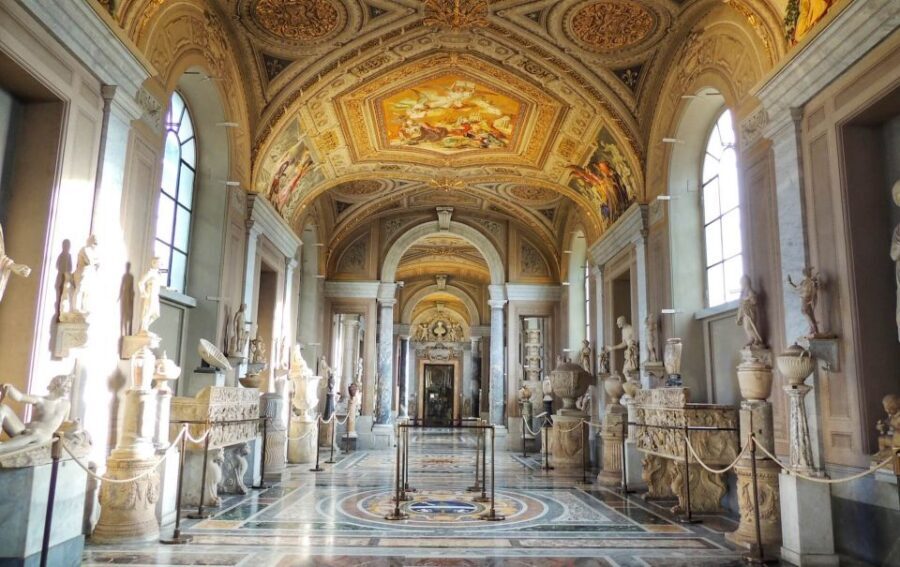
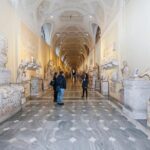
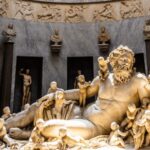
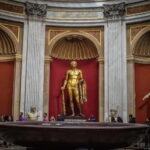
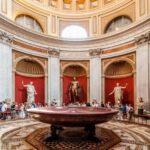
In the Greek Cross Gallery, you’ll spend time among ancient sarcophagi. These aren’t just decorative objects. They help you remember that the Vatican Museums aren’t only Renaissance and Baroque glory—they also preserve earlier Roman material culture, and the museum layout puts that in your line of sight.
If you’ve ever felt like the Vatican is all “big paintings and bigger names,” this stop gives your eyes a different kind of history: stone, form, and the way symbolism was built into funerary art.
Sala degli Animali: a virtual menagerie
Next is the Sala degli Animali, described as a virtual menagerie of fantastic beasts—real and imagined. That’s a neat breather from the usual expectation of museum-only realism. It’s also a reminder that art history isn’t always about strict realism; it’s about how people wanted the world (and stories) to look.
It’s the kind of stop where you might catch your bearings again, because your brain gets a different type of visual language to process.
Upper Galleries and the Gallery of Maps
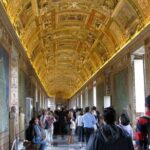
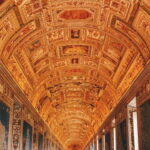
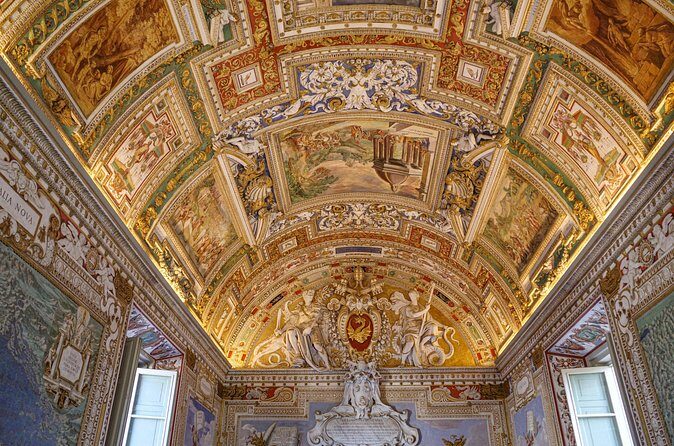
Then you move into the Upper Galleries, including the Gallery of Maps. This section is one of the most practical reasons to go with a guide: you’ll learn how cartographers used to depict the world through the ages.
Even if you’re not a map-nerd, you’ll likely appreciate this. Old maps aren’t just geography; they show what people believed, what they assumed, and what they hadn’t yet confirmed. It changes the way you look at the idea of exploration.
Other Sistine Chapel tours at the Vatican & Rome



Raphael Rooms: The School of Athens and Deliverance of Saint Peter
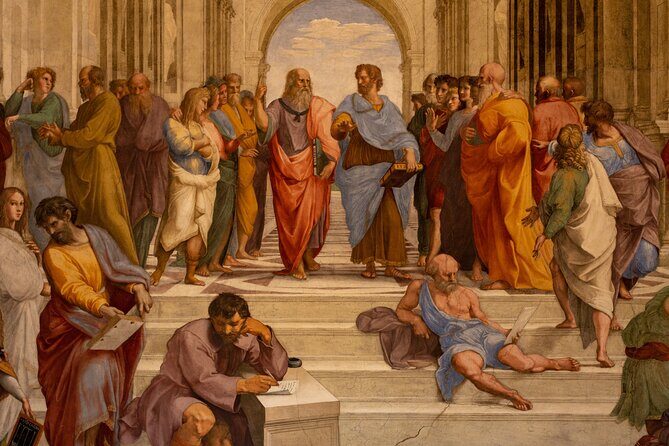
The tour’s middle section leans hard into art that people recognize instantly—then gives you the context that makes it land. The Raphael Rooms are where your experience starts to feel less like sightseeing and more like guided interpretation.
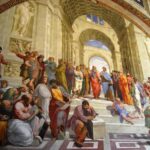
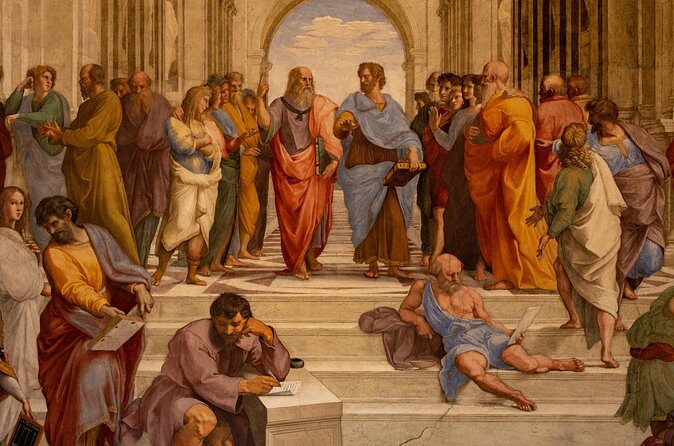
You’ll see frescoes including The School of Athens and The Deliverance of Saint Peter. These works are famous, but they’re famous for a reason: they’re packed with design choices that reward close attention.
Here’s the practical payoff of a good guide at this point: instead of you trying to spot details from a distance, you’re taught what to look for. That can turn a quick glance into a real “oh wow, I see it now” moment.
It also helps that you’re not just learning a single fact. You’re getting a sense of why these images mattered to the people commissioning them and to the broader religious and intellectual atmosphere of the time.
Borgia Apartments rest stop: a break that also makes sense
After Raphael, you’ll rest for a while in the Borgia Apartments. That pause matters more than you might think.
First, the Vatican Museums can be physically and mentally draining. A structured break helps you keep your attention for what comes next—because the Sistine Chapel is the kind of place where you’ll notice everything if you’re ready for it.
Second, the Borgia Apartments give you a shift in tone. You’re moving from Raphael’s high-visibility fresco storytelling to a different set of rooms and atmosphere, which helps you absorb the Vatican as a complex place rather than one highlight sequence.
Sistine Chapel in about 30 minutes: what you should focus on
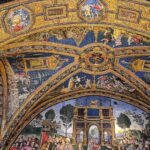
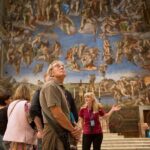
Then you reach the Sistine Chapel, where you spend around 30 minutes. This is the moment that most people imagine before they come: Michelangelo’s frescoes under the church’s famous ceiling.
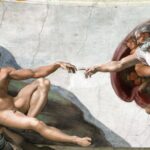
You’ll admire The Last Judgment and The Creation of Adam, and you’ll learn how it took four years to complete the ceiling work. That timeline detail changes your viewing. You’re not just looking at genius; you’re looking at a massive project that required sustained effort, planning, and execution.
What this guide format does for your eyes
The Sistine Chapel can feel intimidating if you come in cold. With a guide, you’re nudged toward the key visual elements and the story behind what you’re seeing—so the chapel becomes readable instead of overwhelming.
Because your time here is limited, you’ll want to use those minutes well. When you’re guided to the major scenes, you can actually understand what you’re looking at before you move on.
A downside of the 30-minute structure is simple: if you love ultra-slow museum reading, you might want more time in the chapel itself. But for many visitors, it’s the right trade: you get the essentials done properly without losing the whole day to line-waiting and wandering.
Group size, timing, and the Rome logistics that matter
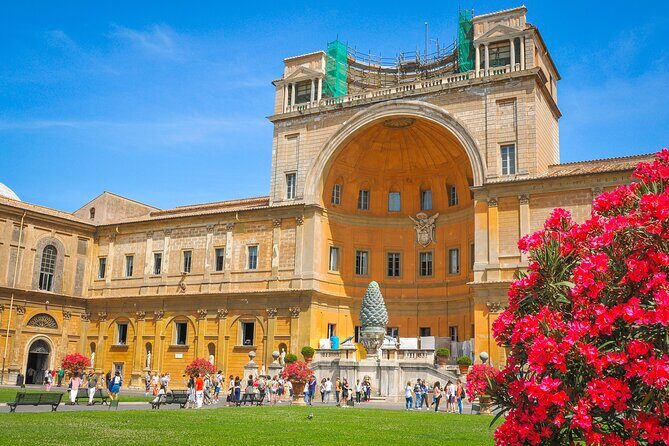
This is offered in English and capped at a maximum of 10 travelers. That matters because the Vatican is huge, and a larger group can feel like a tug-of-war between walking and seeing.
Your total tour time is about 3 hours, which is a realistic window for a serious highlights visit. It’s also why this works best if you’re planning the rest of your day around it—rather than treating it as a flexible add-on.
You’ll meet at Caffè Vaticano, Viale Vaticano 100, 00192 Roma RM, and you end back at the same meeting point. That’s a helpful detail for planning dinner, since you won’t need to figure out new transportation from a distant drop-off.
Transportation isn’t included, and the meeting point is noted as near public transportation. Practically, that means you should build your schedule around a short transit plan to and from the Vatican area, not around a long, complicated commute.
One extra scheduling note: on average, this kind of booking is made about 39 days in advance. If your trip dates are fixed, I’d treat that as a sign to reserve early rather than waiting until the last moment.
Price and value: is $217.67 worth it?
At $217.67 per person for a roughly 3-hour guided visit, the cost isn’t cheap. But when you break it down, you’re paying for three things you’d otherwise have to solve yourself:
- Tickets included, including skip-the-line entry
- A dedicated English guide
- A route built to hit major areas efficiently in a short timeframe
That combo is usually the real value in the Vatican. The Vatican isn’t just about seeing famous art; it’s about navigating a complicated place where time is lost without help. If you’re paying to avoid uncertainty and wasted minutes, the price starts to look more reasonable.
For the money, the “small-group attention” piece is key. A group of up to 10 gives you a better chance of actually following along and asking questions, which tends to improve the whole experience—especially in the Raphael Rooms and Sistine Chapel, where details matter.
If your budget is tight, you might think about doing it independently. But you’d then need to manage tickets, timing, and a workable route through a massive building. This tour is designed to remove that stress.
Who should book this tour?
This experience is a strong fit if you want:
- A high-impact Vatican Museums route without feeling lost
- A guide to connect what you see to history and meaning
- A small group so the day doesn’t feel like one long shuffle
- An English explanation that makes Raphael and Michelangelo easier to understand
It’s also a good choice if you’re visiting for the first time and you don’t want to spend hours building your own plan.
It might be less ideal if you’re the type who needs time to sit with art and read everything slowly for hours. The schedule is built for highlights and interpretation, not for marathon wandering.
Should you book the Vatican Museums and Sistine Chapel semi-private tour?
I’d book it if your top goal is: see the big works, learn why they matter, and do it without gambling on entry time. The included skip-the-line tickets and the max 10 group size are the two practical reasons this feels worth it in a place where logistics can steal your energy.
I’d skip or consider another option if you want a long, slow museum day. The 30 minutes in the Sistine Chapel and the overall 3-hour window mean you’ll hit key scenes, but you won’t have unlimited linger time.
If you’re deciding right now, use this quick checklist:
- You want a clear route with a guide
- You value English explanations
- You want tickets handled
- You’re okay with a structured 3-hour highlights pace
If that sounds like your travel style, this is a smart, efficient way to experience the Vatican’s greatest hits.
FAQ
Is transportation included?
No. Transportation isn’t included.
What language is the tour offered in?
The tour is offered in English.
How long is the tour?
It’s about 3 hours (approximately).
How many people are in the group?
The group size has a maximum of 10 travelers.
Where does the tour start and end?
It starts at Caffè Vaticano, Viale Vaticano 100, 00192 Roma RM, Italy, and ends back at the same meeting point.
Are tickets included for the Vatican Museums and Sistine Chapel?
Yes. Skip-the-line tickets to the Vatican Museums and Sistine Chapel are included, and you’ll also have admission tickets for each part.
What is the cancellation policy?
Free cancellation is available up to 24 hours in advance for a full refund.