REVIEW · ROME
Vatican Museums Sistine Chapel & Saint Peter Basilica tour
Book on GetYourGuide →Operated by ROME WITH SILVIA · Bookable on GetYourGuide
How do you see the Vatican fast? This skip-the-line tour moves you through the big Renaissance art of the Vatican Museums and puts Raphael Rooms within reach, not just on a wish list. I also like that you’re not sent packing after the museums: you continue into St. Peter’s Basilica to see Michelangelo’s Pietà.
One caution: this tour is not suitable for people with mobility impairments or for wheelchair users. If you need step-free routes, it’s better to look for another format.
You’ll wear English headsets, which makes a huge difference when you’re shoulder-to-shoulder in the galleries. Still, in peak season you may lose extra minutes to security and to picking up the compulsory headsets.
In This Review
- Key highlights worth your time
- Skip-the-line at the Vatican: what you’re really paying for
- Meeting at Viale Vaticano: start smart, then go big
- Pio Clementino museums and the Gallery of Maps: the part people miss
- Raphael Rooms and Borgia Apartment: Renaissance that feels connected
- Sistine Chapel: how to enjoy the masterpieces without losing your mind
- St. Peter’s Basilica: Pietà, Bernini, and the inside you came for
- Timing, security, and headsets: small details that decide your day
- What the guide adds (and why the small-group feel matters)
- Who should book this Vatican Museums, Sistine Chapel, and St. Peter’s tour
- Should you book this tour?
- FAQ
- How long is the Vatican Museums, Sistine Chapel & St. Peter’s Basilica tour?
- Where do I meet, and where does the tour end?
- Does this tour include skip-the-line access?
- What’s included in the price?
- What should I bring or wear?
- What happens if St. Peter’s Basilica is closed during our visit?
- Is this tour suitable for wheelchair users or mobility impairments?
Key highlights worth your time
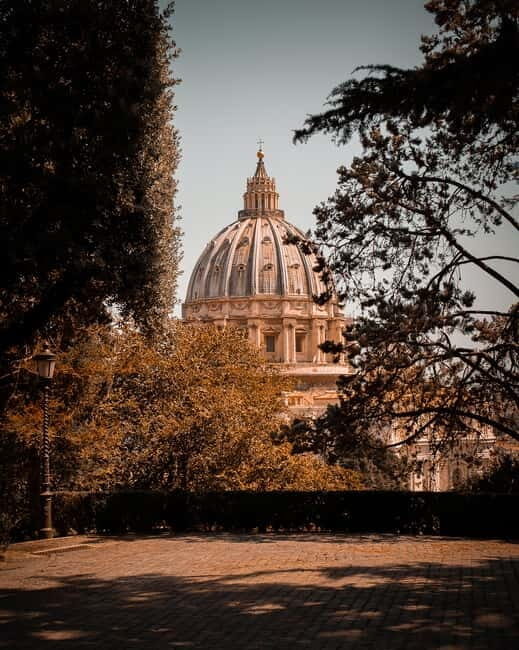
- Panoramic start on the Vatican Gardens balcony with a view toward St. Peter’s dome
- Courtyards first (Courtyard of the Pigna and Cortile del Belvedere) to help you orient fast
- Pio Clementino + Gallery of Maps where frescoed ceilings and ancient geography come to life
- Raphael Rooms and Borgia Apartment in a tight sequence that keeps the Renaissance story coherent
- Sistine Chapel guided viewing focused on the scenes people actually came for
- St. Peter’s Basilica highlights including Michelangelo’s Pietà and Bernini’s Baldachin
Skip-the-line at the Vatican: what you’re really paying for
Let’s talk value. This tour costs $62.63 per person and isn’t just “buy entry tickets and walk around.” Your money goes toward an English-speaking guide, entrance fees, headsets, and the separate access that helps you bypass the worst waiting.
What you gain is time you can spend looking, not waiting. The Vatican is packed in a way that makes self-guided wandering feel slow and chaotic. Here, you’re led from room to room with short guided stops, so you still get your bearings while the group moves at a human pace.
The other value piece is clarity. A good guide helps you read what you’re seeing. In a place full of art and symbolism, a simple explanation can turn a quick glance into a moment you remember.
Other Vatican Museums tours we've reviewed at the Vatican & Rome


Meeting at Viale Vaticano: start smart, then go big
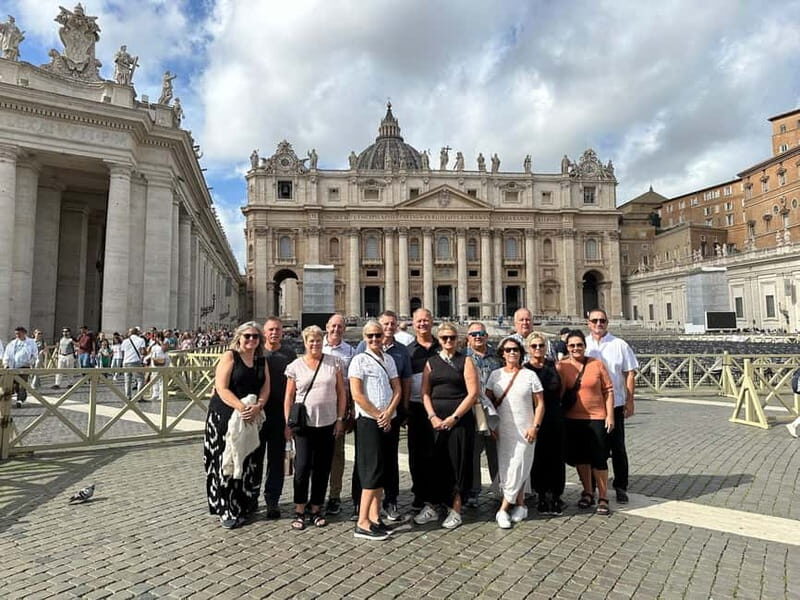
You meet at Viale Vaticano, 100, by the steps. From there, the experience begins with a panoramic moment on the Vatican Gardens balcony. Even before you’re in the museums, you get a view toward the dome of St. Peter’s Basilica. It’s a small thing, but it helps your brain “map” the day.
Then the tour shifts into the courtyards: first the Courtyard of the Pigna, then Cortile del Belvedere. These stops are brief (about 10 minutes each), but they’re useful. Courtyards give you space to take stock of the scale of the Vatican complex, and they set you up for the museum portions where everything is tighter and busier.
If you’re the type who likes to know where you are, these early courtyards are a win. If you’re already confident with Roman geometry, it’s still a nice breather before you get inside.
Pio Clementino museums and the Gallery of Maps: the part people miss

After the courtyards, you head into the Museo Pio Clementino for about 20 minutes. This is where the Vatican Museums start feeling like a museum, not a maze. The tour focuses on the second floor corridors, so you’re shown the highlights without you needing to hunt them down.
Here’s what makes this section click: you’re guided through the Gallery of the Candelabra, the Gallery of the Tapestries, and the Gallery of the Maps. The pacing is tight, with roughly 10 minutes for Candelabra, 15 for Tapestries, and 15 for Maps. That can sound rushed, but it’s actually a good match for how these galleries work. Each one rewards a focused look, not an hour of drifting.
- Gallery of the Candelabra: you’ll see an eye-catching display area with dramatic ornamentation. The guide’s narration helps you notice how the room’s design frames the sculptures and creates visual rhythm.
- Gallery of the Tapestries: you get a chance to connect the art style to the Vatican’s broader collecting mindset. It’s not just a picture on a wall; it’s a room built to present and preserve.
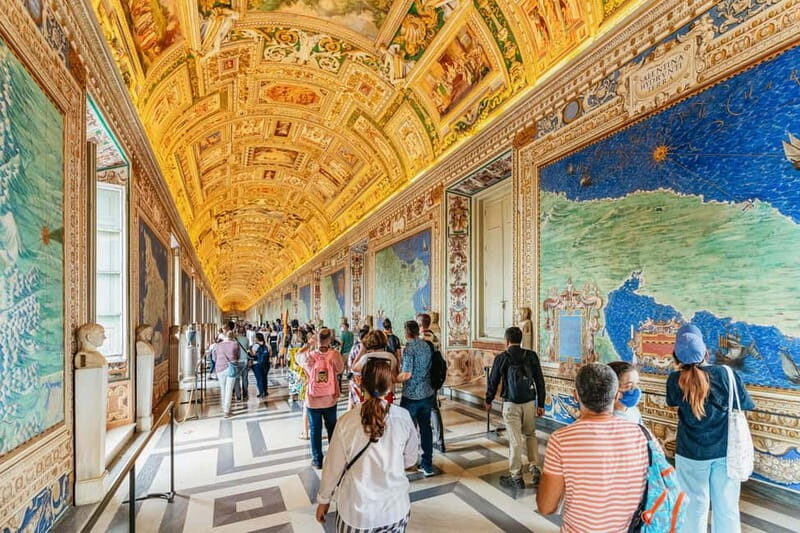
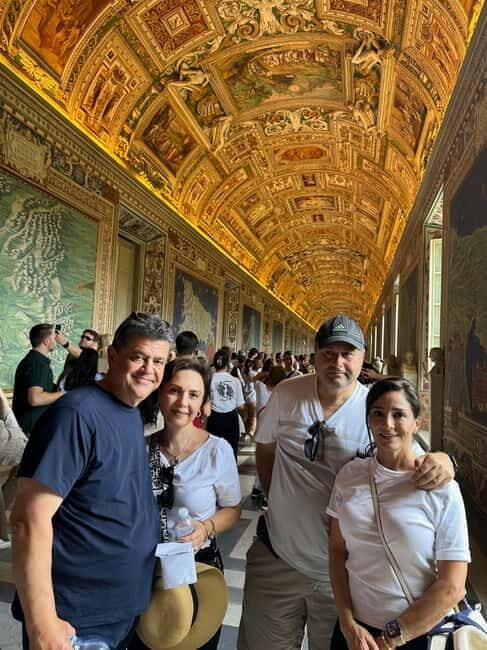
- Gallery of the Maps: this is the star detail. The walls are completely frescoed with maps of ancient Italian territories, and they’re lit in a warm way from the ceiling. If you like geography, politics, and how people thought about land in earlier centuries, this gallery gives you more than decoration. You can stand there and genuinely follow the theme.
One practical tip: wear your “museum face” here. Look up as much as you look forward. The ceilings and wall work are part of why these rooms feel special, and headsets make it easier to keep listening while you glance around.
Raphael Rooms and Borgia Apartment: Renaissance that feels connected
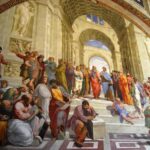
The Renaissance portion starts to feel more like a story with the Raphael Rooms, where you’ll spend about 30 minutes. This is one of the most valuable parts of the whole tour because Raphael Rooms are famous for a reason: the frescoes are designed to be read as sequences, not isolated masterpieces.
You’re not just looking at big names. You’re getting guided context that helps the scenes connect to ideas like theology, history, and power. The guide also keeps it moving, which matters because these rooms can get crowded quickly and standing in one spot too long can turn into shoulder-to-shoulder frustration.
Then you’ll pass through the Borgia Apartment for about 10 minutes. It’s shorter, but it adds texture. If you want a quick “before-and-after” sense of what’s changing in taste and theme, this stop helps you notice it.
In my opinion, the key here is pacing. A self-guided visit often makes Raphael Rooms feel like a highlight reel. With a guide, it’s easier to understand the logic of what you’re seeing, even in a compressed time window.
Sistine Chapel: how to enjoy the masterpieces without losing your mind
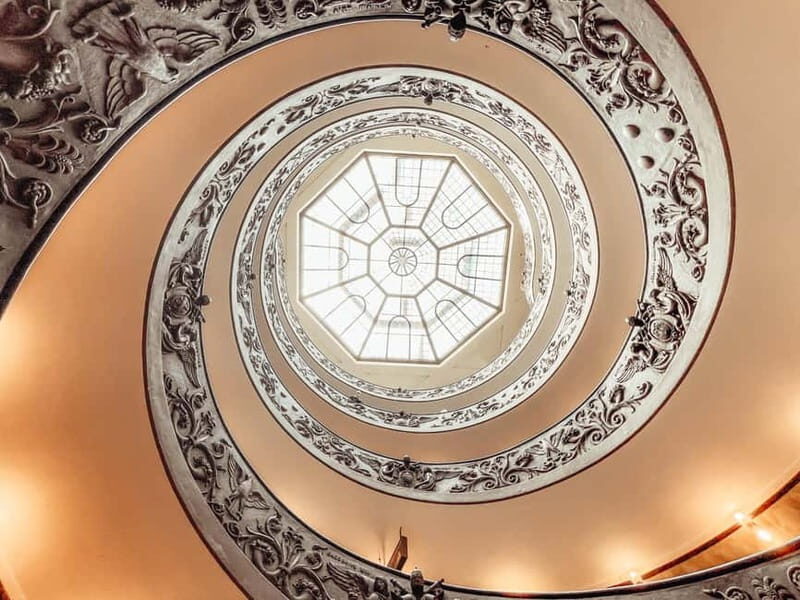
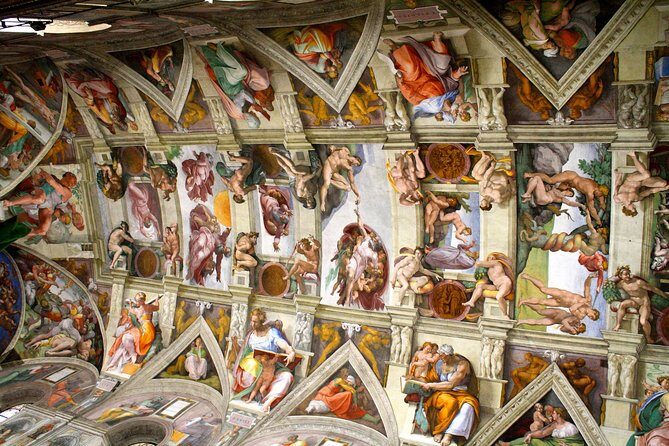
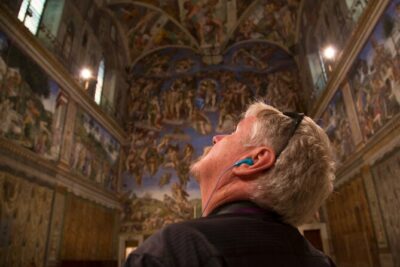
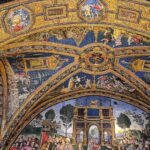
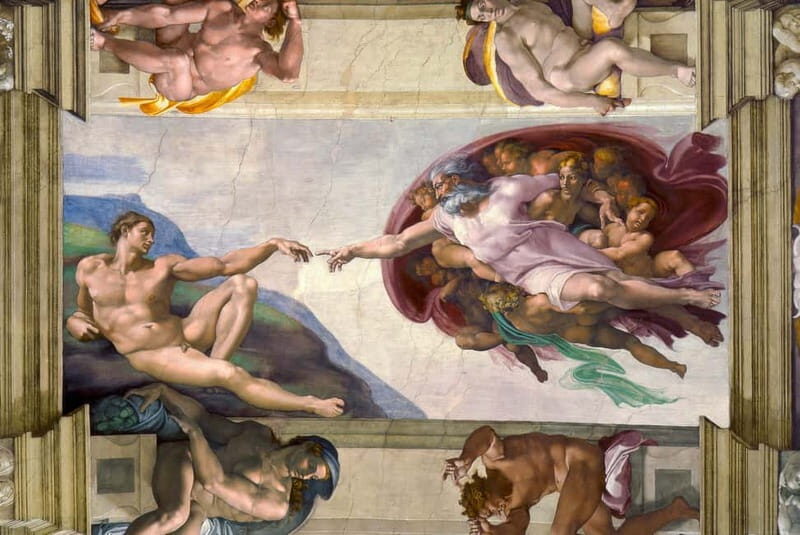
Next comes the Sistine Chapel for about 30 minutes. This is where the tour’s focus gets very real. You stand beneath Michelangelo’s famous ceiling scenes, including The Creation of Adam, and you also have time for The Last Judgement.
Here’s the trick for enjoying it: don’t wait for the perfect viewing spot. People move, and the crowd shifts. Instead, take short scans. Look up, listen, then look again. Your head will get tired, but you’ll catch more details because you’re not stuck in one position.
Also, remember that headsets are included, and in peak periods they’re compulsory. If you’re ever in doubt, listen first to the guide’s key points, then look. Otherwise you can end up staring at everything and absorbing nothing.
One more note: the tour includes skip-the-ticket-line access to the Sistine Chapel. That matters because once inside, it’s hard to relax. The chapel is famous and busy, so your best advantage is arriving without a long wait.
Other Sistine Chapel tours at the Vatican & Rome




St. Peter’s Basilica: Pietà, Bernini, and the inside you came for
After the Sistine Chapel, you go into St. Peter’s Basilica for about 30 minutes, using a privileged entrance reserved for guided tours. This is a smart arrangement because you’re not trying to figure out the maze of entrances while the basilica is pulling in visitors from every direction.
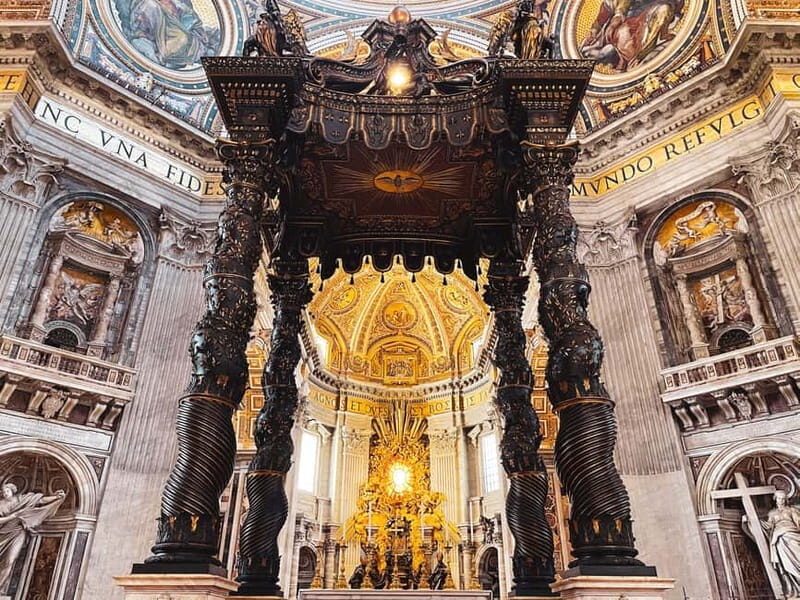
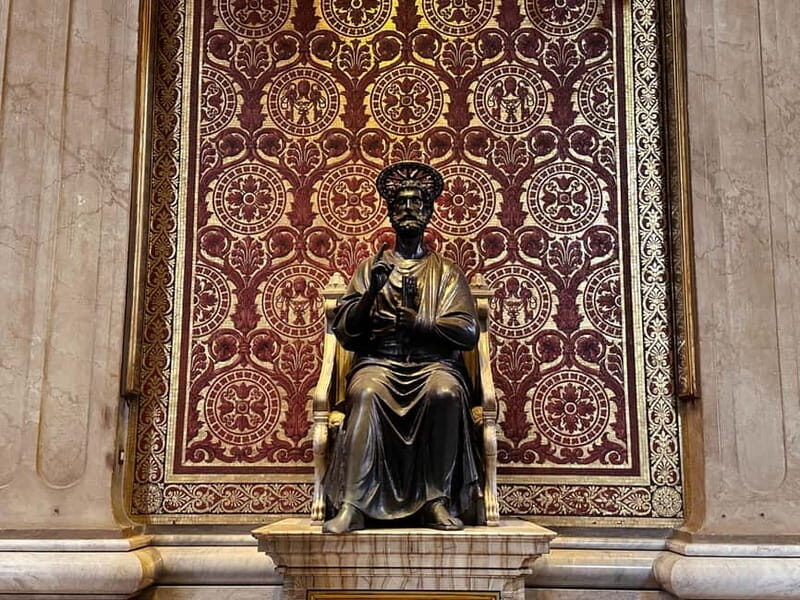
Inside, the tour spotlights the big visual payoff: polished marbles, a golden ceiling, precious mosaics, Michelangelo’s Pietà, and Bernini’s Baldachin. These are not random picks. They’re the objects that define how St. Peter’s feels in person: dramatic, glossy, and built to make you look up.
Michelangelo’s Pietà is worth your focus moment. It’s small compared to the scale of the building, so it’s easy to miss if you’re not paying attention. With a guide, you know where to place your eyes and why the sculpture matters.
Then you see Bernini’s Baldachin, a centerpiece that’s pure theatrical architecture. It helps you understand that St. Peter’s isn’t only a church. It’s a visual statement.
If St. Peter’s Basilica turns out to be closed or inaccessible within the scheduled time, the tour will shift to other parts of the Museums or provide an explanation of the basilica from the outside. During Easter, Christmas time, and Jubilee years, fast access can’t be guaranteed because of religious functions. If you’re traveling in one of those periods, plan for a slightly less predictable finish.
Timing, security, and headsets: small details that decide your day
This tour runs about 2.5 hours total, and starting times vary by availability. In practice, the Vatican’s crowds are the true “timekeeper.”
In peak season, security checks and collecting your compulsory headsets can add extra minutes. That doesn’t erase the value of the skip-the-line access, but it explains why you should arrive prepared and not count on everything feeling effortless.
Also, meeting time can change, and you might get a call or message from the provider. Make sure the phone number and email you give are correct. No refund is issued for latecomers, so arrive a little early.
Practical packing matters:
- Bring your passport or ID card (a copy is accepted)
- Avoid shorts, short skirts, and sleeveless shirts
- Leave luggage or large bags at home
- No umbrellas
This is one of those days where the “what you wear” rule can be a hidden stress source. If you’re unsure, choose something comfortable but within the dress code so you’re not stuck negotiating at the entrance.
What the guide adds (and why the small-group feel matters)
The tour includes an English-fluent live guide and headsets. That combination is key. In the Vatican Museums, you can easily get lost in famous names and forget to understand what you’re seeing. The guide helps you connect the artwork to a bigger picture.
There’s also a strong sense of interaction. In one of the highlighted guide experiences, Giorgio was described as very informative, involving the group with questions and even engaging kids in Q and A. Even if you’re not in the same exact guide slot, the format you’re buying here is built for participation, not silent sightseeing.
If you enjoy asking questions, or if you’re traveling with teens who get restless standing in lines, this kind of guided pacing is a better match than a fast “follow the leader” walk.
Who should book this Vatican Museums, Sistine Chapel, and St. Peter’s tour
I think this tour fits best if you want a strong highlight plan in limited time. It’s also a smart pick if you care about context. You’re going to see the Raphael Rooms, Sistine Chapel ceiling scenes, and then land inside St. Peter’s for Pietà and Bernini’s Baldachin. That’s a lot of iconic art in about 2.5 hours, and the skip-the-line pieces protect your schedule.
It might not be ideal if:
- You need wheelchair access or have mobility limitations
- You’re hoping for long, slow gallery time
- You’re visiting during major religious periods and expect guaranteed fast Basilica access
If your travel style is “see the highlights, then return later on my own,” this tour works as the perfect first pass. It gives you orientation so a later, self-guided return makes more sense.
Should you book this tour?
Yes, I’d book it if you want the Vatican’s biggest art in a tight window and you don’t want to gamble your day on long waits. The headsets and English guide help you get meaning fast, and the skip-the-line access is the difference between an enjoyable visit and a tense one.
Just be realistic about the setting. It’s the Vatican, so crowds and security are part of the package. If you can handle that and dress code basics, this tour offers solid value for the price by bundling guidance, entrances, and time-saving access into one visit.
FAQ
How long is the Vatican Museums, Sistine Chapel & St. Peter’s Basilica tour?
The tour lasts about 2.5 hours, though you should check availability for specific starting times.
Where do I meet, and where does the tour end?
You start at Viale Vaticano, 100 (by the steps). The information also notes that the activity ends back at the meeting point, while the scheduled end is at Basilica di San Pietro—your confirmation should clarify the exact end point.
Does this tour include skip-the-line access?
Yes. It includes skip-the-ticket-line access to the Vatican Museums and skip-the-ticket-line access to the Sistine Chapel, plus entry to St. Peter’s Basilica using a privileged entrance reserved for guided tours.
What’s included in the price?
Included are an English-speaking guide, headsets, entrance fees, skip-the-ticket-line access for the Vatican Museums and Sistine Chapel, entry to St. Peter’s Basilica, and bathroom access. Transportation is not included.
What should I bring or wear?
Bring a passport or ID card (and copies are accepted). Do not wear shorts, short skirts, or sleeveless shirts.
What happens if St. Peter’s Basilica is closed during our visit?
If St. Peter’s Basilica is closed or not accessible within the scheduled time, the tour will include other parts of the Museums or provide an explanation of the Basilica from the outside. During Easter, Christmas time, and Jubilee years, fast access to the Basilica can’t be guaranteed.
Is this tour suitable for wheelchair users or mobility impairments?
No. It is not suitable for people with mobility impairments and not suitable for wheelchair users.