REVIEW · ROME
Vatican Museums & St. Peter’s Basilica guided tour
Book on Viator →Operated by My City Tours · Bookable on Viator
Two hours in Vatican chaos is the real trick. This guided tour is built for people who want the big moments—Vatican Museums and the Sistine Chapel, then St. Peter’s Basilica—without getting lost in the crowd. What I like most is the live guide narration plus headsets/radios, so you can actually hear the explanations while you’re moving.
My only real caution is that the format is fast. It’s about two hours total, and one booking report I saw complained about a late start and explanations that felt rushed. If you need slow pacing and lots of time to wander, this may feel like a sprint.
If your goal is a tight hit of art and sacred sites—Michelangelo’s Pietà, Bernini’s baldachin, and the underground papal areas—this is a practical way to get there.
In This Review
- Key things that make this tour worth your attention
- Meeting at Via dei Gracchi: how to start without stress
- Vatican Museums in two hours: what you’ll actually see
- Sistine Chapel: the guide’s job is to make it make sense
- St. Peter’s Basilica highlights: Pietà, baldachin, and what to look for
- Going underground: papal grottoes and St. Peter’s Tomb
- Dome access: included fees, real effort, big payoff
- Group size, headsets, and staying in the flow
- Price and value: what you get for $49.93
- Timing hiccups and pacing: the main downside to weigh
- Who this tour suits best (and who might prefer a different plan)
- Practical tips to make the two hours feel smoother
- Should you book this Vatican Museums and St. Peter’s Basilica guided tour?
- FAQ
- How long is the guided tour?
- What does the tour include?
- Is a mobile ticket provided?
- What are the main stops during the tour?
- Does the tour include skip-the-line service?
- What meeting point should I use?
- Is the group small?
- Do I need to be physically fit?
- What is the cancellation policy?
- What happens if weather is poor?
Key things that make this tour worth your attention

- Headsets for clarity in a noisy, packed basilica so you don’t miss key details.
- St. Peter’s Basilica + papal grottoes and access to St. Peter’s Tomb beneath the church area.
- Vatican Museums highlights like the Belvedere Courtyard, Hall of Maps (Gallery of Geographical Maps), and Sistine Chapel focus.
- Small group size (maximum 20) which helps you stay together.
- Dome entrance fees included, not just a stop outside the church.
- No skip-the-line service, so expect normal queues when you arrive.
Meeting at Via dei Gracchi: how to start without stress
The tour starts at Via dei Gracchi, 17 (00192 Roma RM). It’s listed as near public transportation, which matters because the Vatican area can be slow and awkward to reach if you’re relying on taxis alone.
This is a guided experience with a group cap of 20, so your first job is to arrive on time and ready to move. Rome tours often run on a tight internal schedule, and you’ll feel it if you show up late or hesitate at checkpoints. I’d treat the meeting point like a train platform: get there early, check your map offline if you need it, then let the guide handle the route.
Also, you’ll use a mobile ticket. Bring your phone with enough battery, and keep the ticket accessible so you’re not fumbling in front of everyone.
If you're still narrowing it down, here are other tours in Rome we've reviewed.


Vatican Museums in two hours: what you’ll actually see
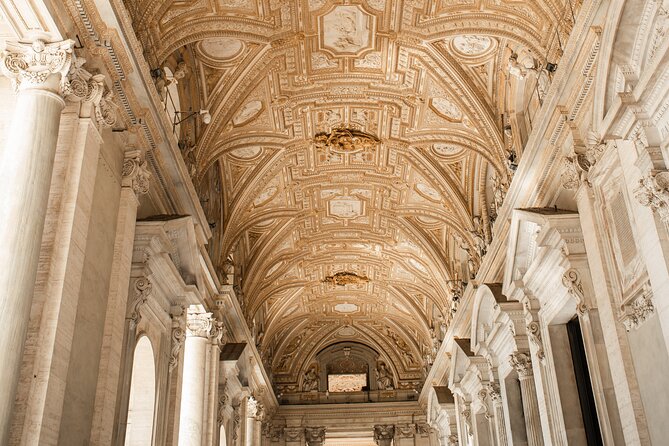
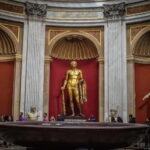
This tour focuses on the museum highlights instead of a full museum circuit. In the time you get, that’s smart. The Vatican Museums can feel like a warehouse of masterpieces—amazing, but easy to mentally overload. A guided “top hits” approach helps you connect the art to the story without losing the thread.
Expect a run-through of major stops such as:
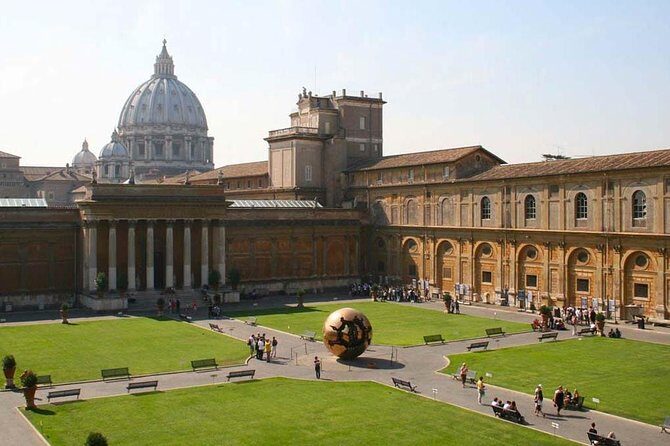
- Belvedere Courtyard
- Hall of Muses
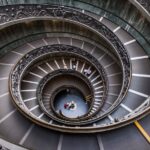
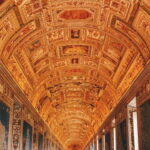
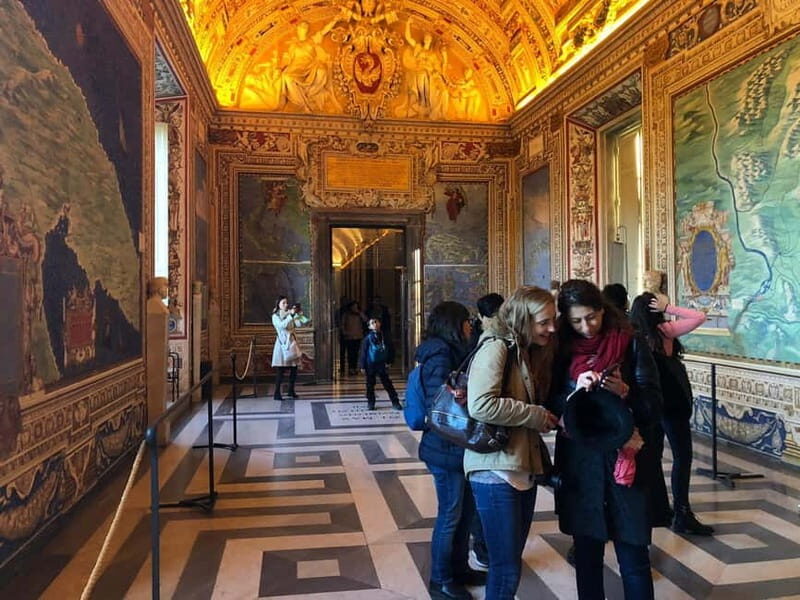
- Gallery of Geographical Maps
- Then you move on toward the Sistine Chapel
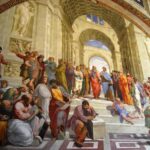
You’re also told you’ll see works tied to major names like Raffaello (Raphael) and Caravaggio, plus the museum’s mix of painting, frescoes, tapestries, ancient Greek and Roman statues, sarcophagi, and mosaics. The practical takeaway: you’re not trying to absorb every category. You’re getting a guided sampling that helps you understand what the museum is “for,” historically and artistically.
The value here is direction. Without a guide, you can wander through rooms and still feel like you missed the point. With a guide, those stops start to link together: the museum isn’t just a pile of famous art, it’s a curated narrative of power, faith, and artistic skill.
Sistine Chapel: the guide’s job is to make it make sense
In most one-day Vatican plans, the Sistine Chapel becomes a blur: people look up, photos happen, and everyone tries to breathe in the same small space. This tour tries to keep your visit more intentional by using the guide’s explanation and the headsets to keep the key context audible.
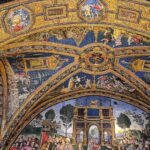
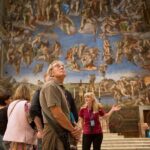
You’ll be directed to see Michelangelo’s The Last Judgement and The Creation of Adam. Those are the anchor images people come for. But what makes a guided approach worthwhile is what you’ll likely learn about the composition and symbolism—things you might not notice on your own when you’re surrounded by moving bodies and strict viewing rules.
One more practical point: the Sistine Chapel area can be crowded and rule-heavy (silence, phone/photo restrictions, and slow movement). Headsets won’t change the rules, but they do help you follow the guide while you’re standing still for long stretches.
St. Peter’s Basilica highlights: Pietà, baldachin, and what to look for
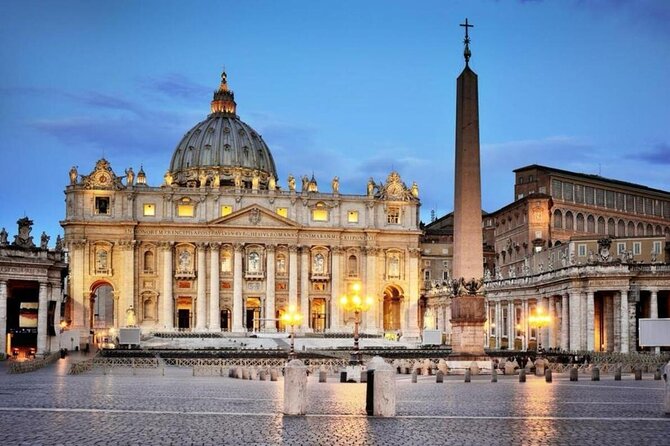
Once you shift from museums to St. Peter’s Basilica, the atmosphere changes fast. You go from gallery rooms to a giant church where the scale can mess with your sense of what to look at first. This tour’s design is to help you pick the right “targets” quickly.
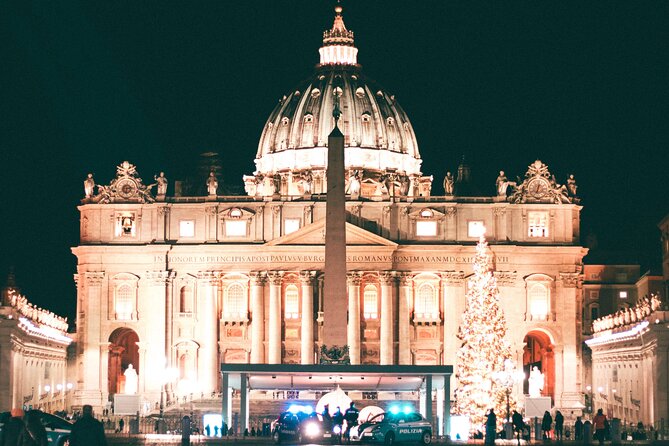
You’ll get guided coverage of the basilica with attention on landmark masterpieces, including:
- Michelangelo’s Pietà
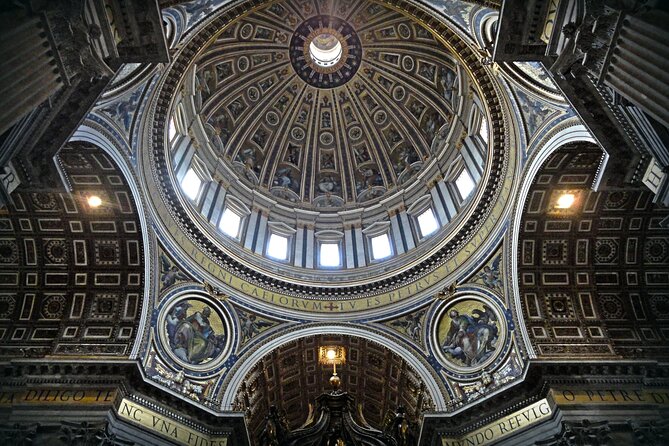
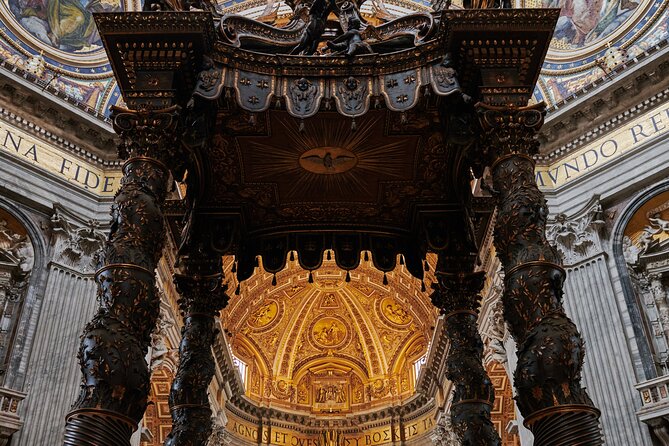
- Bernini’s baldachin
And you’re not just shown the objects. The guide’s job is to tell you why these works are positioned the way they are and how they connect to the bigger sacred space. When you’re standing inside a building this large, learning where to focus helps you enjoy it instead of simply being impressed.
The other big plus is that the tour includes access beyond just walking around the main floor. You’re set up to also go to the dome and underground areas. That matters because St. Peter’s isn’t only about what you see at eye level. The story goes downward.
Going underground: papal grottoes and St. Peter’s Tomb
The underground portion is one of the most distinctive parts of this tour. You’ll head to the papal grottoes and to St. Peter’s Tomb beneath the church.
This is valuable for two reasons:
- It gives you a physical sense of the layers of the site—St. Peter’s isn’t just a single era of art and architecture.
- It turns the visit into more than sightseeing. You get the context for why the location matters, not only that it’s famous.
Underground visits also tend to be cooler and more enclosed, which can be a welcome change from the bright, crowded basilica floor. The tradeoff is that you need to be comfortable with a walking route that includes underground areas.
You should also take the provider’s note seriously: a strong physical fitness level is recommended. That usually means the plan involves stairs, uneven footing, and time spent moving in restricted areas. If that’s not you right now, consider whether you want a slower-paced basilica-only visit.
- Skip-the-Line Group Tour of the Vatican, Sistine Chapel & St. Peter’s Basilica
★ 4.5 · 12,779 reviews



Dome access: included fees, real effort, big payoff
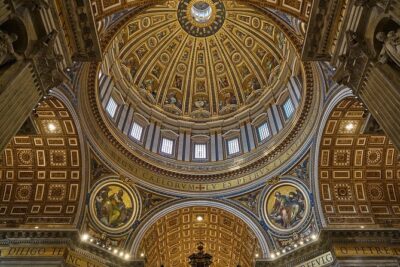
This tour includes entrance fees to the dome, which is often where “look-only” tours fall short. Going up changes how you experience St. Peter’s. From above, the church’s structure stops being a wall of detail and starts making sense as a whole—space, geometry, and the way the interior pulls your eye upward.
Because dome visits typically involve climbing, the fitness note is relevant. If you’re fine with steady walking and stairs, you’ll probably handle it well. If you’re not comfortable with steps or you know you tire quickly, this is the moment to think carefully about whether a two-hour tour format is the right fit.
What you should do in advance: wear supportive shoes. Don’t show up in fashion sneakers that slip. The Vatican isn’t a place for grippy soles to be optional.
Group size, headsets, and staying in the flow
With a maximum group size of 20, you should generally have an easier time keeping up than with huge bus-tour crowds. In a site like St. Peter’s, that difference matters. Smaller groups can pause where they need to, and you’re less likely to get separated.
The headsets/radios are a genuine quality-of-life upgrade. They let you hear the guide even when the group compresses and people are standing in every direction. Without headsets, you end up doing what many visitors do: watch the guide’s gestures and guess what you’re missing. With headsets, you keep the story straight.
One more consideration: the tour is listed around two hours. That’s tight. It means the guide likely uses a brisk rhythm to hit the museums, move to the basilica, and cover the dome and underground stops. If you want to linger at each artwork until it turns into a personal epiphany, you may feel slightly forced along.
Price and value: what you get for $49.93
At $49.93 per person, this tour sits in the “mid-value” zone for Rome. It’s not the cheapest option, but it includes several things that usually cost extra or require extra planning on your own:
- Entrance fees to the dome
- Tour guide
- Guided tour of the basilica, dome, and grottoes
- Radios/headsets
- Admission ticket inclusion for the 2-hour museum portion you’re assigned
That combination is the real value. You’re paying for structure and for the parts of the site that take extra logistics—dome access and underground areas—plus the ability to hear commentary in crowded spaces.
The catch is also clear: skip-the-line services are not included. That means you might still deal with standard waiting. If you hate lines more than you hate missing context, factor that into your decision. If you’re flexible and you want the guide to do the heavy lifting, the price can feel reasonable.
Finally, the “booked 37 days in advance on average” suggests many people plan ahead. If you know you want a specific day, earlier booking usually gives you better odds of fitting into your schedule.
Timing hiccups and pacing: the main downside to weigh
One booking report I saw noted a postponement from a scheduled 2pm start to 3pm without prior warning. Another complaint mentioned a guide who felt less friendly and provided explanations quickly, making the pace feel aimed at getting out fast.
That doesn’t mean every tour will run that way. But it does mean you should be mentally prepared for two things:
- Start times can shift.
- A two-hour format may feel compressed.
If you’re the type who gets stressed by delays, or you prefer slow museum time, you might find a guided “highlights sprint” less satisfying than a longer, more relaxed option.
If you’re okay with a structured route and you want the main sites covered, the headsets plus targeted stops are exactly what make a fast tour workable.
Who this tour suits best (and who might prefer a different plan)
This works best for you if:
- You want major Vatican and St. Peter’s highlights in one go.
- You appreciate a guide explaining what you’re looking at.
- You’re okay with a packed schedule and limited time per stop.
- You’re comfortable enough to handle dome access and underground grottoes (the note recommends strong physical fitness).
You might want to rethink this if:
- You need lots of free time to wander and study art slowly.
- You’re highly sensitive to changes in start time or pacing.
- You want guaranteed line avoidance, since skip-the-line service isn’t included.
Practical tips to make the two hours feel smoother
I’d plan your day so you’re not rushing from a long morning activity right into this. Vatican timing is tricky, and a guided route works best when you can stay calm.
- Wear shoes you can walk in for a while; stairs are likely given dome and underground stops.
- Keep your phone charged for the mobile ticket.
- Have a relaxed mindset: you’re covering highlights, not mastering every artwork.
- If you’re particularly attached to one masterpiece, mentally decide what you’ll focus on most—Pietà, baldachin, or Sistine Chapel scenes—so you don’t feel disappointed if you only get quick moments at everything.
Should you book this Vatican Museums and St. Peter’s Basilica guided tour?
If you want a guided highlights loop that includes the Sistine Chapel area, St. Peter’s Basilica, the dome, and the papal grottoes in about two hours, I think you’ll probably like it. The best part is the practical setup: headsets for clear commentary plus guided access to the parts many self-guided visits miss or treat as optional.
I’d only hesitate if you hate rushing, if start-time changes would throw off your day, or if you specifically need skip-the-line convenience. For the rest of us—people who want the big landmarks with context and a clear route—this is a solid, efficient way to tackle Rome’s most overwhelming sacred site without losing the thread.
FAQ
How long is the guided tour?
The duration is approximately 2 hours.
What does the tour include?
It includes entrance fees to the dome, radios and headsets, a tour guide, and guided visits of the basilica, dome, and grottoes.
Is a mobile ticket provided?
Yes, the tour uses a mobile ticket.
What are the main stops during the tour?
You’ll visit the Vatican Museums (including the Sistine Chapel area) and then St. Peter’s Basilica, including access to the papal grottoes and St. Peter’s Tomb beneath the church.
Does the tour include skip-the-line service?
No. Skip-the-line services are not included.
What meeting point should I use?
The meeting point is Via dei Gracchi, 17, 00192 Roma RM, Italy.
Is the group small?
Yes. The maximum group size is 20 travelers.
Do I need to be physically fit?
The tour notes that travelers should have a strong physical fitness level.
What is the cancellation policy?
You can cancel for free up to 24 hours before the experience’s start time for a full refund.
What happens if weather is poor?
The experience requires good weather. If it’s canceled due to poor weather, you’ll be offered a different date or a full refund.
You Might Also Enjoy
More Tour Reviews in Rome
- Skip-the-Line Group Tour of the Vatican, Sistine Chapel & St. Peter’s Basilica
★ 4.5 · 12,779 reviews