REVIEW · ROME
Wheelchair Accessible Sistine Chapel & Vatican Private Tour for Disable Visitors
Book on Viator →Operated by Sistine Chapel Tours · Bookable on Viator
Rome’s easiest Vatican access starts at the gate. This private, wheelchair-accessible tour gets you into the Vatican Museums and down to the Sistine Chapel with a guide focused only on your group, plus guaranteed skip-the-line entry so you don’t waste your energy in queues. I love the sense of support you get before you even move—your guide handles the flow— and I love that the tour pairs big-name art with clear, practical explanations so you’re not just standing there guessing what you’re seeing.
One thing to plan for: the dress code. Shoulders and knees must be covered for everyone, and you’ll be denied entry if you show up in shorts or sleeveless tops.
In This Review
- Key things to know before you go
- Wheelchair access that actually works at Vatican Museums
- The start at Cortile della Pigna: quick, scenic, and low-pressure
- Vatican Museums: Pio Cristiano galleries and the Raphael Rooms connection
- Gallery of Tapestries
- Gallery of Maps
- Raphael Rooms painted for Pope Julius II
- Sistine Chapel: the briefing that makes the silence worth it
- What the guides are really doing for you (and why it matters)
- Dress code, water rules, and the reality of visiting worship spaces
- Price and value: when $355.21 is worth it
- Who this tour is best for (and who might want something else)
- Should you book this private wheelchair-accessible Vatican tour?
- FAQ
- How long is the wheelchair-accessible Vatican private tour?
- What stops are included on the tour?
- Is skip-the-line access included?
- Is this tour private or group-based?
- Do I need to pay extra for the tickets?
- What is the dress code?
- Are food and drinks allowed inside the Museums?
- Is St Peter’s Basilica included?
Key things to know before you go
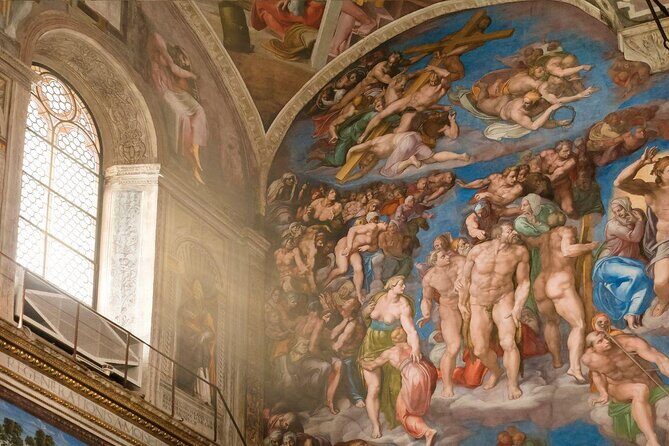
- Guaranteed skip-the-line entry helps you use your time wisely.
- Private guide attention means more help with pacing, questions, and transitions.
- Wheelchair and mobility-device friendly route through major Vatican highlights.
- Stop-by-stop art focus at Cortile della Pigna, Raphael Rooms, and the Sistine Chapel.
- No talking inside the Sistine Chapel means you’ll rely on your guide’s briefing beforehand.
Wheelchair access that actually works at Vatican Museums
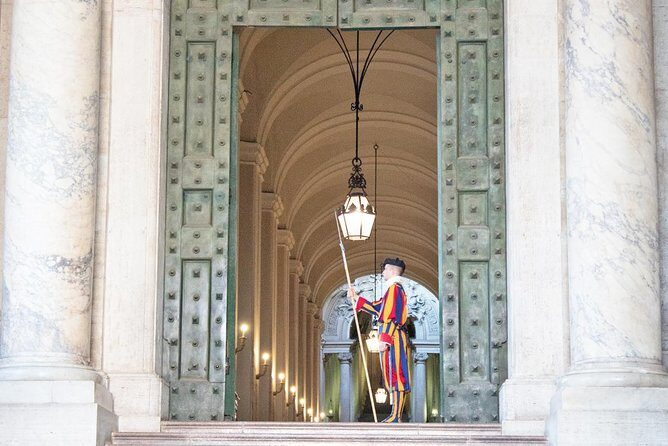
If you’ve ever tried to tour the Vatican with mobility needs, you already know the real problem is not the distance. It’s the lines, the “wait here” moments, and the stress of figuring out access on your own.
This tour is built around the idea that you shouldn’t have to fight the logistics. You meet your guide at Caffè Vaticano (Viale Vaticano, 100, 00192 Roma), and from there you move past the long queues. The route is designed to bring wheelchair users into the Vatican Museums and then on to the Sistine Chapel, with the guide staying close and focused on your needs as you go. You’re not competing for attention in a big crowd.
One practical plus: because it’s private, your guide can set a pace that fits your day. If you need more time at one room, you can usually take it. If a transition feels tight, your guide can help you plan the next step instead of rushing you into the next bottleneck.
The tour is listed as about 3 hours, and it includes mobile tickets, so you’re not scrambling with printed paperwork once you’re near the Vatican. The experience is offered in English, which matters because it affects how well you’ll follow the art explanations and accessibility guidance.
Other Sistine Chapel tours at the Vatican & Rome

The start at Cortile della Pigna: quick, scenic, and low-pressure
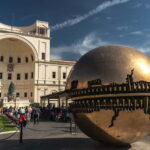
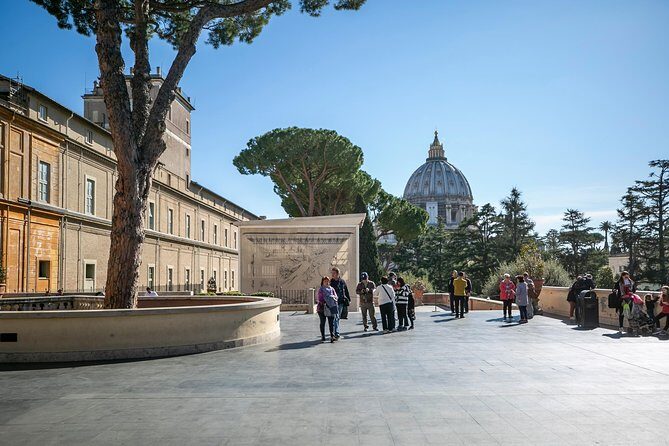
Your first stop is Cortile della Pigna, where you’ll meet your guide at the museum entrance area and get directed to start in the Pigna Courtyard. This is where you’ll see the famous “Pineapple” (a classic Vatican yard ornament that people love because it’s recognizable fast).
Why this first stop matters: it gives you momentum right away. You’re not jumping straight into the Sistine Chapel with information overload. Instead, you begin with something visible, iconic, and easy to orient around. Even better, this is when you’re still fresh enough to take in the larger layout of the Museums ahead.
You’ll spend about 1 hour here, and the admission ticket is included. That time also helps you reset if you needed any extra moments to get comfortable before entering the bigger galleries.
A possible drawback at this stage: starting early means you may feel the Vatican’s real atmosphere—more people passing through nearby walkways, even if you’re not stuck in the long entry lines. If you’re sensitive to crowd noise, it helps to move slowly and keep your eyes on your guide’s cues for the next corridor.
Vatican Museums: Pio Cristiano galleries and the Raphael Rooms connection
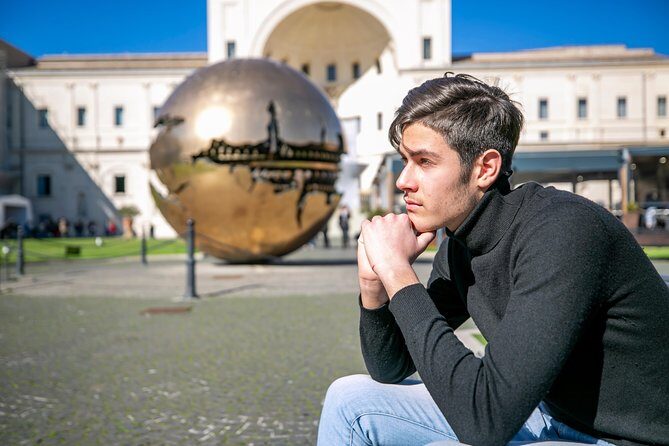
After the courtyard, the tour focuses on the Vatican Museums, with a route that brings you through major highlights that most first-timers rush through. You’ll cross into the Pio Cristiano Museum area and then keep going toward the Raphael Rooms.
Here’s what’s special about this part: it’s not just “see famous rooms.” You’re shown what to notice, and the Museums become easier to understand. The tour includes a look at:
Gallery of Tapestries
This is a good early “visual training” stop. Even if you don’t know the history, you can start learning how Renaissance art tells stories through composition and detail. The timing matters because it comes before you hit the peak visual experience of Raphael and the Sistine Chapel.
Gallery of Maps
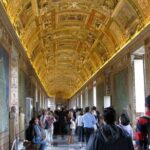
This is one of the most practical stops on the whole route if you like your art connected to real-world context. You’ll see one of the largest displays of Renaissance maps anywhere in the world. For many visitors, it’s a palate cleanser from purely religious imagery. It also gives your guide a chance to explain how the Renaissance looked at knowledge, geography, and power.
Other private Vatican tours at the Vatican & Rome

Raphael Rooms painted for Pope Julius II
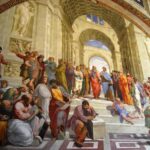
Next come the Raphael Rooms, where you’ll see rooms decorated in the 1500s for Pope Julius II. The tour points you toward Raphael’s major works as you move through the spaces, including the paintings now considered among the young Raphael’s greatest masterpieces: Parnassus and School of Athens.
Why I like this approach for accessibility: it’s easier to enjoy art when you know what you’re looking at. These rooms can feel overwhelming on your own because you see the scale, but not always the logic. With a guide who can explain what the imagery is doing, the rooms become more than backdrops.
You’ll spend about 1 hour in this section, and admission is included. Real talk: Museums can feel long even when time feels “only an hour.” The private format helps because your guide can slow down for the moments you need, rather than cutting you off to keep the group moving.
Sistine Chapel: the briefing that makes the silence worth it
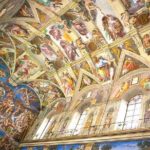
The tour ends at the Sistine Chapel, the big moment. It’s also the moment where you’ll feel the strict rules most clearly.
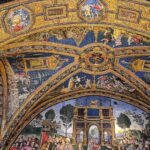
Before you enter, your guide gives a briefing about what you’ll see inside. This is important because once you step into the Chapel, no talking is allowed. In other words, your guide’s explanation is not optional. It’s how you’ll turn what looks like a ceiling full of people into something meaningful.
What your guide covers includes major works such as:
- Michelangelo’s The Last Judgment
- Frescoes by Botticelli and other famous Renaissance artists
Even if you’ve seen pictures before, the Chapel changes when you’re standing there. Your guide helps you notice details and relationships you’d normally miss. And because this is private, you’re not trying to hear over someone else’s tour group or scramble to get a view.
One accessibility detail that stands out from the experience: some guests use a mobility scooter for most of the route, and then a wheelchair is provided for going down to the Sistine Chapel area. That’s the kind of flexibility you want built into your plan. The hard part of the Vatican for mobility needs is often the “last step.” This tour is set up so you’re not stuck figuring it out at the worst possible time.
What the guides are really doing for you (and why it matters)
A great accessibility tour is not just about ramps and pathways. It’s about communication and safety, especially when you’re working with mobility devices.
From the guides associated with this experience—such as Max, Francesco, and Tommaso—the common thread is straightforward: they prioritize your ability to see the art and stay comfortable, not just complete the route. You might notice this in how they pace you and how they handle the transitions between major areas of the Museums.
For example, one guide style you can expect is a calm, safety-first approach—particularly if you’re using a mobility scooter part of the way. You’ll get help arranging where you are in relation to the guide and the route, so the tour feels less like you’re squeezing through space and more like you’re being guided through a sequence.
You can also expect an art-focused explanation style. Some guides are known for taking time to give you a preliminary overview before key rooms, which helps the art “click” faster once you’re inside. And if you run into a meetup hiccup, one guide handled issues quickly through phone contact and helped everything move on track.
Dress code, water rules, and the reality of visiting worship spaces
This is the kind of tour where rules are not just formalities. They affect whether you get in and how your experience feels day-to-day.
Here’s what you must plan around:
- Dress code required: no shorts or sleeveless tops. Knees and shoulders must be covered for both men and women.
- Food and drinks not allowed in the Museums except bottled water.
For many people with mobility needs, that’s not a small detail. It affects what you pack, what you wear under a day bag, and how you manage comfort if you’re sitting for stretches. If you tend to travel light, build in an extra layer plan so you can stay compliant without suffering.
Also, bottled water matters if you’re pacing yourself. Bring a plan for drinking during breaks outside the restricted spaces, because once you’re in the Museums you’ll need to follow the water-only rule.
Price and value: when $355.21 is worth it
At $355.21 per person for about 3 hours, this isn’t the cheapest way to see the Vatican. But it’s priced like a problem-solver: accessibility plus time saved plus a guide who gives you full attention.
Here’s what you’re buying for the money:
- Guaranteed skip-the-line access, which can be huge when mobility is involved. The less waiting you do, the better your day goes.
- Private tour format, meaning your time belongs to your group, not a larger schedule.
- Professional art historian guide (local guide plus professional art historian guide listed in the inclusions).
- Admission ticket is included for the stops described.
If you’re trying to do this solo, you pay indirectly through time, stress, and risk of getting stuck at the wrong point in the day. For someone using a wheelchair or mobility scooter, those risks aren’t theoretical—they can change the whole trip.
So the value equation is simple: if you want access that’s structured and guided, and you want less waiting, this price tends to make sense.
Who this tour is best for (and who might want something else)

This tour is a great fit if you:
- Use a wheelchair or need a mobility-friendly plan inside the Vatican
- Want private, English-speaking guidance through major highlights
- Prefer art explanations that help you actually understand what you’re seeing
- Care about saving time with skip-the-line entry
It may be less ideal if you want a broader religious circuit on the same day. This tour explicitly lists St Peter’s Basilica as not included.
If your priority is only the Sistine Chapel and top museum masterpieces, then the route is very focused. If your priority includes Basilica time too, you’d likely need a separate plan.
Should you book this private wheelchair-accessible Vatican tour?
Book it if you want a structured Vatican day that respects mobility needs and minimizes the most exhausting parts: long queues, last-minute access surprises, and listening for instructions in a loud crowd. The biggest selling points are the private format and the way the tour funnels you into the Museums and down to the Sistine Chapel with a guide who stays close and clear.
Think twice if you strongly prefer total freedom to wander at your own rhythm or you’re not comfortable with the strict dress code and indoor rules.
One last decision helper: if you’re traveling with someone who has mobility needs and you want the day to feel calm, safe, and well explained, this is the kind of tour that turns the Vatican from a stress test into an art experience.
FAQ
How long is the wheelchair-accessible Vatican private tour?
The tour duration is approximately 3 hours.
What stops are included on the tour?
The itinerary includes Cortile della Pigna, the Vatican Museums (including Pio Cristiano Museum areas and the Raphael Rooms), and the Sistine Chapel.
Is skip-the-line access included?
Yes. You get guaranteed to skip the long lines.
Is this tour private or group-based?
It’s a private tour/activity. Only your group participates.
Do I need to pay extra for the tickets?
Admission tickets for the included stops are listed as included.
What is the dress code?
You must cover your knees and shoulders. No shorts or sleeveless tops are allowed, or you may be refused entry.
Are food and drinks allowed inside the Museums?
Food and drinks are not allowed in the Museums except for bottled water.
Is St Peter’s Basilica included?
No. St Peter’s Basilica is not included.
You Might Also Enjoy

More Tour Reviews in Rome
- Skip-the-Line Group Tour of the Vatican, Sistine Chapel & St. Peter’s Basilica
★ 4.5 · 12,779 reviews