REVIEW · ROME
Rome Jubilee Walking Tour of Churches, Bridges & Legends
Book on Viator →Bookable on Viator
Rome at 5pm has a pilgrim feeling. This Jubilee walking tour strings together church interiors, bridge legends, and the story-line that leads toward St. Peter’s Square—without turning your evening into a marathon. I especially love how guides like Kasia or Alina turn architecture into something you can picture, from the ancient frame of Piazza di Pietra to the angel statues on Ponte Sant’Angelo.
I also like the art and symbolism stops, including Michaelangelo’s Christ the Redeemer and major Baroque church work, all built into a route that fits roughly two hours. One catch to plan for: entry tickets to the Pantheon and St. Peter’s Basilica are not included, so you’ll see them from outside.
In This Review
- Key things I’d circle in advance
- Why a 5pm church-and-bridge route makes sense in Rome
- Piazza di Pietra and the Temple of Hadrian framing your first wow
- Sant’Ignazio di Loyola: Baroque church art you can decode fast
- Basilica of Saint Mary of Minerva: peaceful setting, major names inside
- The Pantheon from outside: what this tour can and can’t cover
- Piazza Navona and the Baroque church-and-fountain duo
- Via dei Coronari: the pilgrim street with a caution label
- Ponte Sant’Angelo: angel statues and a pilgrim main road
- Castel Sant’Angelo and Piazza Pia: the “almost there” moment
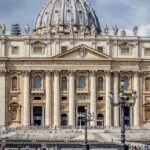
- St. Peter’s Square with Bernini’s colonnades: context changes everything
- Price and value: what $120.14 gets you for two hours
- What to wear and how to plan your day around it
- Who this tour is best for (and who should consider another option)
- Should you book this Jubilee Walking Tour of Churches, Bridges & Legends?
- FAQ
- FAQ
- How long is the Rome Jubilee Walking Tour?
- What time does the tour start?
- Where does the tour start and end?
- Is the tour in English?
- What does the price include?
- Are tickets to the Pantheon or St. Peter’s Basilica included?
- Is there a limit on group size?
- Do I need modest clothing for anything?
- Will I get confirmation after booking?
- Can I cancel for a full refund?
Key things I’d circle in advance
- Small group size (max 15) for a more focused, question-friendly walk
- 5:00 pm start to beat the worst daytime crowds and angles
- Churches + pilgrim route storytelling—not just photo stops
- Art markers you can actually find like Christ the Redeemer at Santa Maria Sopra Minerva
- Outside-view strategy for the big-ticket sights (Pantheon and St. Peter’s)
- Flexible pacing with short stays that keep the walk manageable
Why a 5pm church-and-bridge route makes sense in Rome
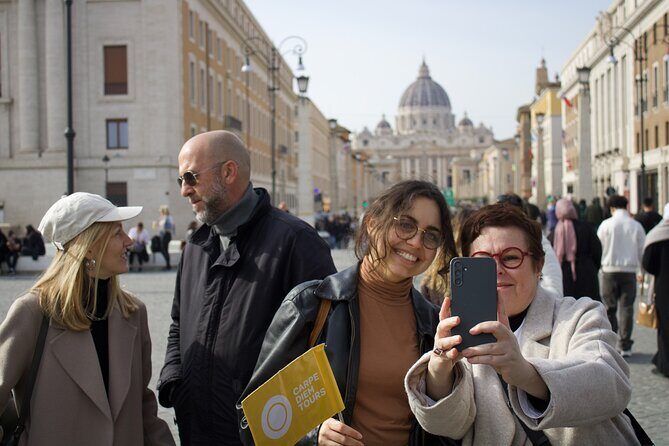
Starting at 5:00 pm is smart for this part of town. You get workable temperatures and lighting for walking and looking up at façades, domes, and colonnades. The route is designed as a classic “context walk,” so you’re not just checking boxes—you’re learning how these places connect.
You also avoid the common problem with Vatican-area planning: showing up at iconic sites without knowing what you’re seeing. This tour’s format gives you a story thread from ancient roads to Jubilee-era pilgrimage vibes, which makes the later sights feel earned instead of random.
The small-group cap of 15 travelers matters here. It keeps the guide from rushing, and you’ll have a better shot at hearing the meaning behind details like the Baroque ceiling symbolism or why the bridge became such a key approach route.
If you're still narrowing it down, here are other tours in Rome we've reviewed.

Piazza di Pietra and the Temple of Hadrian framing your first wow
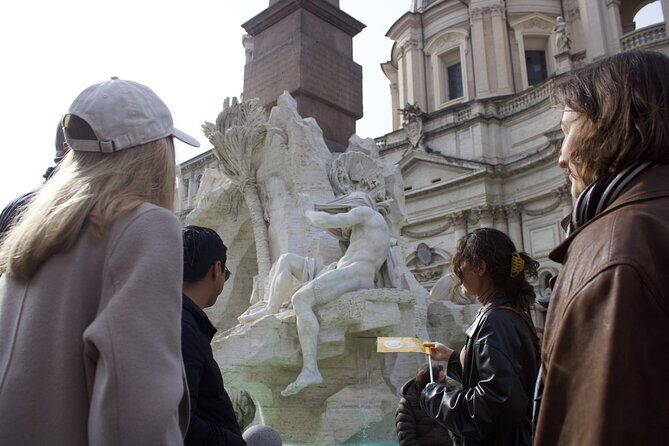
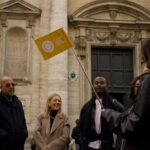
You begin in Piazza di Pietra, a calmer square than most people expect once they arrive near the center of all the tourist energy. The immediate visual payoff is the view toward the Temple of Hadrian, where you can read ancient Roman architecture as something still present in the city fabric.
This first stop does two useful things for you:
- It resets your eyes to Rome’s timeline, moving from emperors and stone geometry toward later religious meaning.
- It primes you for the route logic—Rome often feels layered, and this helps you catch the layers faster.
At around 15 minutes, it’s enough time to look, orient, and get the background your brain will need later when you’re standing among later churches and pilgrimage entry points.
Sant’Ignazio di Loyola: Baroque church art you can decode fast
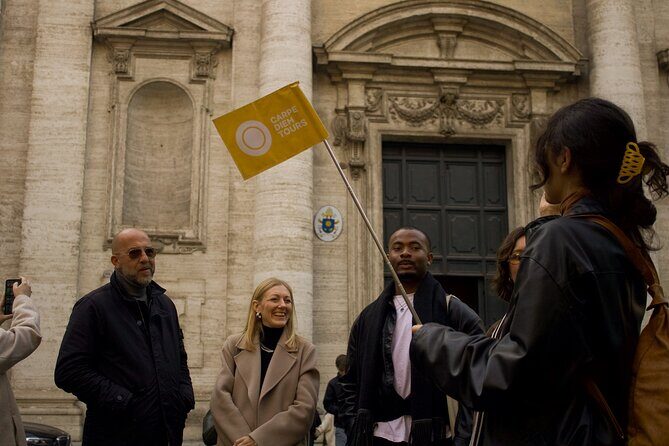
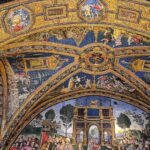
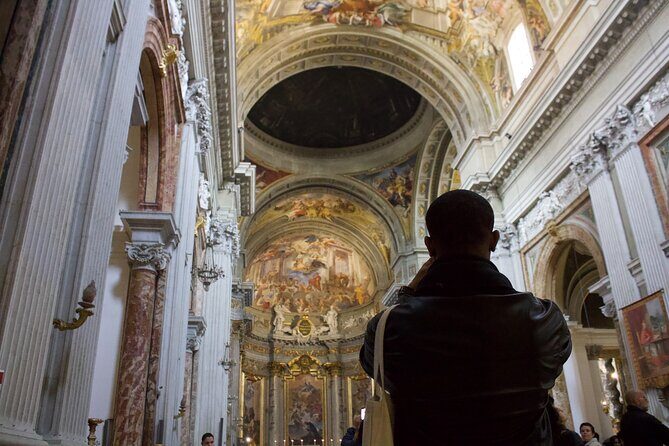
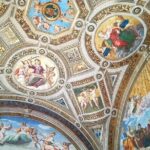
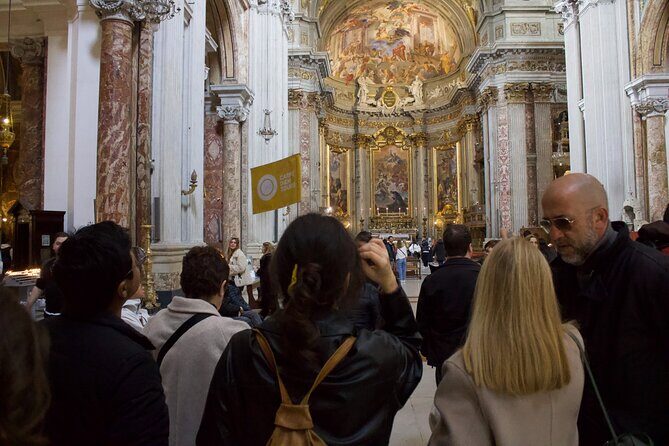
Next is Chiesa di Sant’Ignazio di Loyola, one of those churches where the most famous feature is inside. You’re there long enough to focus on the big Baroque idea: dramatized spirituality through ceiling design and ornate interior work.
What I’d take seriously here is the guide’s approach. The whole point isn’t just admiring gold and curves. You’re meant to understand what the 17th-century religious art is trying to communicate—how it directs your attention upward and how it turns architecture into a kind of visual theology.
If you’re a fan of churches that reward careful looking, this is a strong stop. If you’re someone who usually walks right past ceilings, this one is the reminder you need that Rome’s interiors aren’t decorative extras; they’re the main event.
Basilica of Saint Mary of Minerva: peaceful setting, major names inside
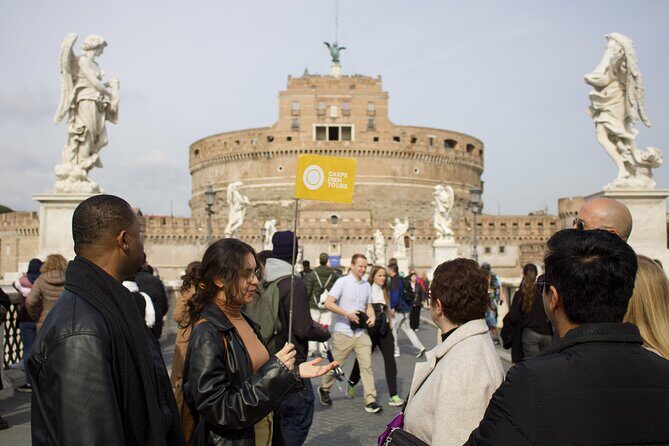
Basilica of Saint Mary of Minerva is another short stop, but it carries serious artistic weight. The surrounding area is quiet enough that you can actually notice the transition from street noise to a more contemplative space.
Inside, you’ll point your attention toward two highlights:
- Michaelangelo’s Christ the Redeemer
- the tomb of Saint Catherine of Siena
That mix matters because it shows you two sides of what churches in this area do so well. They preserve masterpieces, and they anchor devotion through named saints. The guide’s job is to keep it from becoming a list. You’re there to understand why these names show up and how they fit into the broader pilgrimage worldview.
Practical tip: if you want the most out of your photos, look up and then back down. The church can reward both kinds of attention.
The Pantheon from outside: what this tour can and can’t cover
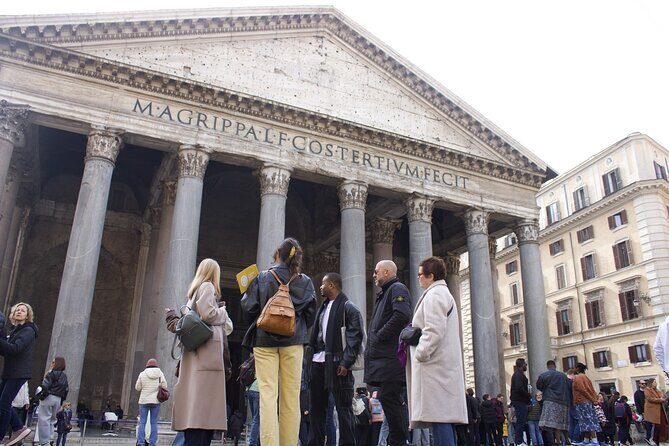
There’s a stop positioned for the Pantheon. You’ll get the big visual hit—its iconic dome and portico—while staying outside. That’s useful if you want a guided evening that doesn’t require juggling entry tickets.
But it also means you should manage expectations. If you want the full Pantheon experience with interior access, you’ll need to plan that separately. The same goes for St. Peter’s Basilica later: the tour helps you frame it, but it doesn’t include entry.
Still, seeing the Pantheon from the outside with context can be satisfying. You understand the design logic and why people call it one of the world’s best-preserved Roman buildings, which makes it more than a background landmark.
Other walking tours we've reviewed in Rome

Piazza Navona and the Baroque church-and-fountain duo
From the ancient-to-sacred setup, you move into Piazza Navona—an elegant square that used to be an ancient Roman stadium. That stadium history changes the way the place feels. You’re not just looking at fountains; you’re standing on a site that once hosted crowds for very different reasons.
The fountains and energy are a draw, but the church focus is key: Sant’Agnese in Agone, designed by Francesco Borromini and Gian Lorenzo Bernini. This is where the tour’s art-and-legends lens starts to click.
What you’ll likely appreciate most is how this stop connects the Rome you see in postcards to the Rome that pilgrims would have recognized as a stage for belief, power, and public life all at once.
Via dei Coronari: the pilgrim street with a caution label
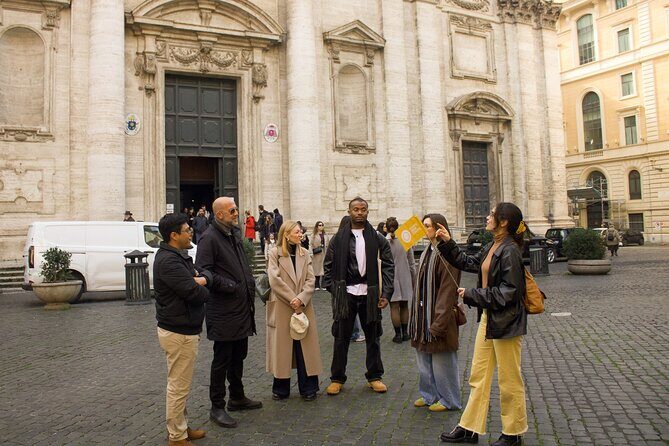
Via dei Coronari is where the walk becomes more character-driven. It’s a narrow cobblestone street lined with Renaissance-era buildings and views that feel like you’re moving through a lived-in corridor, not a tourist channel.
The story here is very Rome: pilgrims walked these routes toward St. Peter’s Basilica, and the street also attracted less-than-holy establishments along the way. That contrast is the point. Rome’s religious history isn’t separate from everyday human behavior—it’s tangled up with it.
This stop also helps you experience something many first-time visitors miss: you don’t just go to sacred buildings. People also traveled through neighborhoods that held both spiritual ambition and ordinary temptation.
If you like your city tours with a bit of honesty, this is one of the more memorable segments.
Ponte Sant’Angelo: angel statues and a pilgrim main road
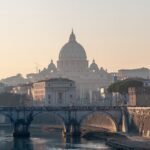
Then you cross Ponte Sant’Angelo (St. Angelo Bridge), where the statues of angels give you instant visual anchors. You’ll also get views over the Tiber River and toward Castel Sant’Angelo.
This is more than a scenic crossing. The bridge is described as a key entrance route for pilgrims traveling toward St. Peter’s Basilica. So you’re walking part of an approach path that shaped movement, not just scenery.
Also, one guide detail stood out in feedback: the group gets one bridge crossing here, and that keeps the tour from feeling stretched or repetitive. It’s a clean choice—one big moment instead of several quick ones.
If you’re the type who likes to understand city navigation, this segment teaches you how Rome’s topography guides people, even when the city looks like it’s all curves and surprises.
Castel Sant’Angelo and Piazza Pia: the “almost there” moment
After the bridge, the tour keeps rolling through the pilgrim “almost finished” feeling.
You get a look at Castel Sant’Angelo, explained as more than one thing:
- an ancient fortress
- a papal residence
- even a prison
- and today a museum
That stack of identities matters. It helps you read the building as a symbol that changed roles over time while staying strategically placed. In Rome, locations often outlast governments. This is a great example.
Next comes Piazza Pia, described as a key meeting point for visitors heading toward St. Peter’s Basilica, signaling that the journey toward spiritual awakening was almost complete. That framing makes the square feel intentional rather than just another open space.
It’s also where you can start thinking about how you’ll handle St. Peter’s after the tour. Since the tour doesn’t include entry to the basilica, having this “you’re close” moment helps you decide whether you’ll go straight in—or do a slower, self-guided revisit.
St. Peter’s Square with Bernini’s colonnades: context changes everything
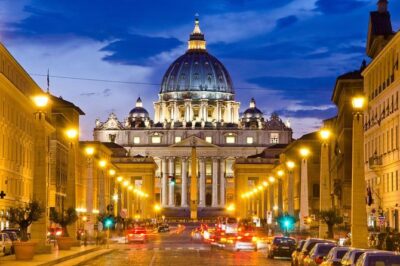
The final focal viewpoint is St. Peter’s Square, with Bernini’s colonnades leading your eyes toward the façade of St. Peter’s Basilica. The tour’s angle is deliberate: you’re guided to understand why the basilica feels like the center of gravity of Catholicism, built right over the tomb of Saint Peter.
This is where a good guide earns their pay. The stories and context help you read what you’re seeing:
- why the square is shaped the way it is
- why the colonnades are designed to direct crowds
- why people experience emotion in the space, even before they step inside
At the end, you can explore St. Peter’s and its surroundings at your own pace. The tour ends at Piazza Pia next to Castel Sant’Angelo, which is convenient because you’re positioned near a major landmark and an easy-to-continue route.
Price and value: what $120.14 gets you for two hours
For $120.14 per person over about two hours, you’re paying for three things that matter in Rome:
- A guided route that keeps the story coherent
- A small-group format (max 15)
- Tour content focused on context, art references, and pilgrim route meaning
You aren’t paying for museum or church entry here. Tickets for the Pantheon and St. Peter’s Basilica are not included, and you’ll view them from outside. If your main goal is interior access to those specific sites, you should budget separately.
Where the tour can still be a good value for you: if you want a guided framework that makes the big monuments make sense fast, and you don’t want to spend your whole afternoon waiting in lines or hopping between ticket systems.
Also, the mobile ticket and English language offering make it easier to plug into your schedule. This is the kind of evening plan that works when you’re juggling a tight itinerary.
What to wear and how to plan your day around it
The tour itself is a walking evening, so treat it like real walking. Comfortable shoes help, because cobblestones and uneven paving are part of Rome’s charm—and part of the work.
If you plan to visit St. Peter’s Basilica or the Sistine Chapel before or after the tour, dress modestly with knees and shoulders covered. This isn’t just etiquette; it’s a practical rule for getting inside comfortably.
Finally, if you’re trying to do Rome by logic rather than by instinct, pick your plan sequence carefully:
- Let this tour give you the map and meaning first
- Then decide where you want more time inside afterward
Who this tour is best for (and who should consider another option)
This tour is a strong fit if:
- you want Vatican-area context without trying to do everything in one day
- you like church art explanations tied to the building’s purpose
- you want a manageable small-group evening walk
- you’re building toward a bigger St. Peter’s visit later
It may be less ideal if:
- you only want tours that include entry to major sites
- you expect every big monument on the list to be entered that day
If you’re traveling with someone who gets bored by long museum sessions, this format can still work because the stops are short and story-driven. If you prefer a totally flexible itinerary, you might also consider a private option, since group pacing can feel structured.
Should you book this Jubilee Walking Tour of Churches, Bridges & Legends?
I think it’s a book-worthy choice when your priority is understanding the pilgrimage story arc in one well-paced evening. The biggest strength is that the tour connects monuments through meaning—ancient roads to Baroque art to the approach path toward St. Peter’s—so the city clicks faster.
You should book it if you like guided storytelling and you’re okay with outside views for the Pantheon and St. Peter’s Basilica. You’ll still get plenty to do and see in about two hours, and you’ll leave knowing what to look for next.
You might skip or pair it differently if your top goal is interior access to those specific sites. In that case, treat this tour as the warm-up and plan your timed-entry visits separately.
FAQ
FAQ
How long is the Rome Jubilee Walking Tour?
It runs for about 2 hours.
What time does the tour start?
The start time is 5:00 pm.
Where does the tour start and end?
It starts at P.za di Pietra, 45, 00186 Roma RM, Italy and ends at Piazza Pia (next to Castel Sant’Angelo), Piazza Pia, 00193 Roma RM, Italy.
Is the tour in English?
Yes, the tour is offered in English.
What does the price include?
It includes a guided walking tour with a local tour guide, city highlights, and lesser-known stops.
Are tickets to the Pantheon or St. Peter’s Basilica included?
No. Entry to those sites is not included, and you will view them from outside.
Is there a limit on group size?
Yes. The tour has a maximum of 15 travelers.
Do I need modest clothing for anything?
If you plan to visit St. Peter’s Basilica or the Sistine Chapel before or after the tour, you should dress modestly with knees and shoulders covered.
Will I get confirmation after booking?
Yes. Confirmation is received at the time of booking.
Can I cancel for a full refund?
Free cancellation is available. You can cancel up to 24 hours in advance for a full refund, and changes within 24 hours of the start time are not accepted.
If you want, tell me your travel month and whether you’re planning to enter St. Peter’s Basilica (and/or the Sistine Chapel), and I’ll suggest the best way to pair this with your remaining time in Rome.
You Might Also Enjoy
More Tours in Rome

More Tour Reviews in Rome
- Skip-the-Line Group Tour of the Vatican, Sistine Chapel & St. Peter’s Basilica
★ 4.5 · 12,779 reviews