REVIEW · ROME
Skip the Line: Vatican Wheelchair Accessible Private Tour
Book on Viator →Operated by Tours of Rome · Bookable on Viator
Wheelchair access meets the Vatican’s biggest highlights. This private tour pairs skip-the-line entry with an expert guide so you can see the Renaissance hits without spending half your day stuck in lines. You also get a practical plan for moving through major sights at an easier pace.
My favorite parts are the time you save at the gate and the way the route stays wheelchair-focused (with pathways and lifts, where needed). The main drawback to consider is that proof of disability is required, and the required dress code (shoulders and knees covered) can be a quick checklist item before you go.
In This Review
- Quick hits before you go
- Skip-the-line start at Viale Vaticano: less waiting, more seeing
- The first leg: Pigna Courtyard to Pio Cristiano Museum
- Galleries of Tapestries and Geographic Maps: Renaissance clues you’ll actually notice
- Raphael Rooms: the “when Raphael was young” stop
- Two-and-a-half hours in the Vatican Museums: smart scope, real pacing
- Sistine Chapel in 30 minutes: how to make a short visit count
- Accessibility and comfort details that affect your day
- Value check: is $385.53 for 3 hours worth it?
- Who should book this Vatican wheelchair-accessible private tour?
- Should you book it?
- FAQ
- How long is the tour?
- Is this tour wheelchair accessible?
- Do I need to show proof of disability?
- What’s included in the tour price?
- Is transportation to and from the attractions included?
- Does the tour include St. Peter’s Basilica?
- Where do we meet the guide?
- Are pets allowed?
- What should I wear?
Quick hits before you go

- Skip-the-line Vatican Museums entry so your visit starts faster
- Wheelchair-accessible routing through the Museums and into the Sistine Chapel
- Art historian-style guiding with stops like the Raphael Rooms and key Michelangelo scenes
- Short, smart timing: about 2.5 hours in the Museums plus 30 minutes in the Chapel
- Private group means you move based on your needs, not a crowd’s rhythm
Skip-the-line start at Viale Vaticano: less waiting, more seeing

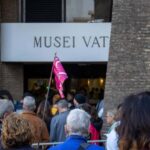
The biggest practical win here is that you do not start by fighting the main entrance chaos. You meet your guide at Viale Vaticano, 100 (00192 Rome) and go in with skip-the-line tickets. That matters in the Vatican because security queues and ticket lines can balloon fast, and even a few wasted minutes add up when you’re managing a wheelchair, mobility scooter, or tight mobility budget.
Your tour is private, so you aren’t squeezed into a big group shuffle. The guide sets the pace and keeps you pointed in the right direction, which is a big deal when the site feels like a maze—especially in the early moments when you’re trying to get your bearings.
One more smart detail: the instructions warn you not to go straight to the Vatican Museums entrance on your own. Trust that. Going “ahead” even a little can mean you’ll miss the shortcut your ticket is designed to use.
If you're still narrowing it down, here are other tours in Rome we've reviewed.


The first leg: Pigna Courtyard to Pio Cristiano Museum
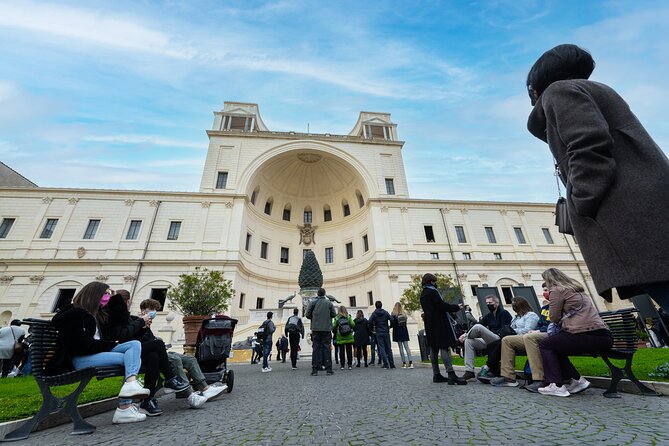
You begin by crossing the Pigna Courtyard. It’s a strong opener because it gets you oriented to the Vatican’s layout right away. Then you head toward the Pio Cristiano Museum, which is the kind of stop that can feel optional on a self-guided trip—but with a guide, it becomes a foundation for what you’ll understand later.
This is where guided framing starts doing real work. The Vatican isn’t only about one famous room or one iconic ceiling. When you start with the museum context, the later jump to famous Renaissance spaces lands better. You also get a route that’s set up for wheelchair movement from the start rather than “we’ll figure it out later.”
If your group is dealing with energy limits, this early pacing helps. You’re not immediately thrown into the Sistine Chapel at full intensity. You build up, then you peak.
Galleries of Tapestries and Geographic Maps: Renaissance clues you’ll actually notice

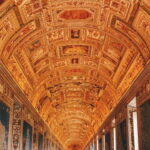
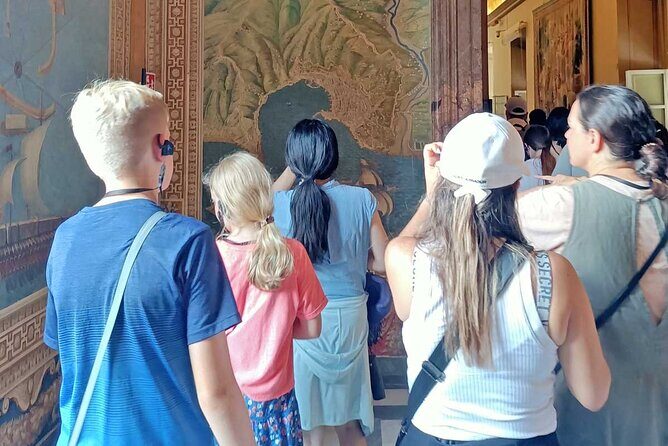
Next come the Galleries of Tapestries and Geographic Maps, where you’ll see an important display of Renaissance maps. This is one of those stops that sounds niche on paper, but it’s a great choice for guided touring.
Maps don’t just show geography. They show how Renaissance thinkers understood the world—what felt important enough to draw, measure, and display. With the guide guiding your attention, you’re more likely to pick up the why behind what you’re seeing, not just the what.
There’s also a practical angle. Moving through corridors and galleries can be easier than bouncing between far-flung rooms. And because the tour is structured, you’re less likely to lose time searching for the next door.
Raphael Rooms: the “when Raphael was young” stop
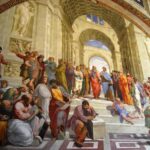
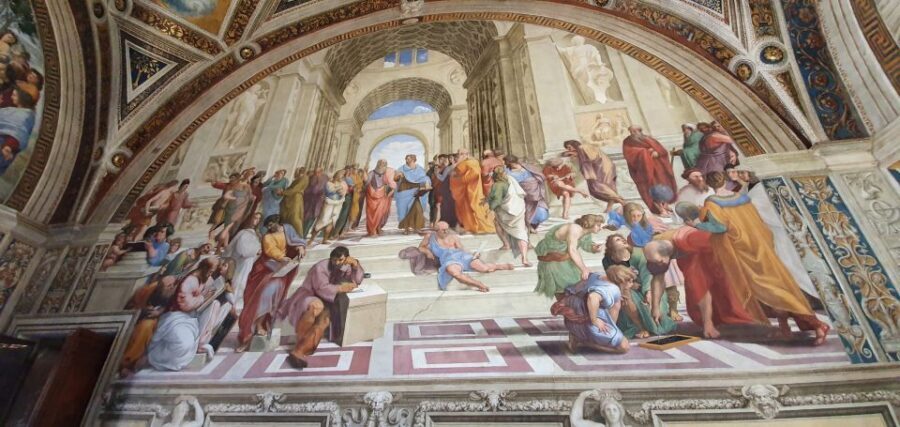
Then you reach the Raphael Rooms, commissioned by Pope Julius II in the early 1500s, when Raphael was still young. This stop is a classic Vatican highlight, but the value is in how your guide positions it. Instead of treating the rooms like a checklist, you get a sense of the project and why it mattered.
The Raphael Rooms are also an ideal example of why a private format helps. Some people want details. Others just want the story beats. With a one-group plan, your guide can match the pace and keep accessibility needs in mind without the pressure of an entire herd behind you.
This is one of the most praised parts of the overall experience because it keeps your eyes moving and your brain engaged. It’s not only sightseeing. It’s interpretation.
Two-and-a-half hours in the Vatican Museums: smart scope, real pacing
Your first main stop runs about 2 hours 30 minutes in the Vatican Museums, with admission included. In that window, you’re guided through major highlights without trying to swallow the entire Vatican in a single sitting.
That’s a key point for expectations. The Vatican Museums can feel endless when you’re self-guiding. With a guided plan, you’re making choices on purpose. You’ll likely see fewer total rooms than someone who takes days to wander, but you’ll spend your time on the pieces that connect to each other: mapping and perspective, then major artistic commissions, then the Michelangelo climax.
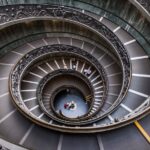
Another practical win: the route is set up for wheelchair access. The included information also points to lifts and accessible pathways being part of how the visit works. In real terms, that reduces the awkward moments where you have to backtrack, wait, or re-route.
From the guide-side, the tour provider has used guides with serious credentials and strong communication skills. Names that came up in feedback include Deborah Virgili, Serena, Franz, Michael (also mentioned as Michelle), Teresa, Andrea, Alexandra, and Andreas. Different personalities, same goal: helping you see the right things in a way that fits mobility needs.
- Skip-the-Line Group Tour of the Vatican, Sistine Chapel & St. Peter’s Basilica
★ 4.5 · 12,779 reviews



Sistine Chapel in 30 minutes: how to make a short visit count

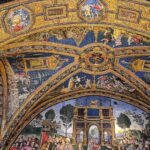
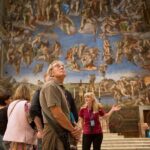
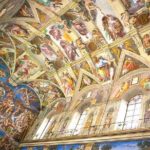
Finally, you go into the Sistine Chapel for about 30 minutes, and this is where your guide’s focus really matters. You examine Michelangelo’s Last Judgement on the altar wall and the colorful frescoes on the ceilings. That’s the big headline. The value is the way you’re guided through what you’re looking at.
Thirty minutes can sound short if you’re thinking like a museum wanderer. But it’s actually a smart duration for the way many people experience the Vatican: the main museum run is longer (with time to pace and reposition), and then the Chapel is treated like the peak moment it is. You’re not exhausted and you’re not trying to process a lifetime of art in one breath.
The other advantage is momentum. By the time you enter the Chapel, you’ve already been oriented by earlier rooms and context. That makes the Chapel feel less like a random photo stop and more like a culmination.
Your tour ends after the Chapel, and then you return to the starting area near the main entrance.
Accessibility and comfort details that affect your day
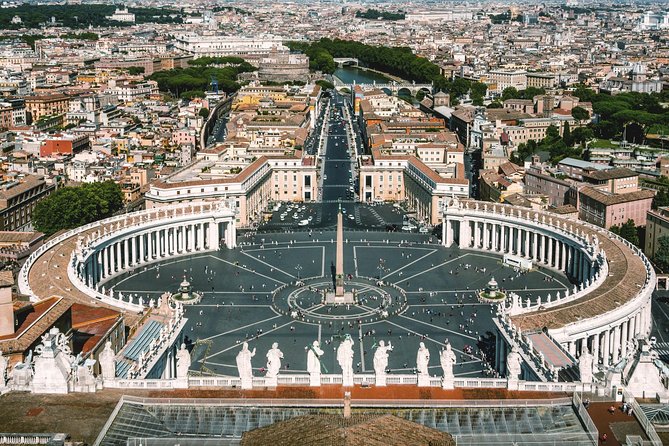
This tour is built for wheelchair users, and proof of disability is required. That’s not the kind of detail you want to learn at the door. Make sure you’re ready with the documentation your group needs.
Dress code is another gate-keeper. You’ll need shoulders and knees covered to be allowed inside. If you’re traveling in warm weather, this becomes a practical packing decision. Light layers that cover without overheating can save you from last-minute stress.
A few rules also shape comfort:
- No pets and service dogs are not allowed according to the tour info.
- You should plan around the fact that St. Peter’s Basilica is not included.
- The information notes that after your guided tour, you can stay more time inside the Vatican if you want to explore further on your own.
Also note the timing reality. The listing says most travelers can participate, and there are multiple tour times offered (morning and afternoon). Since you’ll be moving through accessible routes, picking the time that matches your energy makes more sense than picking the time with the best-sounding weather.
One more real-world tip: the operator strongly recommends you avoid street vendors around the Vatican area as they may give incorrect information. It’s not about being cautious in a fancy way. It’s about saving you from bad directions when you’re trying to meet the guide at a specific spot.
Value check: is $385.53 for 3 hours worth it?
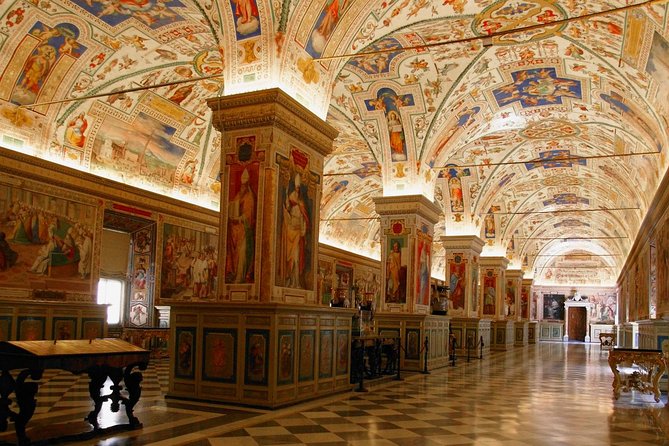
At $385.53 per person for a tour lasting about 3 hours, you’re paying for three things: (1) skip-the-line access, (2) a private guide, and (3) an accessibility-centered route through high-demand areas.
Is it “cheap”? No. But it’s also not just paying for someone to walk beside you. In the Vatican, time and navigation are the two biggest hidden costs. If you’re using a wheelchair or mobility scooter, the cost of wrong turns or long delays can be higher than just lost minutes—it can be fatigue and frustration. The skip-the-line component reduces one of the most exhausting variables.
What about the guide? The tour feedback is full of praise for guides who clearly understand how to support ADA-style needs and who can explain art in a way that stays useful. Names like Franz, Andrea, and Deborah Virgili show up again and again in feedback for a reason: the experience depends on the guide doing more than reciting facts. You want someone who can help you orient quickly and make the highlights land.
Then there’s scope. You’re not trying to do St. Peter’s Basilica in the same ticket, and the tour doesn’t pretend you’ll conquer the entire Vatican in 3 hours. You get focused value: Museums plus Sistine Chapel, with the key scenes and rooms you actually want to remember.
A practical tip: the tour is often booked about 122 days in advance on average. If your dates are fixed, don’t wait until the last week. The Vatican is always busy, and accessible private tours are usually the first to sell out in many travel windows.
Who should book this Vatican wheelchair-accessible private tour?
I’d put this tour at the top of the list if:
- You need a wheelchair-focused route through the Vatican Museums and Sistine Chapel
- You want skip-the-line entry to protect energy and reduce stress
- You’d rather see a curated set of masterpieces than fight for time in a free-for-all crowd
- Your group benefits from a private pace (families, multi-generational trips, or anyone who wants less rushing)
I’d think twice if:
- You’re expecting St. Peter’s Basilica included in the plan (it isn’t)
- You want a full-day Vatican marathon (this is about 3 hours, on purpose)
- You haven’t planned for the Vatican dress code (shoulders and knees covered)
Should you book it?
If your top goal is to see the Vatican’s biggest art moments with a plan that respects mobility needs, this is a strong choice. The combo of private guiding plus skip-the-line saves you from the two biggest headaches: queues and confusion.
Book it if you value focus over wandering. Pass if you want total freedom with no structure. Either way, plan your dress code in advance, bring your proof of disability, and meet your guide at Viale Vaticano, 100 so you get the shortcut you paid for.
FAQ
How long is the tour?
The tour is about 3 hours total, with around 2 hours 30 minutes in the Vatican Museums and about 30 minutes in the Sistine Chapel.
Is this tour wheelchair accessible?
Yes. It is described as a wheelchair-accessible tour of the Vatican Museums and the Sistine Chapel.
Do I need to show proof of disability?
Yes. Proof of disability is required to participate.
What’s included in the tour price?
The tour includes skip-the-line tickets, Vatican Museums wheelchair access, and a wheelchair-accessible Sistine Chapel visit. Admission tickets for both parts are included.
Is transportation to and from the attractions included?
No. Transportation to and from the attractions is not included.
Does the tour include St. Peter’s Basilica?
No. St. Peter’s Basilica is not included.
Where do we meet the guide?
You meet in front of the Vatican City main entrance area at Viale Vaticano, 100, 00192 Roma RM, Italy.
Are pets allowed?
No. Pets are not allowed, and the tour info also states that service dogs are not allowed.
What should I wear?
You should cover your shoulders and knees to be allowed inside the Vatican.
You Might Also Enjoy

More Tour Reviews in Rome
- Skip-the-Line Group Tour of the Vatican, Sistine Chapel & St. Peter’s Basilica
★ 4.5 · 12,779 reviews