REVIEW · ROME
Tour Squares of Rome and Vatican
Book on Viator →Operated by RomaTourGratis · Bookable on Viator
Rome’s biggest names, in walking range.
This tour strings together Imperial Rome and Papal Renaissance-Baroque highlights, hitting the Pantheon (you enter), Castel Sant’Angelo, and a fountain run that takes in Trevi and the Piazza Navona area. I also like how it frames the art side clearly, pointing you toward major works associated with Michelangelo Buonarroti and Gian Lorenzo Bernini. One thing to watch: the pacing and duration are short and variable, so you’ll want to arrive ready to move, and I’d double-check that your purchased ticket matches what the meeting group is expecting.
The route starts at Fontana del Tritone in Piazza Barberini and finishes at St. Peter’s Square, which makes it a practical choice if you want big-sight Roman orientation without committing to a long day. The mobile ticket is convenient, and the group size caps at 30, which keeps things from turning into a mob scene. Still, the time window listed (2 to 45 minutes) means you should treat this as a highlight walk and not a slow, stop-and-stay deep museum visit.
Finally, Sundays include a special finish: a papal blessing in the Angelus, adding real meaning to the ending at Vatican area. The downside? Vatican-day plans can be sensitive to crowds and scheduling, so having flexible expectations helps. If you’re the type who likes to linger for photos, you’ll probably do that on your own after the tour rather than counting on the guide to slow down.
In This Review
- Key highlights to look for
- Why This Squares of Rome and Vatican Route Works Fast
- Meeting at Fontana del Tritone and Getting Oriented
- Imperial Rome Focus: Pantheon Entry, Flavian Ruins, Castel Sant’Angelo
- Papal Golden Time: Michelangelo and Bernini Context You Can Use
- The Fountain Run: Trevi, Triton, Four Rivers, Neptune, and Piazza Navona
- Ending at St. Peter’s Square (and Angelus on Sundays)
- Tickets, Duration, and Group Size: What to Expect Day-of
- Value Check: Does $17.44 Really Add Up?
- Who Should Book This Tour (and Who Might Want a Different Plan)
- Should You Book Squares of Rome and Vatican?
- FAQ
- Where does the tour start and end?
- How long is the tour?
- What is the price per person?
- Do I need paper tickets?
- What does the tour include at the Pantheon area?
- Which fountains are covered?
- Is there a special ending on Sundays?
- How big is the group?
- Is it close to public transportation?
- What’s the cancellation policy?
- Are service animals allowed?
Key highlights to look for
- Roman Pantheon entry included (you don’t just look at the outside)
- Castel Sant’Angelo + Flavian-era ruins in the same historic sweep
- Michelangelo Buonarroti and Bernini-focused art context during the Papal Golden Time walk
- Fountain sequence: Trevi, Triton, Four Rivers, Neptune, and the Piazza Navona area
- Ends at St. Peter’s Square, with Angelus papal blessing on Sundays
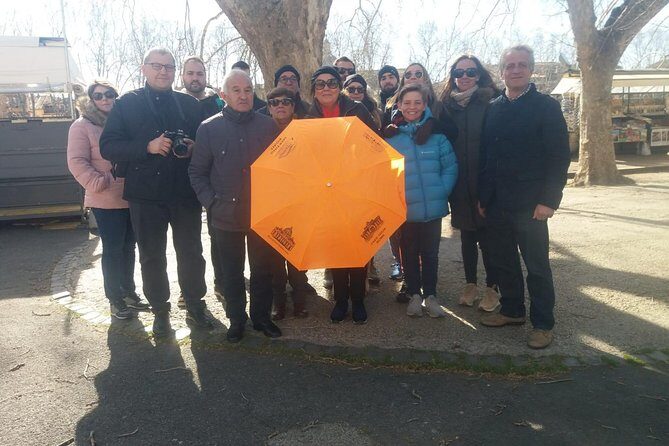
- Small group cap (30) and mobile ticket for easy use
Why This Squares of Rome and Vatican Route Works Fast
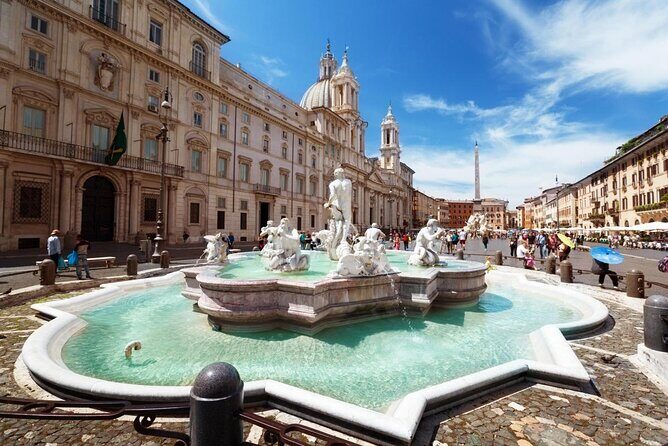
What I like most about this kind of tour is the goal: get your bearings quickly. Rome can feel like a pile of monuments unless someone connects the dots. This one does that in two moves—first by walking through eras (Imperial into Papal Renaissance/Baroque), then by using the city’s most iconic public art as your guideposts.
You’ll start in central Rome (Centro Storico), then progress into the Vatican area. Along the way, the tour focuses on landmarks you’ll recognize even if you don’t know their backstory. That’s a big value point. Paying attention to the why—the artists and the themes—makes the fountains and monuments feel less like postcard wallpaper and more like a planned statement about power, faith, and city identity.
The price also reflects a “high output, low time” concept. At $17.44 per person, it’s not trying to be an all-day museum pass. Instead, it’s meant to give you a concentrated slice of the highlights—especially useful if you only have a limited number of hours and still want a route that ends with St. Peter’s Square.
Other St Peter's Square tours at the Vatican & Rome
Meeting at Fontana del Tritone and Getting Oriented
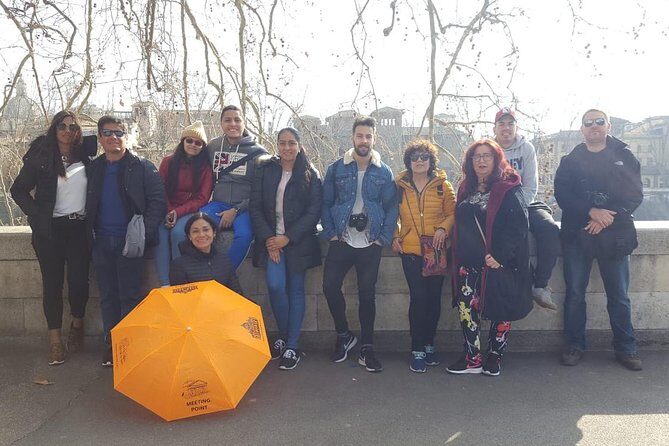
Your start point is Fontana del Tritone, at Piazza Barberini (00187 Roma RM). That’s a smart meeting spot because it sits in a central, walkable area and connects you to public transportation lines. Even if you arrive early, you’ll have a familiar reference point immediately: you’re at a famous fountain, not standing around guessing where everyone is.
From the first moment, the “squares and fountains” theme is clear. You’re not starting at a random corner; you’re starting in the kind of Rome where public water displays are part of the street-level art scene. That matters because the tour later leans hard into fountains and their symbolism.
Also, plan on moving. The overall duration is listed as approximate and can range from 2 to 45 minutes. That wide range is your clue: this is not a leisurely guided stroll where every stop becomes a long lecture. It’s closer to a guided sweep with key moments.
Imperial Rome Focus: Pantheon Entry, Flavian Ruins, Castel Sant’Angelo
The tour’s first historic layer centers on Imperial Rome, and it gives you at least one big “you’re actually inside” anchor: the Roman Pantheon, which the tour includes entry for. That’s a big deal because the Pantheon changes the moment you step under its dome. Even if you’ve seen photos, the scale hits you differently in person—height, light, and the way the interior feels designed for awe.
Next you move into the area tied to the Domitian Flavio stadium ruins. The name sounds technical, but the practical takeaway is simple: you get a sense of Rome as a machine for public spectacle. When you’re standing near remnants of such a venue, the city’s “stage” culture makes more sense—people didn’t just walk for pleasure; they gathered for performances, politics, and communal identity.
Then Castel Sant’Angelo enters the story. In this part of the walk, it’s less about a single building as an object and more about what it represents in Rome’s long timeline. You’ll likely get a clearer mental map of how Rome reused, transformed, and layered its structures as power shifted.
Consideration: this portion of the tour is historic, not hands-on. You won’t be climbing around ruins in most cases, so if you like tactile exploration, you’ll want to do some extra independent time after the tour.
Papal Golden Time: Michelangelo and Bernini Context You Can Use
After the Imperial layer, the tour shifts into the Papal “golden time,” focusing on Renaissance-Baroque Rome and explicitly connecting the art to major names: Michelangelo Buonarroti and Gian Lorenzo Bernini.
This is where the value rises, because those names can feel like museum labels unless someone explains how they show up in everyday Rome. The tour’s approach is to use public spaces—especially fountains—to connect the artists to what you can actually see on the street. That means you’re not just hearing history; you’re seeing history staged in stone and water.
What to look for as you move through this part:
- How the fountains act like sculptures you can walk up to.
- How the design language feels theatrical—figures, allegory, and strong gestures.
- How Baroque art is meant to pull you in visually, not sit quietly.
This is also why the tour can be effective even with short time windows. If you only have a day, you often don’t have time to bounce between scattered museums. The tour gives you a curated thread: Imperial foundations, then Papal artistic intent expressed in the city’s most famous outdoor works.
The Fountain Run: Trevi, Triton, Four Rivers, Neptune, and Piazza Navona
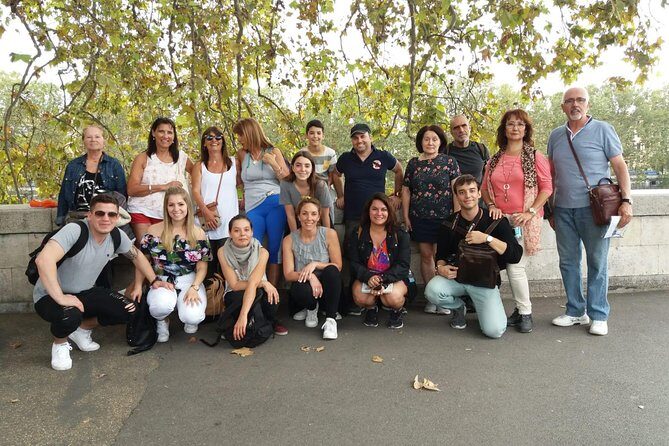
If you come to Rome expecting fountains, you’ll be right. If you come not knowing why fountains matter, this is the moment the city makes sense.
The tour highlights several specific fountains in sequence. Here’s what you can expect from a “fountains as art history” approach:
Trevi Fountain
This is the big one: the most famous fountain in the world. Even if you already know it, treat it as your anchor. Once you understand the fountain’s role as a public statement, the later stops feel like variations on a theme rather than random stops.
Fontana del Tritone
You start at it, so you’ll probably notice it twice—once when you meet, and later as part of the fountain storytelling. It’s a good way to keep the route feeling cohesive: you begin with the tone and then revisit it with more context.
Fountain of the Four Rivers
This one is tied to the idea of global reach and authority—how a city frames itself as center stage. When a fountain includes multiple allegorical figures, it’s rarely just decoration. It’s messaging you can interpret as you walk around.
Neptune
The tour includes the source of Neptune, which fits the broader theme: classical myth re-used as political and religious language. Look for how the figures and waterwork create drama. The “street theater” feeling is the point.
Piazza Navona area and the Moro de Plaza Navona
The tour includes the Moro de Plaza Navona (the Moorish figure associated with the Piazza Navona fountain). Piazza Navona is one of those spaces where the architecture and fountains work together. If you take even a short moment to sit, you’ll see how the square behaves like a stage built for people-watching.
Practical consideration: fountain stops often bring heavy foot traffic. If you care about clear photos, aim to do your own extra photo time after the group moves on. During the tour, the priority is orientation and context, not waiting for the perfect angle.
- Skip-the-Line Group Tour of the Vatican, Sistine Chapel & St. Peter’s Basilica
★ 4.5 · 12,779 reviews
Ending at St. Peter’s Square (and Angelus on Sundays)
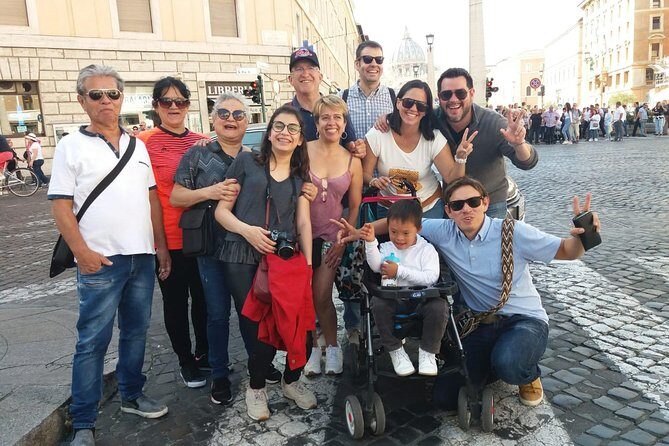
The finishing point is Saint Peter’s Square at Piazza San Pietro (00120). That’s the payoff location, because it’s where Rome’s spiritual center becomes visibly monumental.
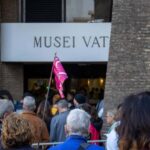
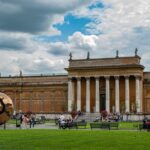
The tour description indicates you reach the St. Peter’s area after leaving the Vatican Museums area. While you should not assume a long Vatican Museums experience during this short-format tour, you can expect that the route is designed to connect the idea of museum-level masterpieces with the public-facing experience of St. Peter’s Square.
On Sundays, the ending includes a papal blessing during the Angelus. That’s special because it turns a sightseeing stop into something you experience in real time. If you’re there on a Sunday and you want that moment, you’ll likely value this tour more than a standard “walk to the square” plan.
Consideration: this area can be crowded and timing-dependent. The tour is short-format, so you may need to plan extra time around the square for comfort and to avoid feeling rushed.
Tickets, Duration, and Group Size: What to Expect Day-of
This experience uses a mobile ticket, which is the modern kind of convenient. Instead of printing or hunting paper vouchers, you’ll rely on your phone on-site.
The duration is listed as approximate, ranging from 2 to 45 minutes. That sounds wild, but here’s how I’d interpret it as a practical traveler: expect a compact set of key stops rather than a long sit-down tour. Some stops are quick, and the “minutes” can vary based on group flow and how long you’re positioned near each highlight.
The group cap is 30 travelers. That’s on the better side for Rome. It usually means you can follow instructions, see the guide when needed, and avoid the worst bottlenecks where you lose the group entirely.
Also note the tour is near public transportation, and most travelers can participate. Service animals are allowed, which helps if you’re traveling with an animal companion.
One more practical note, based on an issue that has been reported: sometimes online bookings and what’s handed to the group at the meeting point don’t line up perfectly. I’d keep your confirmation handy and, when you meet the group, quickly verify that you’re receiving the correct participation details for your ticket.
Value Check: Does $17.44 Really Add Up?
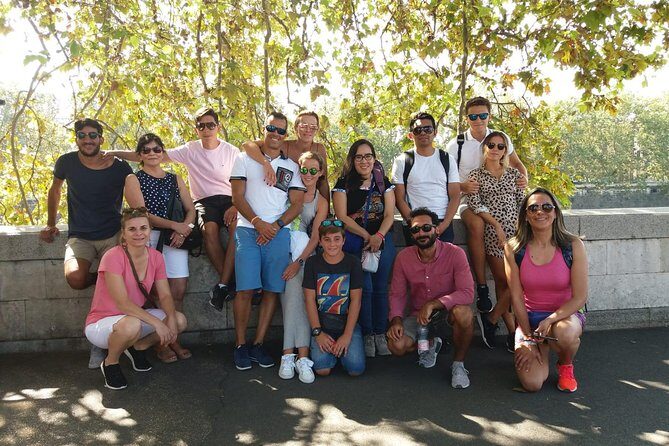
At $17.44 per person, this is priced like a fast orientation tour, not a premium museum deep dive. So the value comes from what you get in a short amount of time:
- Entry to the Pantheon (not just a photo stop)
- A connected route through Imperial-era ruins, Castel Sant’Angelo, and Papal Golden Time
- An art-focused explanation tied to Michelangelo Buonarroti and Gian Lorenzo Bernini
- A fountain circuit that includes world-famous names like Trevi
- A dramatic ending at St. Peter’s Square, plus Angelus on Sundays
If your day is packed with major plans already—like separate Vatican Museums tickets, or pre-booked tours—this could be a smart way to add context and connect the dots across multiple eras without burning half your day.
If, on the other hand, you want to linger at each monument for full exploration time, this may feel too short. In that case, treat it as the front-end guide and then add independent time afterward.
Who Should Book This Tour (and Who Might Want a Different Plan)
This tour fits best if:
- You want a fast guided sweep across top Rome sights and want to understand what you’re looking at.
- You like outdoor art and want the fountain sequence explained in a way you can remember.
- You value a clear start and end: Fontana del Tritone to St. Peter’s Square.
- You’re visiting on a Sunday and want the Angelus blessing moment.
It may not be the best match if:
- You prefer long, slow pacing with lots of time to read inscriptions and stay inside.
- You’re counting on a long Vatican Museums visit during the same session.
- You’re easily stressed by crowded iconic stops, since fountains and St. Peter’s Square can get busy.
If you’re the “get the highlights first, then wander” type, you’ll probably love it. If you’re the “I need 2 hours per stop” type, plan to pair it with extra independent time elsewhere.
Should You Book Squares of Rome and Vatican?
I think this is a solid booking if your goal is orientation and maximum recognition per hour. The combination of Pantheon entry, Imperial-era context, Papal art framing tied to Michelangelo and Bernini, and the practical ending at St. Peter’s Square makes it a good value at $17.44.
Book it with two expectations set:
1) it’s short-format and fast-moving, and
2) you’ll likely want to add your own time for lingering and photos.
If you want a single plan that ties Rome’s eras together without turning your day into a logistics puzzle, this one does that.
FAQ
Where does the tour start and end?
It starts at Fontana del Tritone in Piazza Barberini (00187 Roma RM) and ends at Saint Peter’s Square (Piazza San Pietro, 00120).
How long is the tour?
The duration is listed as approximately 2 to 45 minutes.
What is the price per person?
The price is $17.44 per person.
Do I need paper tickets?
No. This experience uses a mobile ticket.
What does the tour include at the Pantheon area?
The tour includes entry to the Roman Pantheon.
Which fountains are covered?
It includes Trevi, Triton, Four Rivers, Neptune, and the Moro de Plaza Navona.
Is there a special ending on Sundays?
Yes. On Sundays, it ends with the papal blessing in the Angelus.
How big is the group?
The tour/activity has a maximum of 30 travelers.
Is it close to public transportation?
Yes, it is near public transportation.
What’s the cancellation policy?
Free cancellation is available. You can cancel up to 24 hours in advance for a full refund.
Are service animals allowed?
Yes, service animals are allowed.
You Might Also Enjoy
More Tours in Rome

More Tour Reviews in Rome
- Skip-the-Line Group Tour of the Vatican, Sistine Chapel & St. Peter’s Basilica
★ 4.5 · 12,779 reviews